
Kombucha in a Can: Why Sparkling Prebiotic Drinks Are Reshaping Beverage Export Opportunities
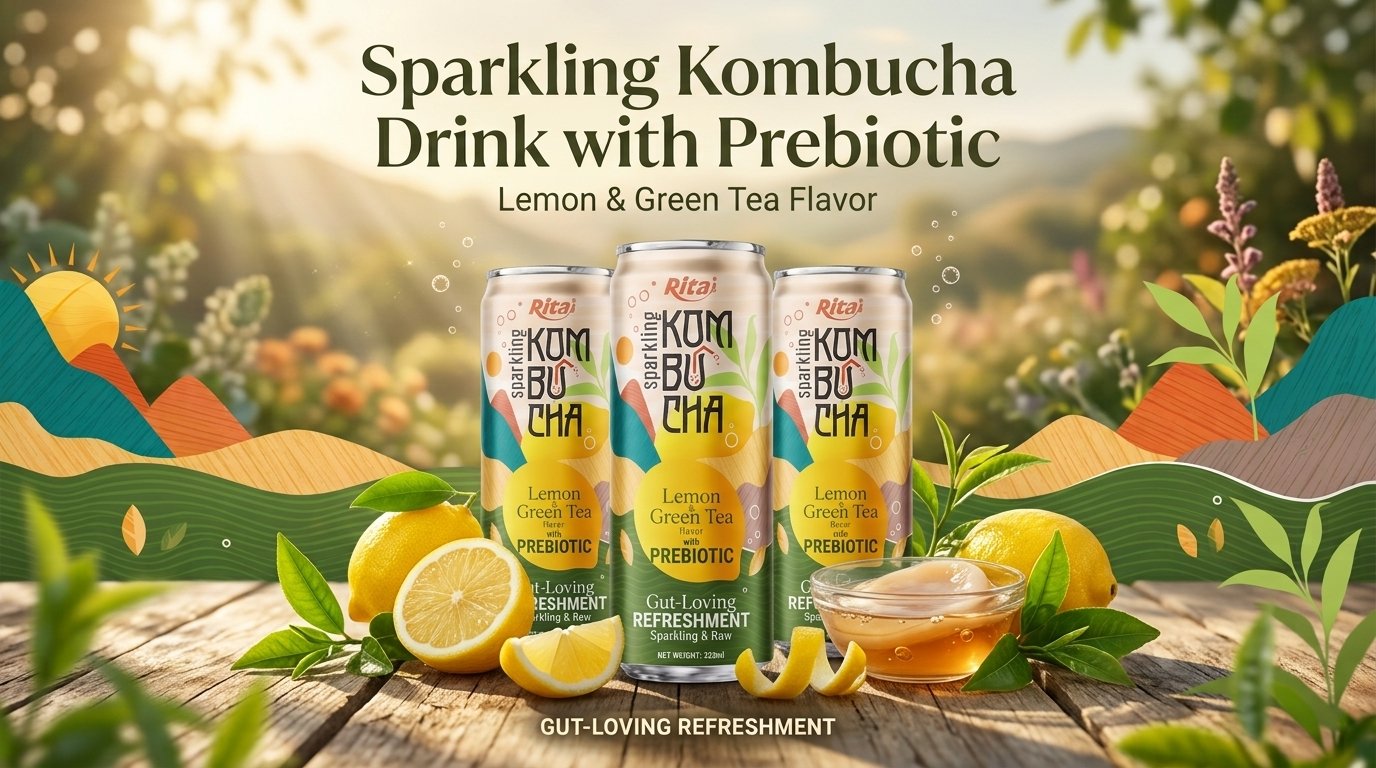
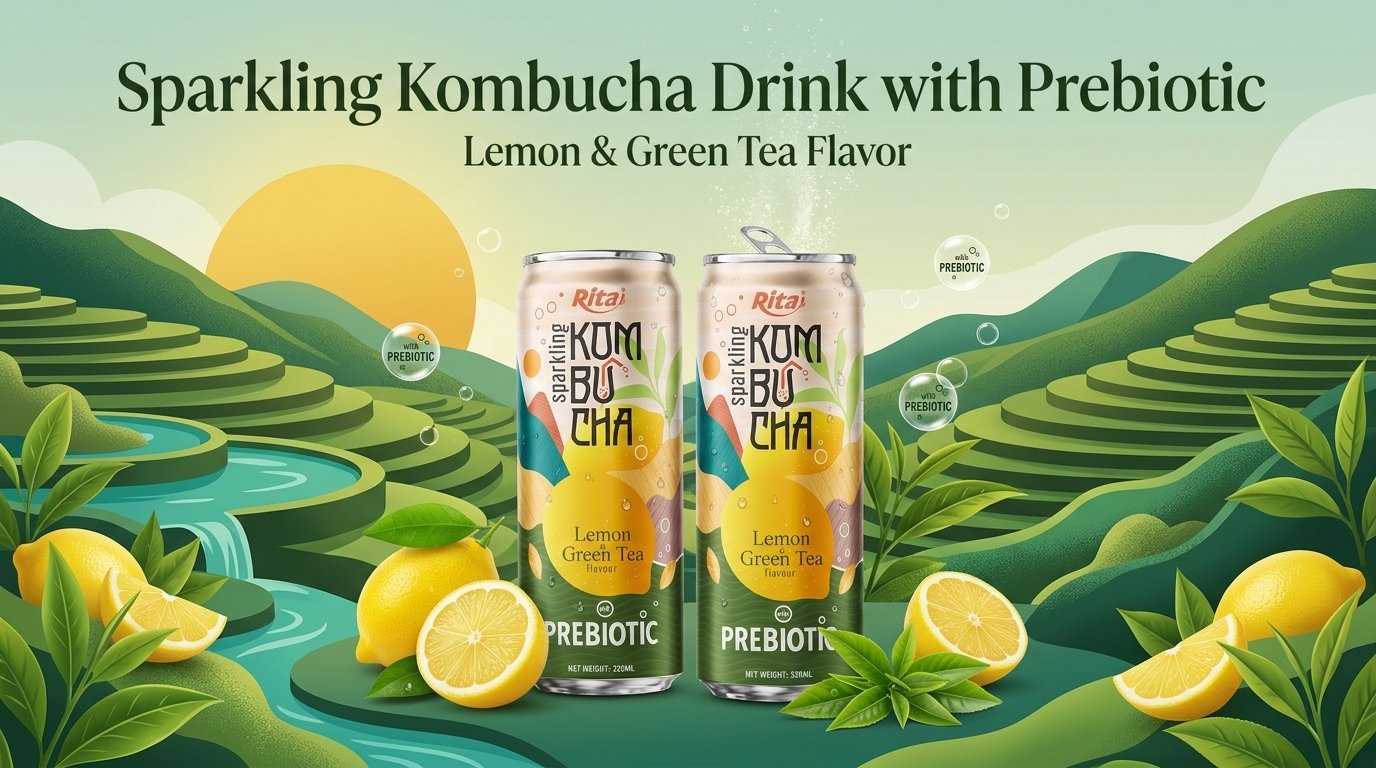
The global beverage industry is undergoing a significant transformation. Consumers are moving away from traditional sugary sodas and artificial juices, seeking out drinks that offer a more complex, sophisticated taste profile. This shift has propelled kombucha—a fermented tea beverage—from a niche health food store item to a mainstream category found in major supermarkets and convenience stores worldwide. For importers, distributors, and F&B businesses looking to capitalize on this trend, understanding the nuances of the market is crucial. The rise of kombucha in a can represents a key evolution, offering portability, convenience, and scalability for global distribution. A prime example of this product innovation is the Rita Sparkling Kombucha Lemon & Green Tea Flavour With Prebiotic 320ml Can, which embodies the modern approach to crafting a market-ready fermented beverage.
The modern consumer is not just buying a drink; they are buying an experience. They want flavor complexity, natural ingredients, and a product that fits their on-the-go lifestyle. This is where the aluminum can format shines. It protects the delicate kombucha from light and oxygen, ensuring a consistent product with a shelf life of up to 24 months, which is a critical factor for international shipping and inventory management. As we explore the dynamics of the international kombucha market, we will analyze the product features, supply chain logistics, and business strategies that make this category a compelling opportunity for serious buyers.
Key Takeaways
- The global kombucha market is expanding rapidly, driven by demand for complex flavors and premium non-alcoholic options, making kombucha in a can a high-growth category for importers.
- Product specifications like a 24-month shelf life and aluminum can packaging are critical for successful long-distance export and retail placement.
- Manufacturing partners with large-scale capacity (e.g., 600 containers/month) and flexible payment terms (L/C, T/T) offer stability for wholesale buyers.
- Certifications such as ISO, HACCP, HALAL, FSSC, and BRC are non-negotiable for entry into regulated international markets.
- OEM/ODM services allow brands to customize flavor profiles and packaging, creating a unique market position without heavy R&D investment.
The Global Shift Toward Fermented and Functional Beverages
The beverage aisle is no longer just about quenching thirst. It is about discovery. Consumers, particularly in North America, Europe, and parts of Asia, are actively seeking out fermented drinks like kombucha for their tangy, effervescent character. This is not a fleeting trend; it is a structural shift in consumer preference. The demand for 'better-for-you' beverages that offer natural ingredients and low sugar content is driving the market forward.
For a distributor or wholesaler, entering this market requires a product that balances authenticity with mass appeal. The flavor profile of lemon and green tea is a strategic choice. It is universally recognized, less polarizing than more experimental flavors, and pairs well with the natural acidity of kombucha. This makes it an excellent entry point for retailers looking to introduce their customer base to the category without overwhelming them. The addition of prebiotics (a type of dietary fiber) further aligns the product with current consumer interest in digestive wellness, though it is important to note that marketing claims must be strictly regulated and avoided in B2B communication.
Why Aluminum Cans Are the Preferred Packaging for Export
Packaging is a critical component of any beverage export strategy. Glass bottles, while premium, are heavy, fragile, and expensive to ship. Plastic bottles can be subject to scrutiny regarding environmental impact and potential flavor degradation over time. The aluminum can has emerged as the superior choice for kombucha in a can for several reasons. It is lightweight, reducing freight costs. It is infinitely recyclable, appealing to eco-conscious consumers and retailers. Most importantly, it provides an absolute barrier against light and oxygen, preserving the delicate flavors and carbonation of the kombucha for its entire shelf life.
Products like the Rita Sparkling Kombucha Lemon & Green Tea Flavour With Prebiotic 320ml Can utilize this format to its full advantage. The 320ml size is a standard 'single-serve' portion, ideal for convenience stores, vending machines, and cafe grab-and-go coolers. For a business planning to import, this format ensures the product arrives in perfect condition, ready for immediate sale. The long shelf life of 24 months also provides a significant buffer, allowing for slower inventory turnover without the risk of spoilage, which is a common pain point for smaller distributors handling fresh or short-shelf-life products.
Supply Chain Reliability and Manufacturing Scale
One of the biggest challenges in the beverage import business is finding a supplier who can guarantee consistent quality and volume. Small-batch craft producers often cannot meet the demands of a large-scale distribution network. This is where the manufacturing capabilities of a partner like RITA become a decisive advantage. With over 20 modern production lines and a capacity of 600 twenty-foot containers per month, they can fulfill orders for large wholesalers and retail chains without bottlenecking.
The minimum order quantity (MOQ) for this specific product is 500 cartons, which is a manageable starting point for a regional distributor testing the market. The delivery time of 20-25 days after order confirmation is competitive for the industry, allowing buyers to plan their inventory cycles effectively. The payment terms (L/C, T/T) are standard for international trade, providing security for both the buyer and the seller. Furthermore, having certifications like ISO, HACCP, HALAL, FSSC, and BRC in place means that the product can be marketed to a wide range of global markets, including those with strict import regulations like the European Union and the Middle East.
OEM and ODM Services: A Path to Brand Differentiation
Many importers and distributors are not just looking for a finished product to sell; they want to build their own brand. This is where OEM (Original Equipment Manufacturing) and ODM (Original Design Manufacturing) services are invaluable. RITA offers full-service private label solutions, allowing clients to customize the sweetness, carbonation level, and even the flavor profile of the kombucha. This flexibility means a business can create a unique product that fits their local market’s taste preferences, rather than simply reselling a generic import.
For example, a distributor in Japan might want a less sweet version, while a buyer in the Middle East might prefer a stronger green tea flavor. Through the OEM service offered by RITA, these adjustments are possible. The company also provides ODM service support, which includes packaging design assistance and brand development. This transforms the supplier relationship from a simple transaction into a strategic partnership. For a startup beverage business, this is a fast track to market, bypassing the expensive and time-consuming process of building a production facility from scratch.
Retail and Horeca Distribution Strategies for Kombucha
Where does a canned kombucha product fit best in the retail landscape? The answer is increasingly diverse. In the retail sector, it competes directly with premium sodas, sparkling waters, and energy drinks. Its placement is often in the 'functional' or 'natural' beverage aisle, but it is also finding a home in the main soft drink section. The key is to position it as a sophisticated alternative to standard options.
In the Horeca (Hotel, Restaurant, Cafe) sector, canned kombucha is a rising star. It serves as an excellent non-alcoholic cocktail mixer, a standalone premium soft drink, or a 'mocktail' base. Bartenders appreciate its complex flavor and effervescence. For cafe owners, it is a high-margin, low-labor item that can be sold directly from the cooler. The 320ml can is a perfect single-serving size for these applications. Distributors who focus on the Horeca channel can often command higher prices than in retail, as the product is seen as a value-add for the end customer.
Leveraging Vietnam's Export Infrastructure
Vietnam has rapidly become a major hub for beverage manufacturing and export. The country offers competitive labor costs, a strong agricultural base for ingredients, and a strategic location for shipping to major markets in Asia, North America, and Europe. The port of Ho Chi Minh City, where this product is shipped from, is one of the busiest and most efficient in the region. This logistical advantage translates to lower freight costs and faster transit times for buyers.
The 'supply ability' of 600 containers per month indicates a robust and scalable operation. For a buyer, this means that once a relationship is established and demand grows, the supplier can grow with them without requiring a secondary source. This consolidation of supply chain risk is a major benefit. Furthermore, the company's commitment to 'good service from before order to after sale' is a critical differentiator in a market where communication can sometimes be a barrier. This focus on partnership and quality control is what makes Vietnam an attractive sourcing destination for serious beverage businesses.
Navigating the Regulatory Landscape for Kombucha Imports
Importing fermented beverages requires careful attention to regulations. Kombucha, if not properly manufactured, can contain trace amounts of alcohol due to the fermentation process. However, reputable manufacturers like RITA control this process strictly to ensure the final product remains below the legal limit (typically 0.5% ABV) to be classified as a non-alcoholic beverage. This classification is crucial for avoiding heavy taxation and distribution restrictions associated with alcoholic beverages.
The certifications listed for this product—ISO, HACCP, HALAL, FSSC, BRC—are a direct response to these regulatory challenges. They provide a roadmap for importers to prove compliance to local food safety authorities. For example, a BRC certification is often a prerequisite for listing a product in major UK and European retailers. An importer looking to bring in a product like the Rita Sparkling Kombucha Lemon & Green Tea Flavour With Prebiotic 320ml Can can use these certifications as a key selling point to their retail buyers, significantly reducing the friction of the listing process.
Newer news items:
- Bici Bici 325ml Blackcurrant Drink — How Texture and Convenience Are Reshaping the Global Beverage Export Market - 21/07/2026 08:34
- Sourcing Bici Bici Grape Drink with Nata De Coco from Vietnam OEM for Global Markets - 21/07/2026 08:31
- Sparkling Kombucha Trends and Supply Chain Opportunities for Global Beverage Importers - 21/07/2026 05:54
- How the Rita Sparkling Kombucha Pear & Ginger Flavour With Prebiotic 320ml Can is Shaping the Global Beverage Export Market - 20/07/2026 06:00
- Exploring the Rise of Sparkling Kombucha in the Global Beverage Market - 18/07/2026 05:48
Older news items:
- Coconut Water Chocolate Flavor Trend: A New Opportunity for Beverage Importers and Distributors - 16/07/2026 05:36
- Coconut Water Chocolate Flavor Trends Reshaping the Global Beverage Export Market - 15/07/2026 05:30
- Coconut Water Market Trends: Why Chocolate Flavored Variants Are Gaining Global Traction - 14/07/2026 05:25
- Exploring Rita’s Dragon Fruit Raw Material Area in Binh Thuan: From Farm to Premium Juice Glass - 13/07/2026 03:35
- Rita Food & Drink Organizes Comprehensive Firefighting Training Course: Enhancing Awareness and Ensuring Labor Safety - 11/07/2026 04:04