
Kombucha Peach Flavour Can Trends in the Global Beverage Export Market
The global beverage industry is undergoing a significant transformation, with consumers increasingly gravitating toward drinks that offer both flavor and functional value. Among the fastest-growing segments is kombucha, a fermented tea beverage that has evolved from a niche health drink into a mainstream category. Within this space, the kombucha peach flavour can has emerged as a particularly popular variant, combining the sweet, aromatic notes of peach with the tangy complexity of kombucha. For importers, distributors, and F&B businesses looking to capitalize on this trend, understanding the market dynamics, supply chain capabilities, and product specifications is essential.
This article provides a comprehensive analysis of the kombucha market, with a specific focus on the kombucha peach flavour can segment. We explore production capacities, export opportunities, packaging innovations, and the strategic advantages of partnering with experienced manufacturers. Whether you are a beverage startup, a retail chain, or a Horeca operator, this insight will help you make informed decisions in a competitive landscape.
Key Takeaways
- The global kombucha market is projected to grow at a CAGR of over 15% through 2030, with fruit-flavored variants like peach driving demand.
- Vietnam has emerged as a key manufacturing hub for kombucha peach flavour can exports, offering competitive pricing and large-scale production capabilities.
- Aluminum cans remain the preferred packaging for kombucha due to their shelf stability, recyclability, and convenience for on-the-go consumption.
- Manufacturers with certifications such as ISO, HACCP, and BRC are better positioned to meet international quality standards and regulatory requirements.
- OEM/ODM services allow brands to customize flavor profiles, sweetness levels, and packaging designs to suit local market preferences.
The Rise of Kombucha in the Global Beverage Market
Kombucha has transitioned from a niche fermented beverage to a mainstream staple in many markets. In 2023, the global kombucha market was valued at approximately USD 2.5 billion, with projections indicating continued growth. The appeal lies in its unique taste profile—a balance of sweet, sour, and effervescent—and its association with digestive wellness. However, from a business perspective, the category offers several advantages: high margins, strong repeat purchase rates, and versatility in flavor innovation.
The peach flavor, in particular, has gained traction because it appeals to a broad demographic. Peach is universally recognized and loved, making it an ideal entry point for consumers new to kombucha. The kombucha peach flavour can format is especially popular in markets like North America, Europe, and Southeast Asia, where convenience and portability are key purchase drivers.
Vietnam as a Strategic Manufacturing Hub for Kombucha
Vietnam has established itself as a leading exporter of beverages in the Asia-Pacific region. With a strong agricultural base, access to high-quality ingredients, and a growing industrial infrastructure, the country offers significant advantages for kombucha production. Companies like Rita, with over 20 modern production lines and a factory size of approximately 30,000 square meters, are capable of producing large volumes while maintaining consistent quality.
For buyers interested in the kombucha peach flavour can, Vietnam offers a reliable supply chain. The country's ports, such as Ho Chi Minh Port, facilitate efficient shipping to global destinations. Additionally, the supply ability of up to 600 twenty-foot containers per month ensures that even large orders can be fulfilled within 20 to 25 days after confirmation.
Production Capacity and Scalability
One of the critical factors for importers and distributors is the ability to scale orders. The minimum order quantity (MOQ) for many Vietnamese manufacturers is 500 cartons, which is manageable for both startups and established brands. With a workforce of over 500 employees and continuous factory expansion, manufacturers can handle increasing demand without compromising on lead times.
This scalability is particularly important for the kombucha category, which often experiences seasonal spikes in demand during summer months. By partnering with a manufacturer that has a robust production capacity, businesses can avoid stockouts and maintain consistent shelf presence.
Packaging and Shelf Life Considerations
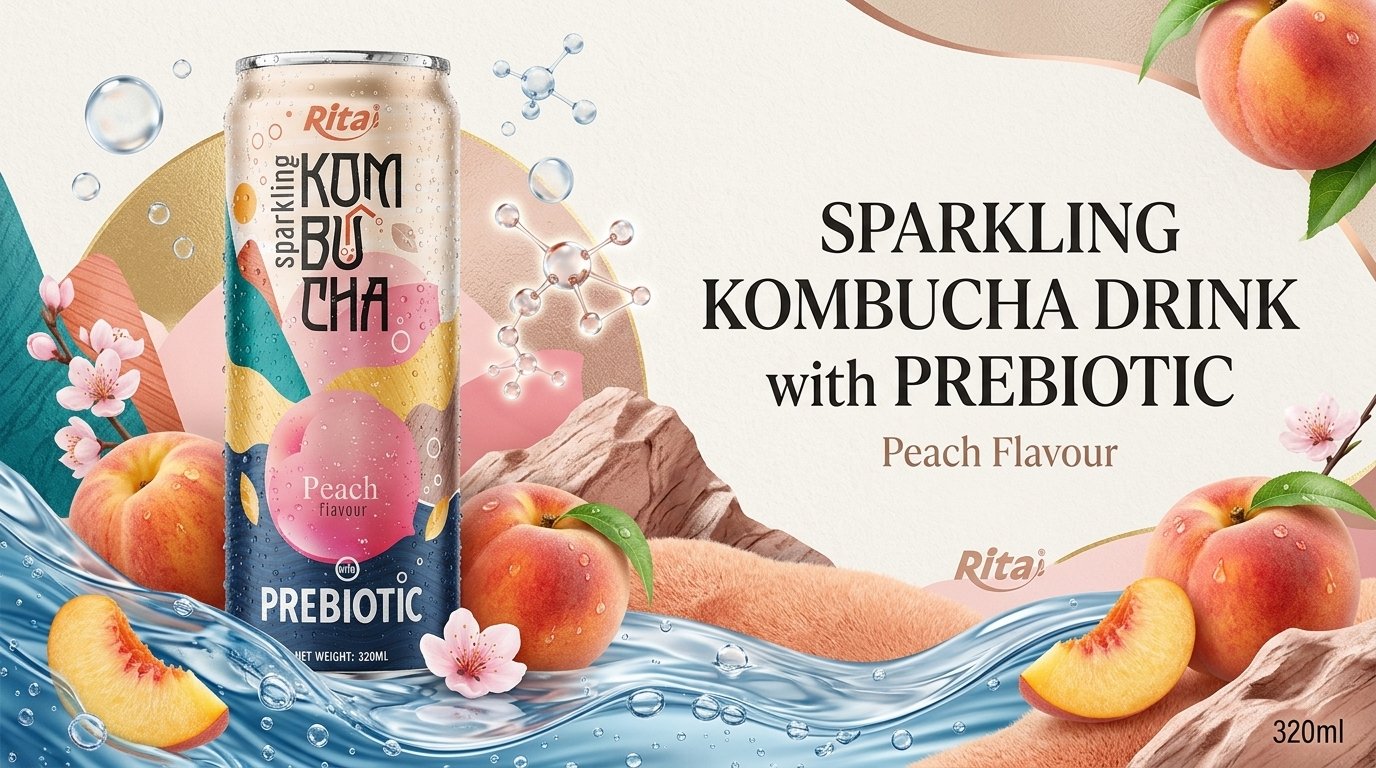
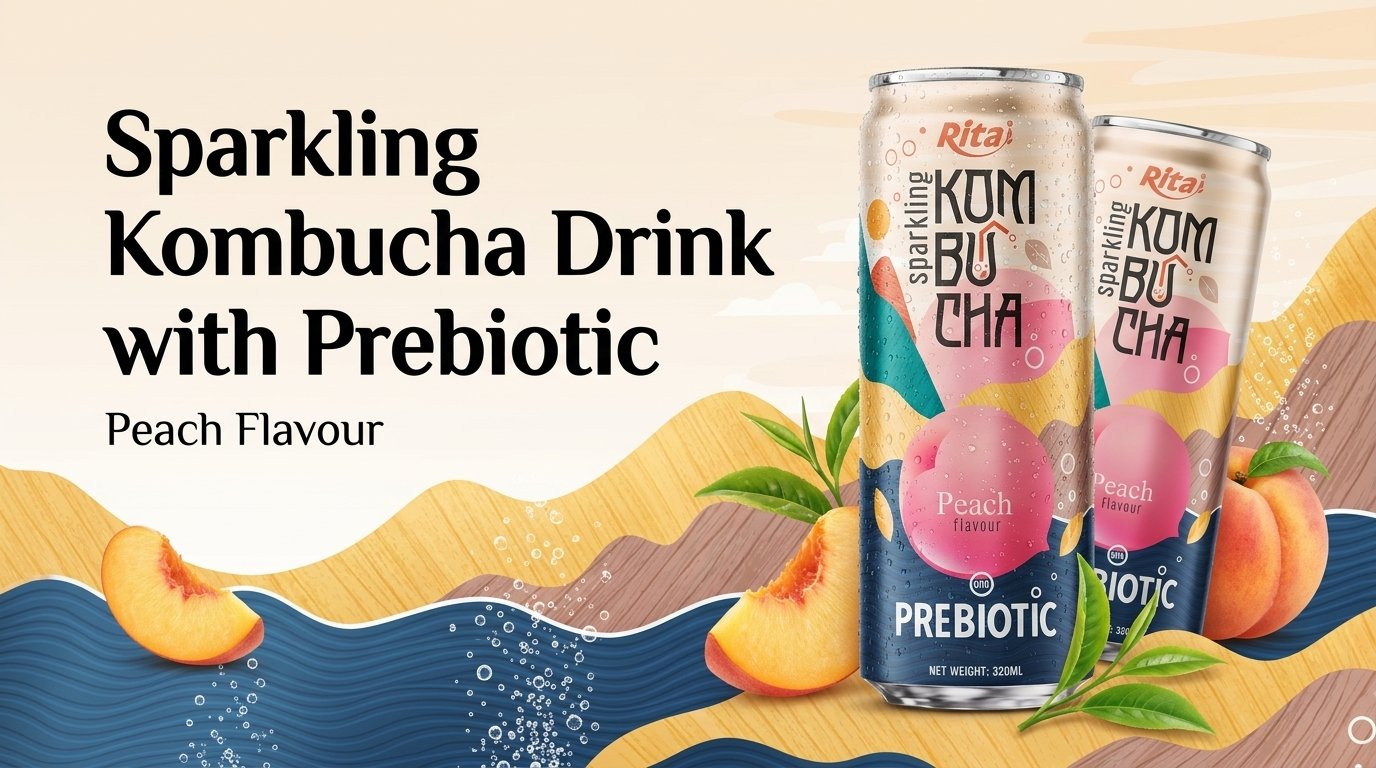
The kombucha peach flavour can is packaged in a 320 ml aluminum can, a format that offers several benefits. Aluminum cans are lightweight, stackable, and provide excellent protection against light and oxygen, which can degrade the quality of kombucha over time. The 24-month shelf life of this product is a significant advantage for distributors, as it reduces the risk of spoilage and allows for longer inventory management cycles.
From a sustainability perspective, aluminum cans are infinitely recyclable, aligning with the growing consumer demand for eco-friendly packaging. Many retailers and Horeca operators prefer cans over glass bottles due to lower breakage rates and easier handling.
Quality Certifications and Compliance
When sourcing beverages for international markets, compliance with global quality standards is non-negotiable. The kombucha peach flavour can from Rita is certified with ISO, HACCP, HALAL, FSSC, and BRC. These certifications assure buyers that the product meets stringent food safety and quality requirements. For importers in regions like the European Union or the United States, BRC certification is often a prerequisite for listing in major retail chains.
Additionally, the absence of harmful chemicals and strict quality control processes ensure that the product is safe for consumption. While we do not make health claims, it is worth noting that these certifications also facilitate smoother customs clearance and reduce the risk of regulatory delays.
OEM/ODM Services for Brand Customization
For businesses looking to launch their own brand of kombucha, OEM/ODM services are invaluable. Manufacturers like Rita offer end-to-end support, from custom formulation to packaging design. This means that a distributor can create a kombucha peach flavour can that is tailored to local taste preferences, such as adjusting the sweetness level or carbonation intensity.
The flexibility extends to packaging options as well. While the standard format is a 320 ml aluminum can, other sizes such as 200 ml, 250 ml, 330 ml, and 500 ml are available. This allows brands to target different price points and consumption occasions, from single-serve impulse buys to larger sharing formats.
Market Opportunities in Horeca and Retail Channels
The Horeca sector (hotels, restaurants, cafes) presents a significant opportunity for kombucha. Many establishments are expanding their non-alcoholic beverage menus to cater to health-conscious patrons. A kombucha peach flavour can can be served as a standalone refreshing drink or used as a mixer in mocktails. The 320 ml can size is ideal for single servings, reducing waste and simplifying inventory management.
In retail, kombucha is often placed in the chilled beverage section alongside juices and functional drinks. The eye-catching design of the can, combined with the familiar peach flavor, can drive impulse purchases. Distributors should consider offering point-of-sale displays and promotional pricing to encourage trial.
Export Logistics and Payment Terms
For international buyers, understanding the logistics is crucial. The FOB price for the kombucha peach flavour can is available upon request, and payment terms include L/C and T/T. The delivery time of 20 to 25 days after order confirmation is competitive, especially given the large production capacity. With a supply ability of 600 twenty-foot containers per month, manufacturers can accommodate both small and large orders efficiently.
Free samples are available, allowing buyers to evaluate the product quality before committing to a bulk order. This is a standard practice in the beverage industry and helps build trust between buyers and suppliers.
Newer news items:
- Exporting French Vanilla Coffee Drink from Vietnam A Complete Market Guide - 28/07/2026 06:29
- Sparkling Lemon Water With Real Fruit Slices 325ml Can Creating New Opportunities in the Global Soft Drink Market - 27/07/2026 06:27
- Strawberry Juice in Aluminum Cans — Redefining Convenience for the Global Beverage Market - 25/07/2026 06:22
- Sourcing Mix Fruit Juice from Vietnam — Quality, OEM, and Logistics - 24/07/2026 06:15
- What Importers Need to Know About Premium Real Grape Juice 10.9 Fl Oz in 2026 - 23/07/2026 06:04
Older news items:
- Bici Bici 325ml Blackcurrant Drink — How Texture and Convenience Are Reshaping the Global Beverage Export Market - 21/07/2026 08:34
- Sourcing Bici Bici Grape Drink with Nata De Coco from Vietnam OEM for Global Markets - 21/07/2026 08:31
- Sparkling Kombucha Trends and Supply Chain Opportunities for Global Beverage Importers - 21/07/2026 05:54
- How the Rita Sparkling Kombucha Pear & Ginger Flavour With Prebiotic 320ml Can is Shaping the Global Beverage Export Market - 20/07/2026 06:00
- Exploring the Rise of Sparkling Kombucha in the Global Beverage Market - 18/07/2026 05:48