Almond Milk in a Can — The OEM Opportunity for US and European Importers
Key Takeaways
- The global dairy alternative market is projected to grow significantly, with almond milk holding a major share.
- Canned packaging offers unique advantages for almond milk, including extended shelf life, portability, and a premium brand perception.
- OEM partnerships with experienced manufacturers like RITA provide a fast-track to market with customizable formulations and packaging.
- The US and European markets show strong demand for convenient, plant-based beverages, making them prime targets for canned almond milk OEM products.
- Understanding import regulations and consumer trends is crucial for successful market entry.
Why Canned Almond Milk is a Growing Trend
The plant-based milk market is no longer a niche. It is a mainstream powerhouse. Within this category, almond milk has consistently been a top performer, beloved for its mild taste and versatility.
Yet, the packaging is evolving. While traditional cartons (Tetra Pak) dominate the refrigerated shelf, the aluminum can is emerging as a powerful alternative. This shift is driven by consumer demand for on-the-go nutrition and single-serve convenience. A 330ml can is the perfect size for a lunchbox, a post-workout refreshment, or a coffee companion.
The can also offers superior product protection. It blocks light and air completely, preserving the flavor and nutritional profile of the almond milk for up to 24 months without refrigeration. This is a game-changer for supply chains, reducing spoilage and expanding distribution possibilities into vending, e-commerce, and convenience stores. For importers, this means less risk and a longer selling window.
Navigating the US Market for Canned Almond Milk
Consumer Demand and Retail Landscape
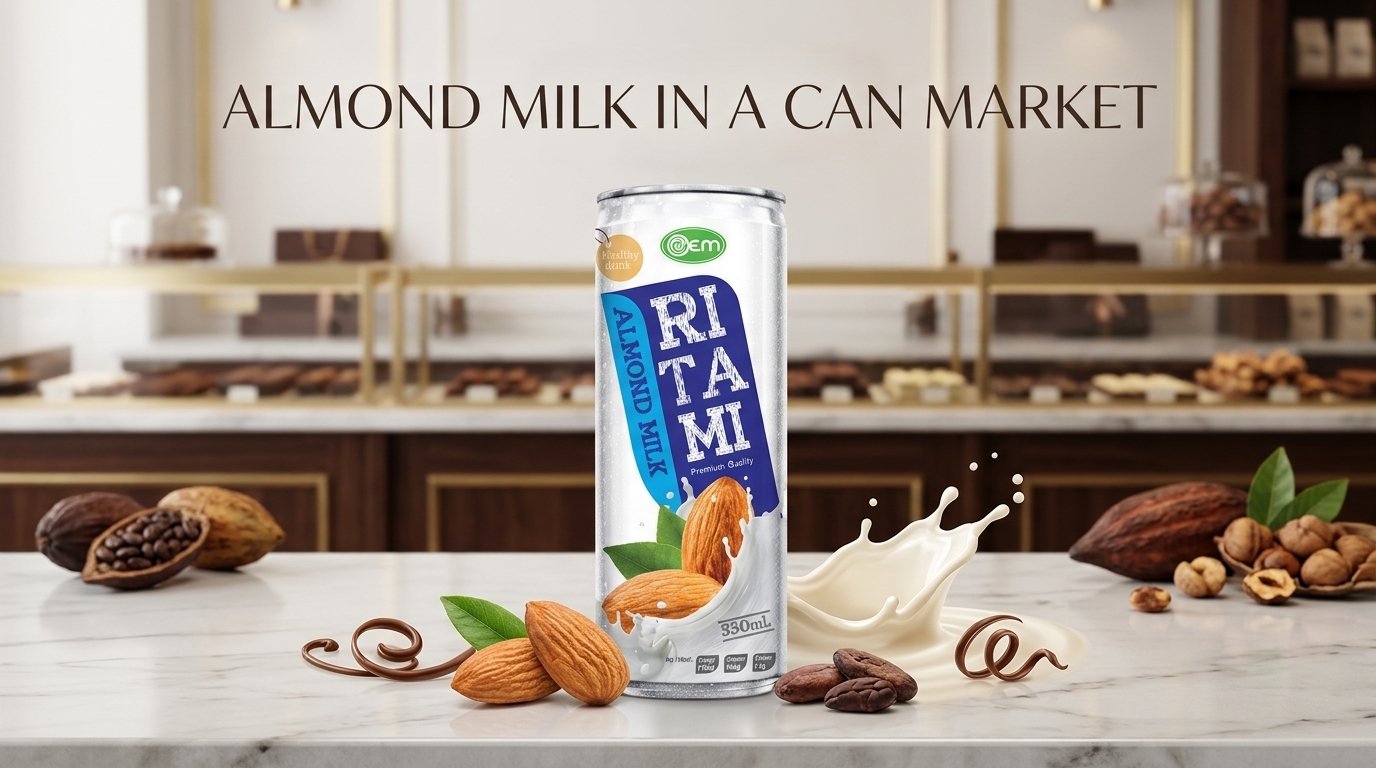
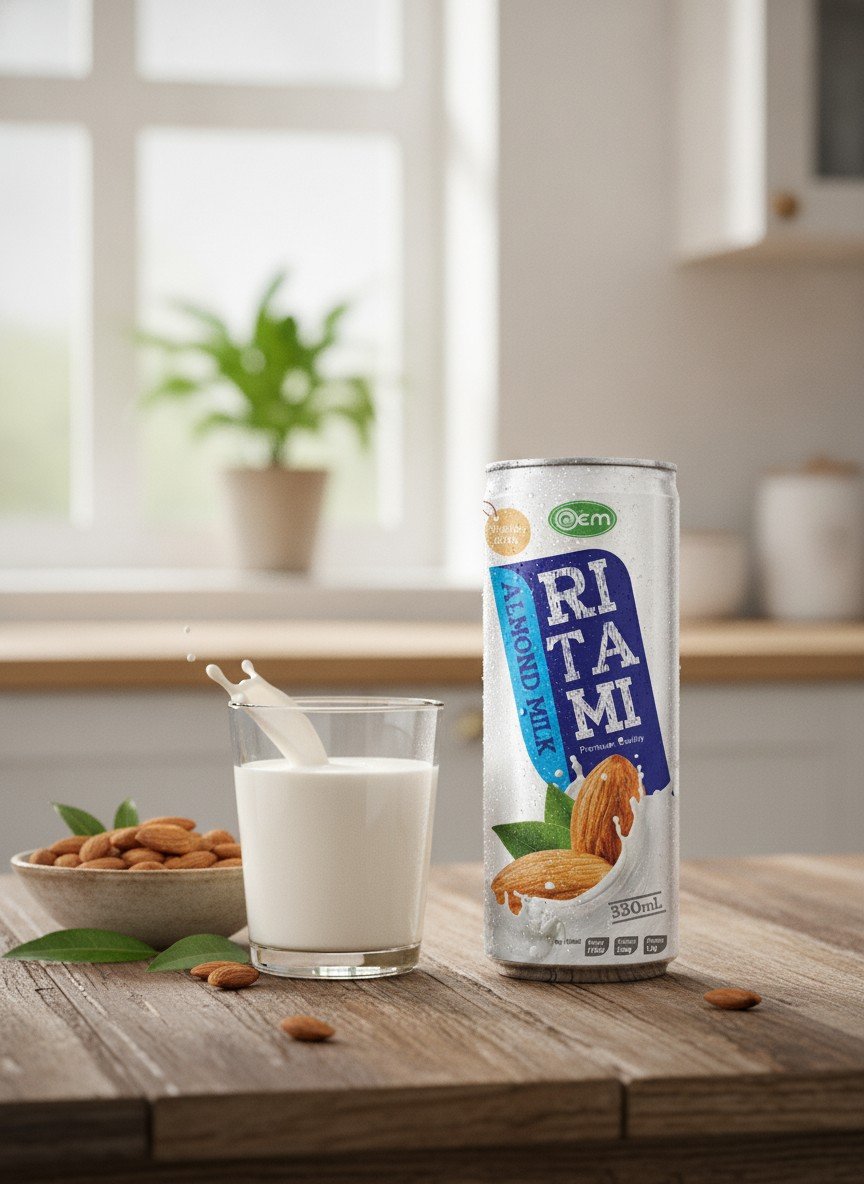
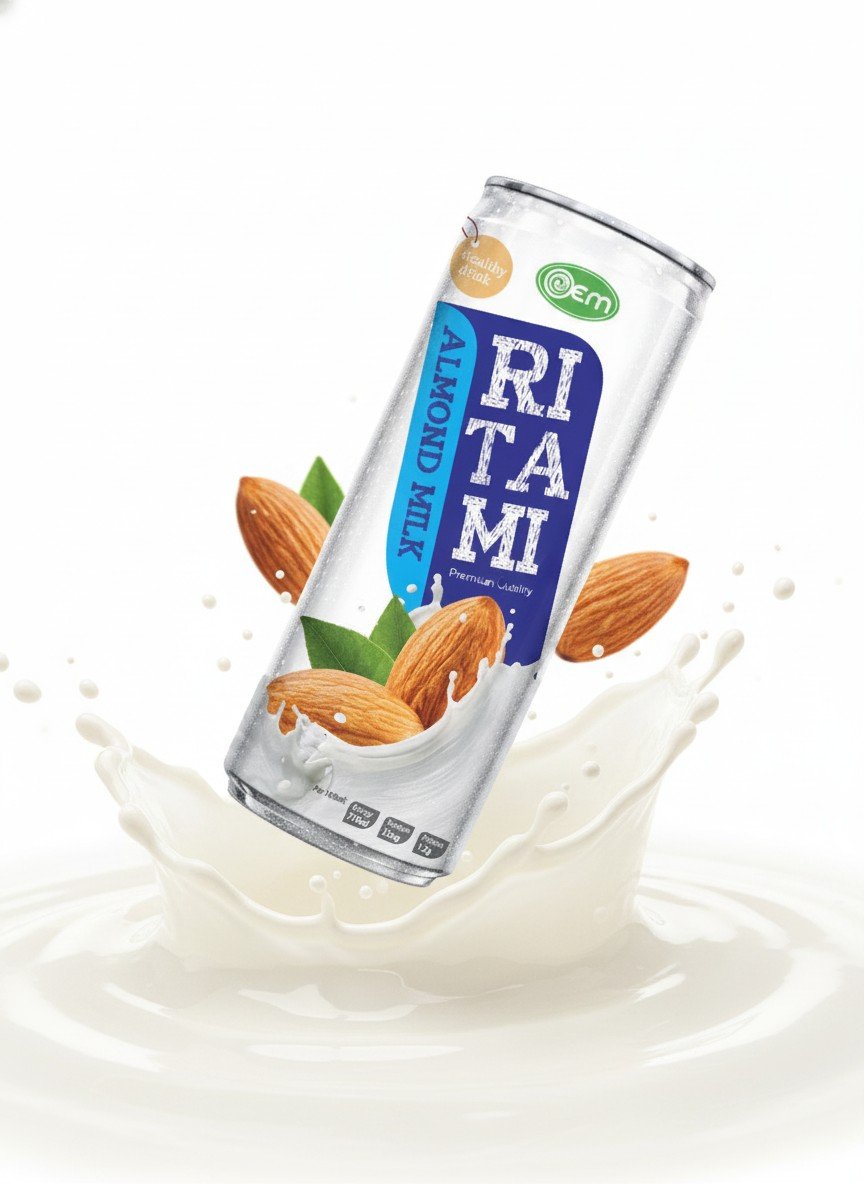
The United States is the largest market for plant-based foods. American consumers are increasingly label-conscious, looking for products with simple ingredients and recognizable names. The clean, modern design of a canned almond milk product fits this demand perfectly. The visual of a sleek can with condensation, as seen in successful product launches, communicates freshness and premium quality.
Key distribution channels include natural food stores, mainstream grocery chains, and the rapidly growing e-commerce sector. Products that highlight a "Premium Quality" positioning, as indicated by nutritional labels showing 71Kcal, 1.2g of protein, and 35mg of sodium per 100ml, appeal to the calorie-conscious and macro-tracking demographic.
For new entrants, partnering with an OEM allows for rapid product testing and launch without significant capital investment in production facilities. This is a critical strategic advantage in a fast-moving market.
Regulatory Pathways and OEM Advantages
Importing food into the US requires strict adherence to FDA regulations. This includes facility registration, prior notice for shipments, and compliance with labeling laws (Nutrition Facts panel, allergen declaration). A competent OEM partner handles these complexities. Manufacturers with certifications like ISO, HACCP, and HALAL, as seen with RITA, provide the necessary documentation and quality assurance to satisfy US import authorities.
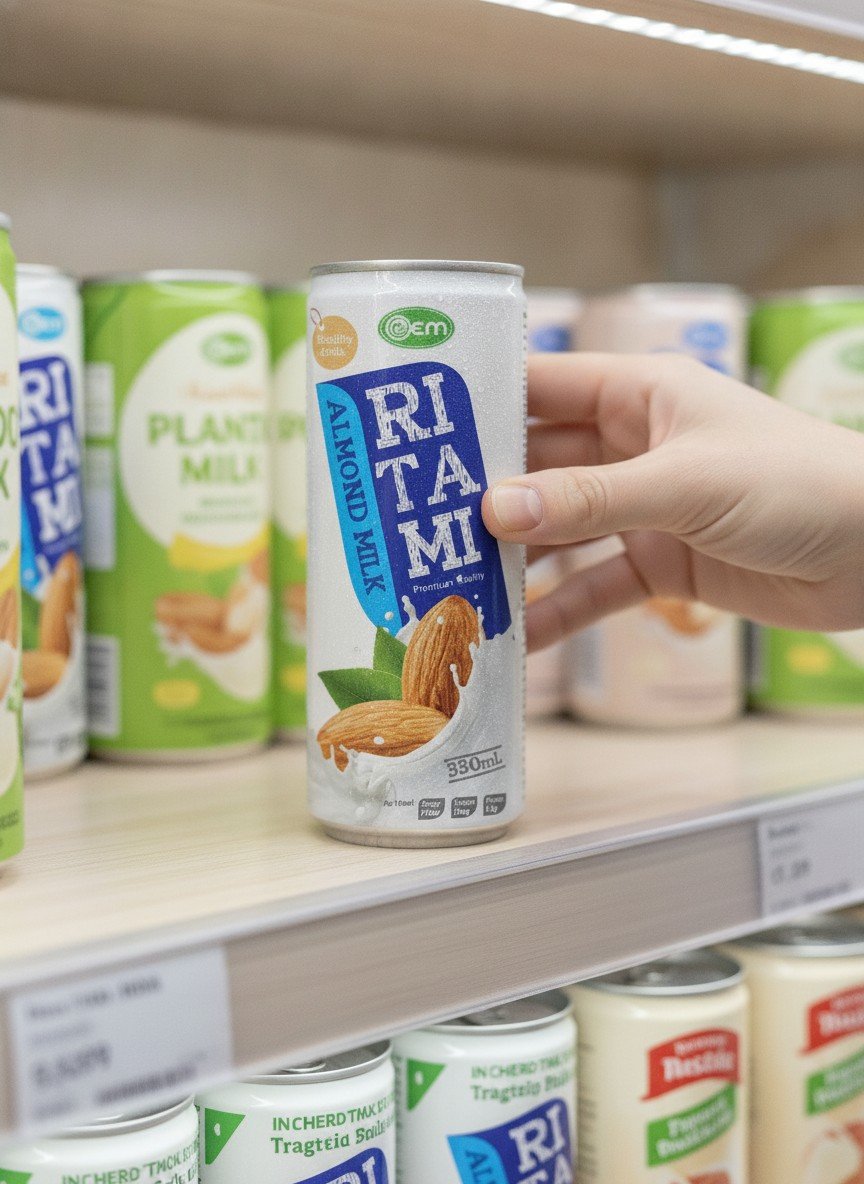
The flexibility of OEM/ODM services is invaluable. An importer can customize the sweetness level, adjust the protein content, or even add a specific flavor profile to differentiate their brand. The packaging itself can be tailored, with options for 330ml aluminum cans being a popular choice for its balance of size and shelf presence. This level of customization allows a new brand to compete directly with established players.
Opportunities in the European Beverage Market
Aligning with EU Consumer Values
The European market for plant-based beverages is mature and sophisticated. Consumers in the EU are driven by strong environmental and health values. The lightweight, infinitely recyclable nature of aluminum cans aligns perfectly with the EU's Circular Economy goals and consumer preference for sustainable packaging.
Furthermore, the trend towards "clean label" is paramount. European shoppers scrutinize ingredient lists. A product like canned almond milk OEM that can offer a short, recognizable ingredient list is well-positioned for success. The nutritional profile, with its moderate calorie count and protein content, appeals to the wellness-focused European consumer.
The convenience of a single-serve can also taps into the busy, urban lifestyle prevalent across major European cities. It offers a portable, mess-free option for consumption at work, on public transport, or during leisure activities.
Strategic Entry via OEM Partnerships
For a European distributor, establishing a new production line is cost-prohibitive. The most efficient path to market is through a strategic OEM partnership. A manufacturer like RITA, with a production capacity of 1,200 containers per month and experience exporting to 200+ countries, provides a turnkey solution.
This partnership covers everything from formulation development to final packaging. A European importer can leverage RITA's R&D capabilities to create a product that meets local taste preferences, such as a slightly less sweet version or one fortified with specific vitamins common in the EU market. The ability to produce private label products (ODM) allows the importer to build their own brand equity without owning a single machine.
The logistics are also streamlined. With a delivery time of 20-25 days after order confirmation and a minimum order quantity of one 20-foot container, it is a manageable entry point for businesses of various sizes.
How to Choose the Right OEM Partner for Canned Almond Milk
Selecting a manufacturing partner is the most critical decision for an importer. The partner's capabilities directly impact product quality, cost, and market timing.
First, evaluate certifications. For the US and EU markets, ISO 22000 or FSSC 22000, HACCP, and HALAL are essential. These certifications are not just logos; they represent a verifiable commitment to food safety and quality control. A 20-person QC lab, as part of RITA's setup, indicates a serious investment in quality assurance.
Second, assess production flexibility. Can the partner accommodate custom formulations? Can they handle different can sizes (e.g., 200ml, 330ml, 500ml)? A partner with a diverse packaging portfolio, including aluminum cans, PET bottles, and glass bottles, demonstrates a broad manufacturing capability. This is crucial for future product line expansions.
Finally, consider the partner's supply chain and export experience. A manufacturer that routinely ships to the US and Europe will have established logistics networks and understand the documentation requirements. Their track record is your best indicator of a smooth transaction. RITA's presence in over 200 countries provides this global logistical expertise.
Conclusion: Seizing the Canned Almond Milk Opportunity
The convergence of consumer trends—health, convenience, and sustainability—has created a perfect storm for canned almond milk. For importers and distributors in the US and Europe, the window of opportunity is wide open. By partnering with a capable OEM, businesses can bring a high-quality, on-trend product to market efficiently and cost-effectively. The key is to act now, leveraging the expertise of established manufacturers to build a brand that resonates with the modern consumer. Explore how a partnership with RITA can transform your product vision into a market reality by learning more about their OEM service and ODM service.
Frequently Asked Questions
What is the typical shelf life of canned almond milk?
Canned almond milk typically has a shelf life of up to 24 months when stored in a cool, dry place. The aluminum can provides an excellent barrier against light and oxygen, preserving the product's quality without the need for refrigeration until opening.
What are the minimum order quantities (MOQ) for OEM canned almond milk?
The typical MOQ for OEM canned almond milk is one 20-foot container. This volume makes it a viable entry point for new brands and distributors looking to test the market without committing to excessively large volumes.
Can I customize the flavor and nutritional profile of my private label almond milk?
Yes. OEM and ODM partners offer extensive customization. You can adjust sweetness levels, add flavors like vanilla or chocolate, and modify the nutritional content, such as protein or calcium fortification, to meet your target market's preferences.
What certifications should an OEM manufacturer have for US and EU import?
For US and EU markets, look for certifications like ISO 22000/FSSC 22000, HACCP, and HALAL. These certifications demonstrate compliance with international food safety standards and are often required by importers and retailers.
Why choose an aluminum can over a Tetra Pak for almond milk?
Aluminum cans offer superior light and oxygen protection, leading to a longer shelf life (up to 24 months). They are also 100% recyclable, highly portable, and provide a premium, modern aesthetic that appeals to on-the-go consumers.
Newer news items:
- Exporting Bici Bici 325ml Strawberry Drink With Nata De Coco from Vietnam — A Complete Market Guide - 10/08/2026 07:58
- Discover the World of Beverages with Rita at VietFood & Beverage 2026 - 08/08/2026 07:09
- Sourcing Coconut Water With Matcha Flavor from Vietnam — Quality, OEM, and Logistics - 06/08/2026 07:55
- How 350ml OEM Pet Bottle Latte Coffee Is Reshaping Consumer Preferences in the US Market - 05/08/2026 07:04
- The Rise of Premium Grape Juice in the US Market — Insights for Buyers - 04/08/2026 06:57
Older news items:
- What Beverage Importers Need to Know About Sparkling Lime Juice Drink in 2026 - 01/08/2026 06:43
- What US Importers Need to Know About Sparkling Lemon Water in 2026 - 31/07/2026 06:37
- Basil Seed Drink with Pineapple Flavor — A Global OEM Opportunity in the Functional Beverage Market - 29/07/2026 06:36
- Exporting French Vanilla Coffee Drink from Vietnam A Complete Market Guide - 28/07/2026 06:29
- Sparkling Lemon Water With Real Fruit Slices 325ml Can Creating New Opportunities in the Global Soft Drink Market - 27/07/2026 06:27