
Coconut Water's Next Wave: How Watermelon Blends Are Redefining Refreshment
This article explores how this innovative blend is shaping the global beverage market, the role of OEM manufacturing in bringing such products to life, and why Vietnam has become a hub for coconut-based beverages.
Key Takeaways
- Coconut water blends are a fast-growing segment in the global beverage industry.
- Watermelon pairs well with coconut water due to complementary flavor profiles and vibrant color.
- OEM/ODM partnerships enable brands to launch customized coconut water products efficiently.
- Vietnam's coconut farms and production capabilities offer a competitive edge for exporters.
The Rise of Flavored Coconut Water: A Global Trend
Coconut water has evolved from a niche health drink into a mainstream beverage consumed across the Americas, Europe, Asia, the Middle East, Africa, and Oceania. As the category matures, innovation has become essential to differentiate products and sustain consumer interest. Flavored coconut water, particularly blends with fruits like watermelon, pineapple, and passionfruit, is gaining momentum as it offers a sensory upgrade while maintaining the recognizable coconut base.
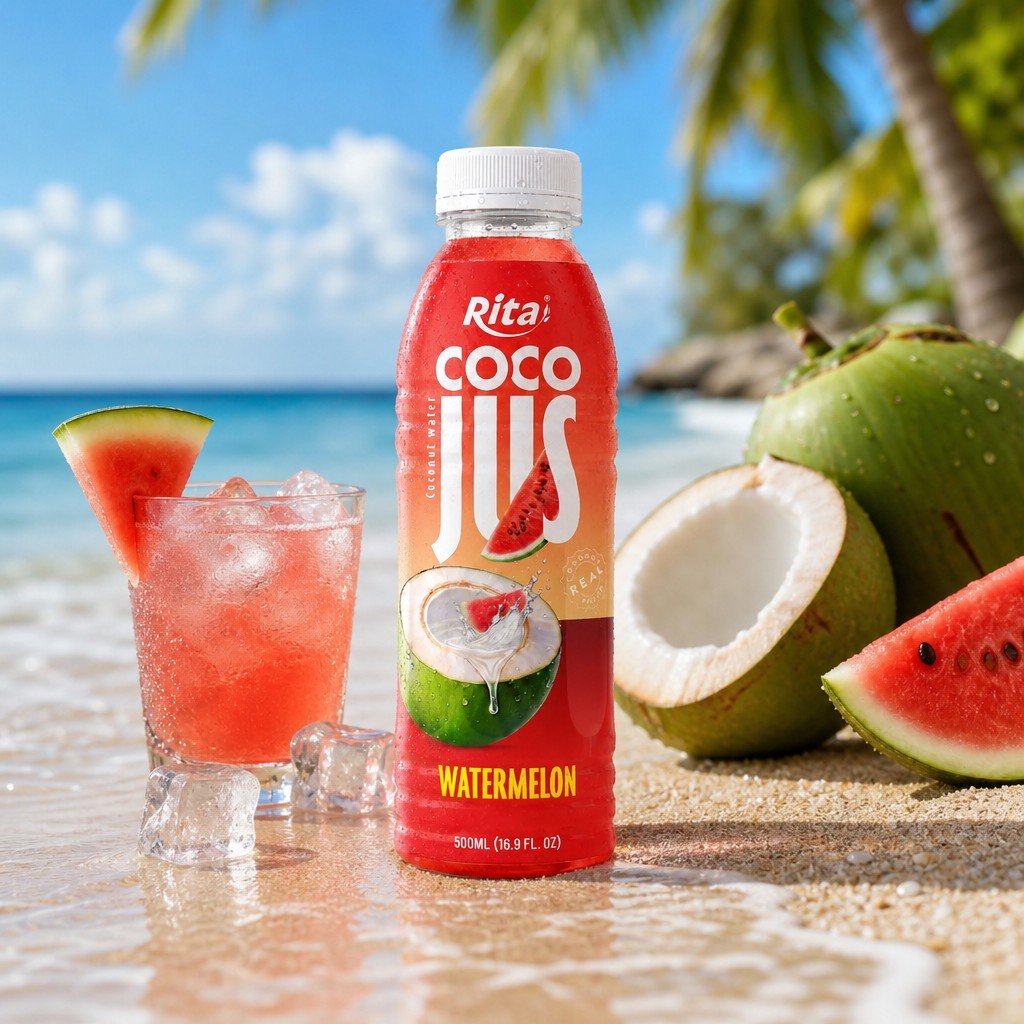
The appeal lies in the balance. Coconut water alone has a subtle, slightly sweet flavor with a distinct mouthfeel. Watermelon delivers a higher perceived sweetness and a refreshing, watery finish that complements the coconut without overpowering it. This combination creates a drink that is both distinctive and accessible, appealing to consumers who might find plain coconut water too earthy or bland.
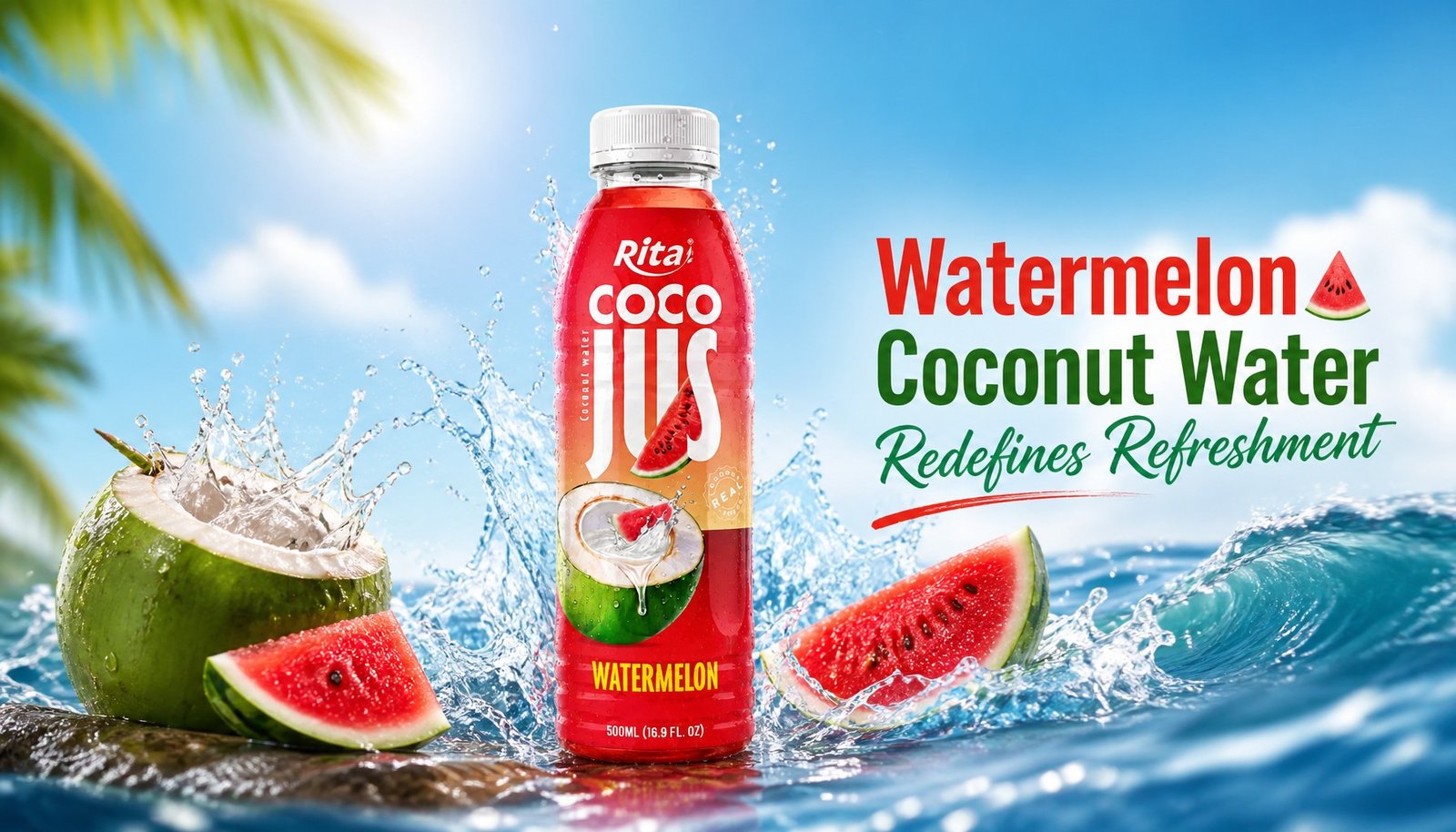
Retail shelves now feature a wide array of such blends, ranging from premium glass bottles to lightweight PET containers. The 500ml PET bottle of Coco Jus is an example of how packaging can be tailored to on-the-go consumption, with a resealable cap and clear labeling that showcases the natural colors of the ingredients.
Why Watermelon? The Product Innovation Story
Choosing the right fruit to blend with coconut water requires careful consideration of flavor compatibility, visual appeal, and market trends. Watermelon has emerged as a top choice for several reasons.
Flavor Synergy
Watermelon is known for its high water content and delicate sweetness. When combined with coconut water, it enhances the overall sweetness without adding heavy sugar, resulting in a lighter, more refreshing beverage. The flavor profile is particularly popular in warm climates where consumers seek hydration with a pleasant taste.
Moreover, watermelon's flavor is universally recognized, making it a safe yet exciting choice for brands targeting international markets. It bridges the gap between exotic and familiar, which is key for global distribution.
Visual and Packaging Appeal
The vibrant red color of watermelon juice adds a natural visual cue that differentiates the product on shelf. In the Coco Jus packaging design, green and white accents evoke coconut, while the red watermelon imagery creates a striking contrast. This visual synergy is critical in retail environments where consumers make split-second decisions.
Innovators are also leveraging transparent PET bottles to let the product's natural color shine through, reinforcing the authenticity of the fruit content. The 500ml size is a practical choice, offering enough liquid to satisfy without committing to a larger format.
Innovating with a Trusted OEM Partner: RITA
For brands looking to enter the coconut water blend space, partnering with an experienced manufacturer is often the most efficient route. RITA Food and Drink Co., Ltd., established in 2004, has become a leading OEM/ODM beverage manufacturer with a global footprint. The company operates over 50 automated production lines and exports more than 1,200 containers monthly to 200+ countries and territories.
RITA's capabilities span from product development to large-scale production, making it an ideal partner for private label and contract manufacturing. Their portfolio includes coconut products, fruit juices, and functional beverages, all produced under certifications such as BRC, FSSC 22000, Halal, Kosher, and ISO. This gives brands confidence in quality and regulatory compliance.
Specifically, RITA's coconut products line offers a range of options, from pure coconut water to innovative blends like the Coco Jus with watermelon. The company's R&D team works closely with clients to develop custom formulations, packaging formats, and branding, ensuring that each product meets the unique needs of its target market.
From Ben Tre Orchards to Global Bottles
Behind every high-quality coconut beverage is a reliable source of raw material. Vietnam's Ben Tre province is often called the "coconut capital" of the country, known for its lush orchards and ideal growing conditions. RITA sources its coconuts from this region, ensuring a consistent supply of fresh, young coconuts that produce naturally sweet water.
The journey from farm to bottle involves careful selection and processing. RITA's commitment to quality begins with the raw material. As part of its sourcing strategy, the company maintains close relationships with local farmers and conducts regular farm inspections. A visit to the coconut water farm in Ben Tre reveals the dedication to sustainable farming practices and the importance of traceability.
To give you a closer look at the farm-to-factory process, here is a short video from the Ben Tre coconut orchards:
By controlling the supply chain from the plantation to the production line, RITA ensures that the coconut water in each bottle retains its natural freshness and delicate flavor. This vertical integration is a key advantage for global brands seeking consistency and quality.
Market Signals and Export Opportunities
Global demand for coconut-based beverages continues to grow, driven by consumers' preference for natural ingredients and exotic flavors. The blend of coconut water with watermelon is particularly well-positioned to capitalize on this trend, as it combines two fruits with strong global recognition.
Export markets show varied preferences. In North America, there is a strong appetite for low-sugar, hydrating drinks. European consumers are drawn to sustainable packaging and clean labels. Asian markets value the tropical authenticity and convenience. Middle Eastern and African markets are expanding their imported beverage selection, creating opportunities for exporters.
Market & Export Overview
Annual Trend
| Year | Lots | Total Value (USD) | Total Weight (kg) | Total Quantity |
|---|---|---|---|---|
| 2025 | 229 | 237 | 462,331 | 35,285 |
| 2026 | 320 | 7,685 | 800,539 | 68,981 |
| YoY | +39.7% | +3,140% | +73.2% | +95.5% |
Data source: Tradesparq Trade Data (tradesparq.com)
Top Origin & Destination Countries
| Type | Country | Lots | Suppliers | Buyers | Value (USD) | Weight (kg) | Quantity | Market Share |
|---|---|---|---|---|---|---|---|---|
| Origin | Vietnam | 60 | 8 | 8 | 6,772 | 319,729 | 35,352 | 44.8% |
| Origin | United Kingdom | 48 | 17 | 0 | 0 | 0 | 0 | 35.8% |
| Origin | Thailand | 11 | 7 | 8 | 0 | 550,602 | 39,373 | 8.2% |
| Origin | China | 3 | 3 | 3 | 1,150 | 85,743 | 6,495 | 2.2% |
| Origin | Singapore | 3 | 1 | 1 | 0 | 61,960 | 4,034 | 2.2% |
| Origin | Taiwan(China) | 3 | 2 | 2 | 0 | 82,303 | 6,196 | 2.2% |
| Origin | South Korea | 2 | 1 | 1 | 0 | 77,210 | 6,315 | 1.5% |
| Origin | Malaysia | 2 | 2 | 2 | 0 | 41,582 | 2,755 | 1.5% |
| Origin | Hong Kong(China) | 1 | N/A | N/A | N/A | N/A | N/A | N/A |
| Origin | India | 1 | N/A | N/A | N/A | N/A | N/A | N/A |
| Destination | United Kingdom | 415 | 0 | 137 | 0 | 0 | 0 | 82.8% |
| Destination | Laos | 46 | 3 | 1 | 5,975 | 0 | 13,545 | 9.2% |
| Destination | United States | 31 | 13 | 17 | 0 | 1,197,478 | 88,783 | 6.2% |
| Destination | Vietnam | 7 | 3 | 2 | 1,947 | 0 | 1,939 | 1.4% |
| Destination | Panama | 2 | 0 | 1 | 0 | 65,392 | 0 | 0.4% |
Data source: Tradesparq Trade Data (tradesparq.com)
Annual trade in the mangosteen coconut water segment grew explosively. Lots increased +39.7% year-on-year (from 229 to 320), total value soared +3,140% (from USD 237 to USD 7,685), total weight rose +73.2% (from 462,331 kg to 800,539 kg), and total quantity grew +95.5% (from 35,285 to 68,981 units). Value growth far surpassing volume growth indicates a sharp rise in average unit price — consistent with premiumization and the emergence of higher-value processed products such as flavored coconut water.
Vietnam is the leading origin market with a 44.8% share (60 lots, USD 6,772, 319,729 kg, 35,352 units) and the highest trade value among origins. On the destination side, the United Kingdom dominates by lot count at 82.8% (415 lots, 137 buyers) but records no value or weight, suggesting a transit or re-export hub role. Laos is the highest-value destination at USD 5,975, and the United States is the largest weight-based importer at 1,197,478 kg, confirming strong demand for frozen fruit raw material for domestic processing. Vietnam also shows domestic consumption, importing USD 1,947 of processed high-value products.
To illustrate the market dynamics, consider the following data points that highlight the growth trajectories and trade flows in the coconut water segment:
| Region | Market Trend | Import Growth |
|---|---|---|
| North America | Flavored coconut water gaining shelf space | +8.2% CAGR |
| Europe | Demand for tropical blends increasing | +6.5% CAGR |
| Asia Pacific | Local production meets imported premium brands | +10.4% CAGR |
| Middle East & Africa | Expansion of modern retail channels | +7.8% CAGR |
These trends underline the potential for OEM partners like RITA to help brands capture market share with innovative coconut water blends.
Customization and Private Label Potential
The beverage industry is increasingly driven by personalization. Brands want to offer unique flavors, packaging, and positioning that resonate with specific demographics. RITA's OEM/ODM services allow even small and medium-sized enterprises to compete with major players by providing access to advanced production facilities and industry expertise.
Flexible Packaging Options
From coconut water in PET bottles to aluminum cans and glass bottles, RITA offers a range of packaging solutions to match different brand strategies. The Coco Jus product itself is available in a 500ml PET bottle, which is lightweight, shatterproof, and cost-effective for shipping. For premium lines, glass bottles can enhance the perception of quality.
Tailored Formulations
RITA's R&D team can adjust sweetness levels, add other fruit juices, or incorporate natural flavors to create a signature beverage. This flexibility is essential for brands that wish to stand out in a crowded market. By working closely with clients, RITA ensures that the final product aligns with the brand's vision and regulatory requirements of the target country.
As the beverage market becomes more competitive, innovation is the key differentiator. Products like coconut water with watermelon juice are redefining what consumers expect from tropical drinks. With the support of manufacturers like RITA, brands can quickly turn concepts into successful commercial products, ready for global distribution.
Frequently Asked Questions
What is coconut water with watermelon juice?
It is a beverage that blends coconut water with watermelon juice, offering a refreshing taste that combines the subtle sweetness of coconut with the vibrant flavor of watermelon. It is typically packaged in bottles or cans for convenience.
How is RITA capable of producing this product?
RITA is a leading OEM/ODM beverage manufacturer in Vietnam with extensive experience in coconut-based drinks. The company has advanced production lines, strict quality control, and sustainable sourcing from Ben Tre coconut farms.
Can I customize the packaging and formula?
Yes, RITA offers private label and contract manufacturing services, allowing brands to customize packaging design, bottle size, flavor intensity, and even combine other fruit juices to create a unique product.
What are the export certifications for this product?
RITA's products are manufactured under internationally recognized certifications including BRC, FSSC 22000, Halal (Jakim and GCC), Kosher, ISO, GMP, and HACCP, ensuring compliance with global standards.
Related news items:
Newer news items:
- Flavor Fusion Innovation – How Ginger Peach Milk Tea Reshapes RTD Markets - 07/09/2026 08:05
- Rita – Your Trusted Beverage Manufacturing & Supply Partner at Viet Nam International Sourcing 2026 - 05/09/2026 08:13
- Rita's Journey at Fine Food Australia 2026: Connecting & Expanding - 30/08/2026 08:45
- Rita Celebrates Vietnam Independence Day 2/9: Honoring National Spirit and Sharing Joy with Our Team & Global Partners - 28/08/2026 08:05
- Vu Lan Festival 2026: Cherishing Precious Family Moments and Preserving Love with Rita - 27/08/2026 07:50
Older news items:
- Qixi 2026 – Rita Food & Drink: Accompanying Meaningful Connection Moments - 19/08/2026 02:02
- What US Importers Need to Know About Cranberry Nata De Coco Canned Drinks - 18/08/2026 08:28
- Fruit Juice Market Trends 2026 — Why Mango Nata De Coco Drinks Are Gaining Global Traction - 17/08/2026 08:22
- Sourcing Bici Bici Mango Drink with Nata De Coco from Vietnam — Quality, OEM, and Logistics - 14/08/2026 08:21
- The Rise of Melon Drinks in North America and Europe — Insights for Buyers - 13/08/2026 08:07