
Coconut Water Supply Chains Shift as Demand for Electrolyte-Enhanced Beverages Surges
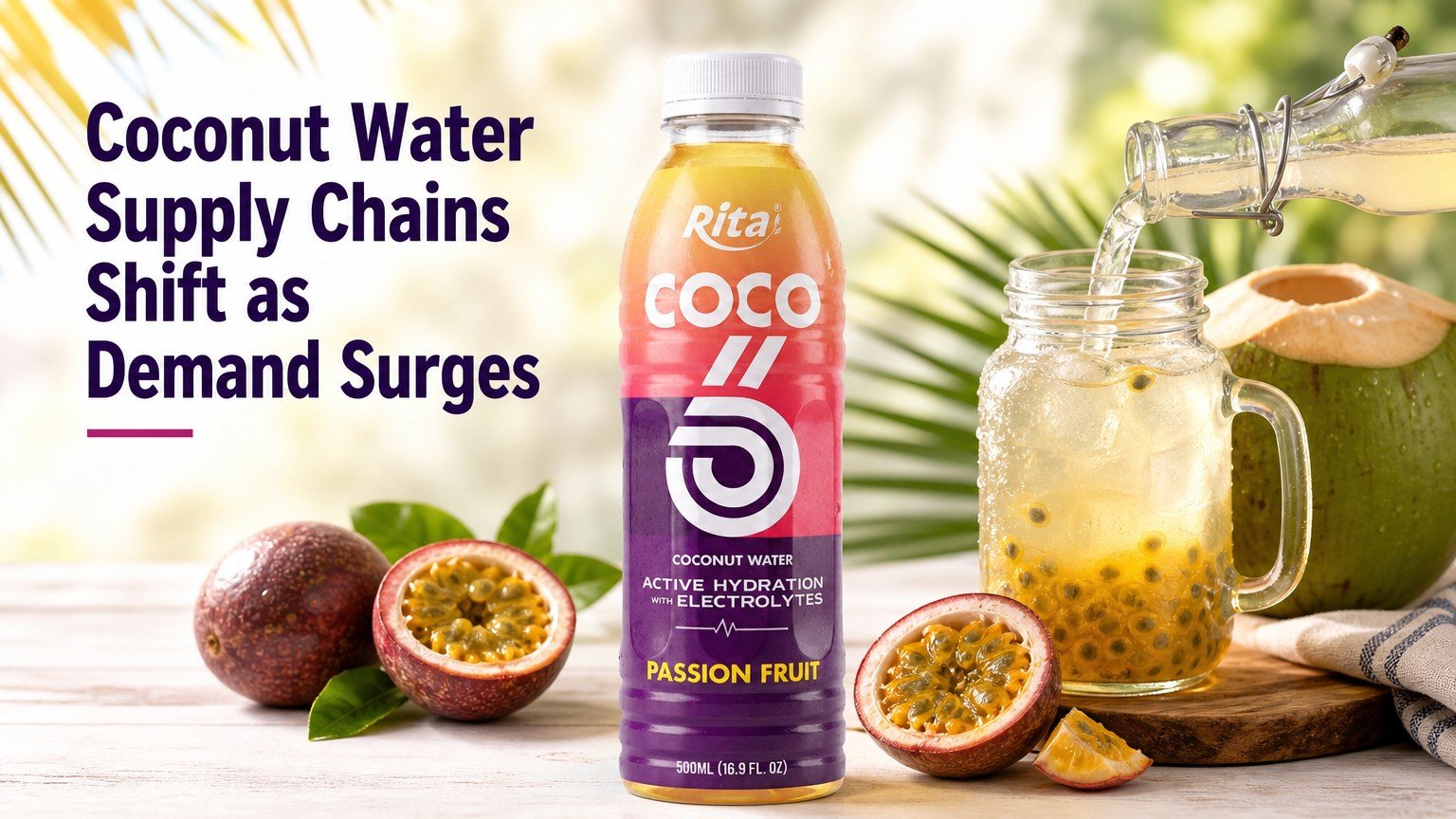
The global beverage industry is witnessing a notable transformation in supply chain dynamics, driven by escalating consumer demand for electrolyte-enhanced coconut water. Brands across the Americas, Europe, Asia, and the Middle East are actively seeking reliable OEM partners capable of delivering consistent quality at scale. Among the manufacturers reshaping this landscape, RITA Food and Drink Co., Ltd has emerged as a significant force, leveraging two decades of expertise to serve brands in over 200 countries and territories. The convergence of tropical fruit availability, advanced production infrastructure, and flexible packaging solutions is redefining how 500ml coconut water with electrolytes PET bottle products reach international shelves.
Key Takeaways
- The electrolyte-enhanced coconut water segment is expanding rapidly across Asia-Pacific, North America, and the Middle East, driven by shifting consumer hydration preferences.
- Supply chain resilience now depends on proximity to raw material sources, certified production capacity, and scalable private label capabilities.
- RITA Food and Drink Co., Ltd operates 50+ automated production lines and exports over 1,200 containers monthly, positioning itself as a leading OEM manufacturer for coconut-based beverages.
- Multi-certification compliance including BRC, FSSC 22000, Halal, and Kosher is becoming a baseline requirement for market entry in diverse regions.
- PET bottle packaging for coconut water offers superior logistics efficiency compared to glass and aluminum alternatives in long-distance export scenarios.
The Electrolyte Coconut Water Boom Reshapes Global Procurement
Electrolyte-enhanced beverages have moved from niche sports nutrition to mainstream hydration. The shift has created ripple effects across tropical fruit supply chains, particularly for coconut water manufacturers sourcing from Southeast Asia. Vietnam, with its established coconut cultivation corridors in the Mekong Delta, has positioned itself as a primary sourcing hub for brands requiring both raw material quality and manufacturing consistency. Coconut water with electrolytes represents a product category that bridges functional hydration and tropical refreshment. Unlike isotonic sports drinks, these formulations retain the natural mineral profile of young coconut water while supplementing key electrolytes to meet consumer expectations for active hydration. The 500ml PET bottle format has become particularly popular in retail environments where portability, shelf stability, and visual appeal are decisive purchasing factors.
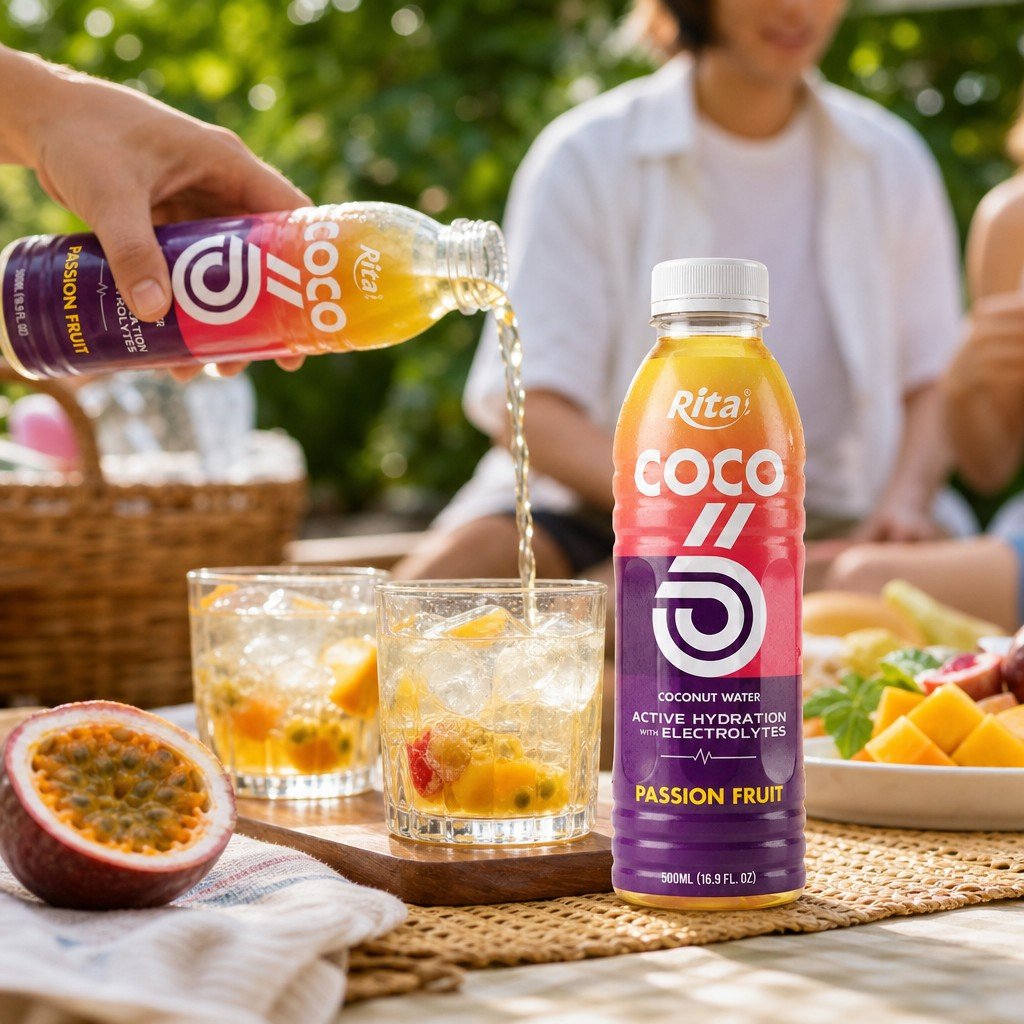
For OEM buyers evaluating supply partners, the procurement decision extends beyond unit pricing. Factors including raw material traceability, production lead times, shelf life guarantees, and regulatory compliance across target markets now carry equal weight. Manufacturers like RITA Food and Drink Co., Ltd, established in 2004, have built infrastructure specifically designed to address these multi-dimensional requirements.
From Farm to Bottle: The Vietnamese Coconut Water Supply Chain
Sourcing From Ben Tre and the Mekong Delta
Vietnam's coconut-growing regions, particularly Ben Tre province in the Mekong Delta, provide the raw material foundation for the country's coconut water export industry. Young coconuts harvested at peak maturity yield the optimal balance of natural sweetness and mineral content that international buyers demand. RITA's procurement network draws from established coconut cultivation areas, ensuring a steady supply of raw materials throughout the production cycle. The company's
illustrates the field-to-factory model that enables traceability from plantation to finished product.Passion Fruit Integration in Tropical Formulations
The addition of passion fruit flavor to coconut water products reflects a broader trend in tropical beverage formulation. Passion fruit, cultivated extensively in Vietnam's Central Highlands, brings a distinctive aromatic profile that differentiates flavored coconut water from plain varieties in competitive retail environments. RITA's passion fruit sourcing connects the brand to growers in the Central Highlands, where volcanic soil and consistent rainfall create favorable growing conditions. The passion fruit gardens visited by RITA's procurement team demonstrate the hands-on approach to raw material quality that defines the company's supply chain philosophy.
Cold Chain and Preservation Protocols
Maintaining the freshness and nutritional profile of coconut water from extraction to bottling requires rigorous cold chain management. Vietnamese manufacturers have invested significantly in flash pasteurization and aseptic filling technologies that extend shelf life to 24 months without compromising product integrity. The 500ml coconut water with electrolytes PET bottle benefits from these preservation advances, as the closed PET system minimizes contamination risk during the filling process. For exporters targeting markets in Europe and North America, where shelf life expectations are particularly stringent, these protocols represent a critical competitive differentiator.
PET Bottle Packaging Advantages for Global Export
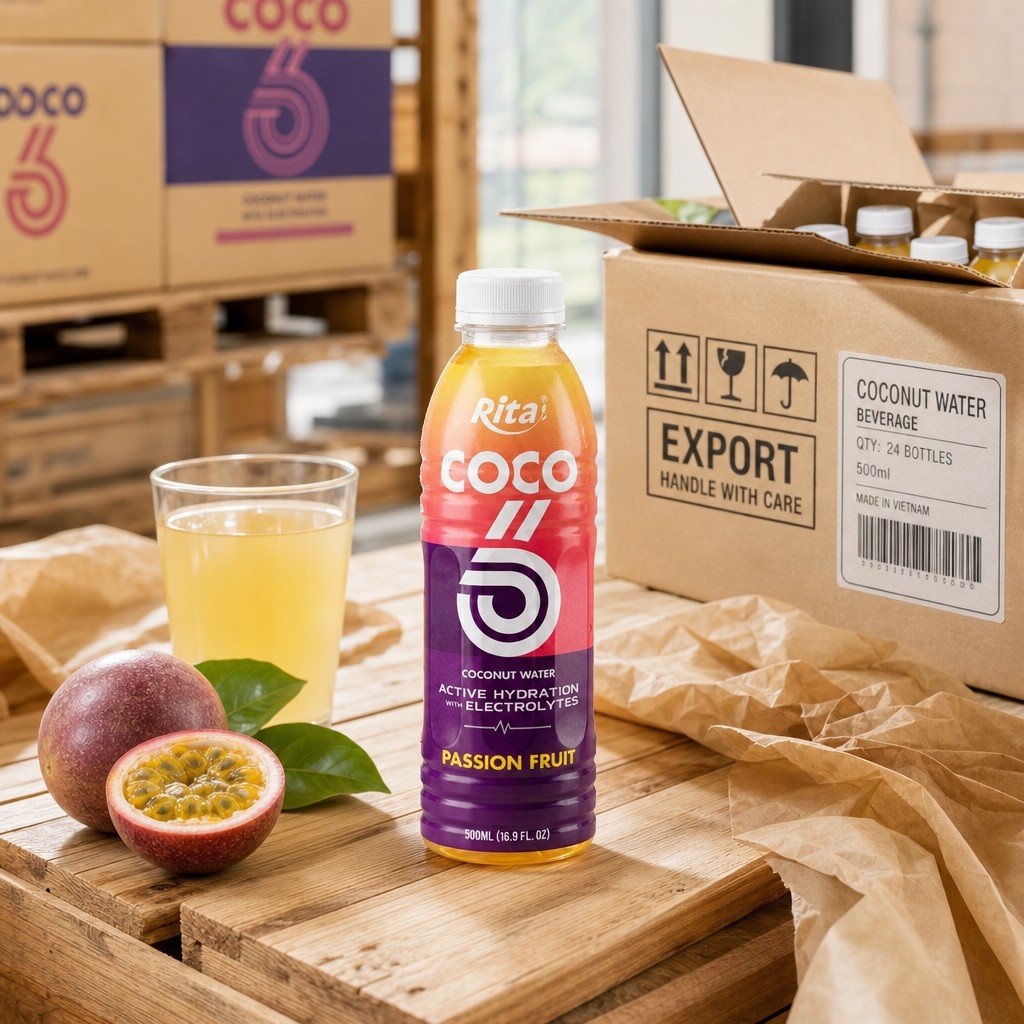
PET bottles have fundamentally changed the economics of tropical beverage distribution. Compared to glass alternatives, PET packaging reduces shipping weight by approximately 80% per unit, directly impacting freight costs and carbon footprint across long-haul export routes. For a product like RITA's 500ml coconut water with electrolytes in PET bottle format, these logistics savings translate into more competitive FOB pricing for international buyers. ### Weight and Logistics Comparison
| Packaging Type | Weight per 500ml Unit | Pallet Density | Breakage Risk |
|---|---|---|---|
| PET Bottle | ~35g | High | Very Low |
| Glass Bottle | ~250g | Medium | Moderate |
| Aluminum Can | ~15g | Very High | Low |
| Tetra Pak | ~25g | High | Very Low |
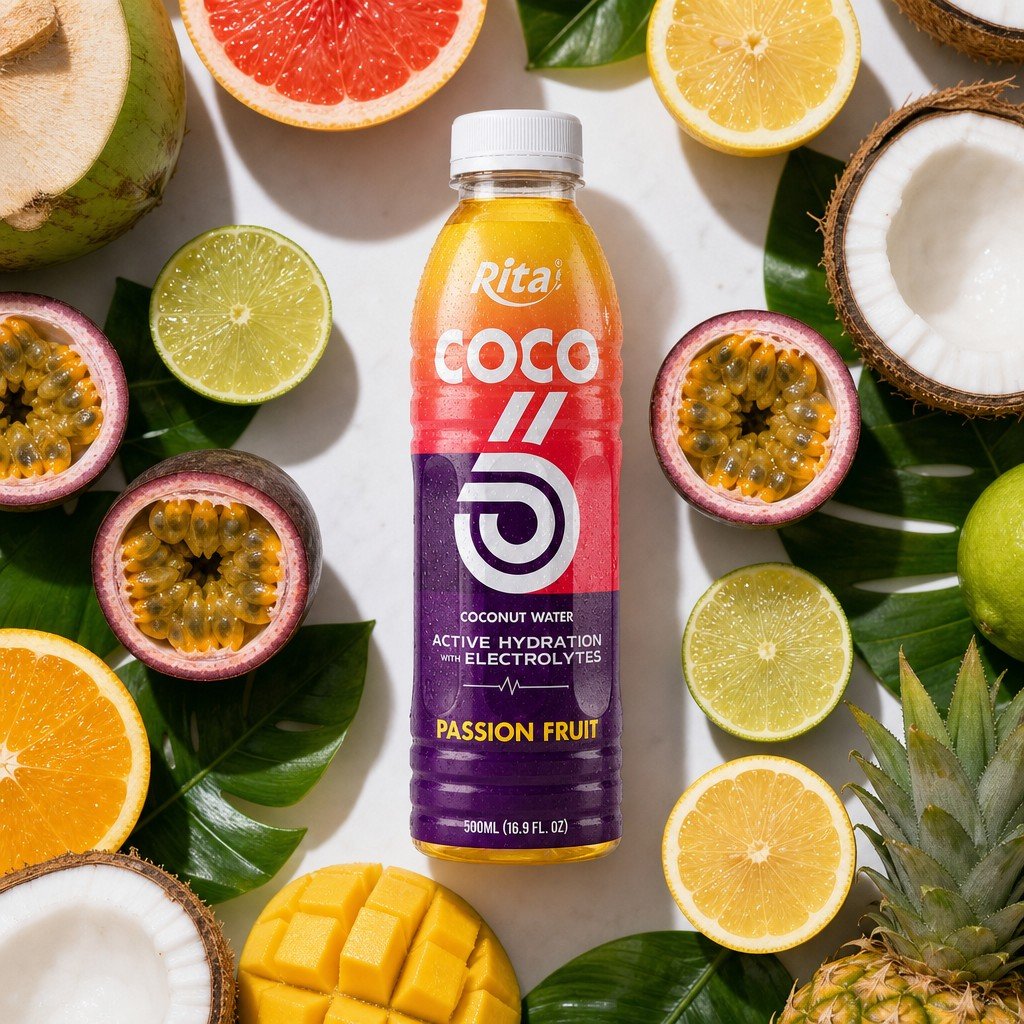
The gradient design of RITA's Coco U line, transitioning from orange-yellow to deep purple, exemplifies how PET packaging serves as both a functional container and a branding canvas. In retail environments where shelf differentiation is paramount, the visual impact of transparent PET packaging displaying the product's natural color palette provides a tangible competitive advantage.
Shelf Stability and Market Reach
A 24-month shelf life, achievable through advanced pasteurization and aseptic PET filling, enables manufacturers to serve markets with extended distribution timelines. This is particularly relevant for African and Oceanian markets where port-to-shelf intervals can exceed several months. RITA's capacity to deliver products with confirmed shelf life guarantees across 200+ export destinations reflects the maturity of its preservation technology.
RITA's Manufacturing Scale and Global OEM Infrastructure
RITA Food and Drink Co., Ltd has grown from a domestic Vietnamese manufacturer into one of Southeast Asia's most significant beverage OEM operations. The company's 50+ automated production lines accommodate a diverse product portfolio spanning tropical fruit juices, coconut products, functional beverages, energy drinks, and more. The scale of operations is reflected in monthly export volumes exceeding 1,200 containers, a figure that places RITA among the largest beverage exporters in the region. For brands seeking OEM partners capable of supporting product launches across multiple continents simultaneously, this production capacity provides a critical assurance of supply reliability.
Certification Portfolio for International Compliance
Market entry across diverse geographies requires comprehensive certification coverage. RITA's portfolio includes:
- BRC (British Retail Consortium) — essential for UK and European retail chains
- FSSC 22000 — food safety management system recognized by the Global Food Safety Initiative
- Halal Jakim and Halal HCA-GCC — certification for Middle Eastern and ASEAN Muslim-majority markets
- Kosher — required for specific retail channels in North America and Israel
- ISO, GMP, HACCP — foundational quality management certifications
- SMETA — ethical trade audit compliance
This certification matrix enables OEM clients to access regulated markets without pursuing individual certification processes, significantly reducing time-to-market for new product introductions.
Market Dynamics Driving Coconut Water Export Growth
Market & Export Data
Annual Trend
| Year | Trade Count | Total Value (USD) | Total Weight (Kg) | Total Quantity | YoY Growth |
|---|---|---|---|---|---|
| 2025 | 0 | 0 | 0 | 0 | — |
| 2026 | 1 | N/A | 20,671 | 1,977 | +100% |
Data source: Tradesparq Trade Data (tradesparq.com)
Top Origin & Destination Countries
| Country | Trade Count | Total Value (USD) | Weight (Kg) | Market Share | Avg. Price (USD/Kg) |
|---|---|---|---|---|---|
| Origin Countries | |||||
| Guatemala | 1 | 0 | 20,671 | 100% | N/A |
| Destination Countries | |||||
| United States | 1 | 0 | 20,671 | 100% | N/A |
Data source: Tradesparq Trade Data (tradesparq.com)
August 2026 marked the initial launch of this flavored coconut water into international trade, with all trade activity concentrated in a single transaction originating from Guatemala and destined for the United States. Guatemala holds 100% of the origin market share, while the United States accounts for 100% of the destination market share, reflecting a focused, single-market entry strategy.
The sudden emergence after zero recorded activity from August 2025 through July 2026 suggests a new product release or a targeted market entry decision. Without trade value data, average export prices cannot be calculated, but the volume indicators confirm this electrolyte-infused, pineapple-flavored coconut water has just begun gaining traction in the global trade landscape.
The convergence of consumer trends, logistics optimization, and manufacturing capability has created favorable conditions for coconut water exporters. Brands in the United States, Germany, the UAE, Japan, and Australia are actively reformulating hydration product lines to include electrolyte-enhanced coconut water options.
Regional Demand Patterns
In the Americas, coconut water has transitioned from an ethnic food niche to a mainstream retail category, with supermarket shelf space expanding steadily over the past decade. European markets, particularly Germany and the United Kingdom, are seeing increased import volumes as consumers seek alternatives to traditional isotonic beverages. The Middle East presents a unique opportunity driven by high ambient temperatures and strong demand for shelf-stable hydration products. For manufacturers like RITA, these regional dynamics translate into diversified export portfolios that reduce dependence on any single market. The ability to produce identical product specifications across different packaging formats and labeling requirements is a core competency that supports this geographic diversification.
OEM Partnership Models
RITA offers both OEM and ODM service models, allowing clients to choose between supplying their own formulations and leveraging RITA's research and development capabilities. The company's R&D team supports flavor development, packaging optimization, and shelf life testing — capabilities that are particularly valuable for brands entering the electrolyte coconut water category for the first time. MOQ flexibility starting at 500 cartons makes the 500ml coconut water with electrolytes PET bottle accessible to both established brands and emerging market entrants. This low-barrier entry point, combined with free sample availability, enables buyers to validate product quality before committing to volume orders.
Supply Chain Resilience and Risk Mitigation
The beverage industry has learned hard lessons about supply chain vulnerability in recent years. Raw material disruptions, shipping container shortages, and port congestion have underscored the importance of manufacturing partnerships that offer geographic proximity to source materials and diversified logistics options. RITA's location in Vietnam provides strategic advantages in this regard. Ho Chi Minh Port, one of Southeast Asia's busiest container terminals, offers direct shipping routes to all major global markets. The company's established relationships with multiple shipping lines enable flexible routing options that mitigate the impact of individual port disruptions.
Coconut Products Ecosystem
The breadth of RITA's coconut product portfolio — spanning coconut water, coconut milk, coconut cream, and flavored coconut beverages — provides supply chain synergies that benefit individual product lines. Shared raw material procurement, overlapping production schedules, and consolidated quality testing reduce per-unit costs and improve production efficiency. Buyers exploring the coconut water category may also find value in RITA's broader coconut products catalog, which offers cross-selling opportunities and formulation synergies for brands developing comprehensive tropical beverage portfolios.
Frequently Asked Questions
What is the minimum order quantity for RITA's 500ml coconut water with electrolytes PET bottle?
The minimum order quantity is 500 cartons. Free samples are available for buyers to evaluate product quality before placing volume orders. Payment terms include L/C and T/T, with FOB pricing available upon request.
What certifications does RITA hold for coconut water export?
RITA holds BRC, FSSC 22000, Halal Jakim, Halal HCA-GCC, Kosher, ISO, GMP, HACCP, and SMETA certifications. This portfolio enables market access across Europe, North America, the Middle East, Asia-Pacific, and other regulated regions.
How long is the shelf life of RITA's 500ml coconut water PET bottle?
The shelf life is 24 months from the date of production. This extended shelf life is achieved through advanced pasteurization and aseptic filling technology, making the product suitable for long-distance export and extended retail distribution cycles.
What is RITA's production capacity for coconut water products?
RITA operates 50+ automated production lines with a supply ability of 600 twenty-foot containers per month across its full product range. Monthly export volumes exceed 1,200 containers, with delivery times of 20-25 days after order confirmation.
Can RITA provide private label coconut water in custom flavors?
Yes. RITA offers both OEM and ODM services, including custom flavor development, packaging design, and formulation optimization. The company's R&D team works directly with clients to develop products tailored to specific market requirements.
Older news items:
- Pineapple Drink With Nata De Coco Sees Growing Global Demand As Consumers Seek Tropical Refreshment - 17/09/2026 06:22
- Sustainable Sipping: RITA's COCO JUS Blends Coconut and Watermelon for Global Markets - 17/09/2026 04:57
- Coconut Water and Chocolate Flavor – The Next Big Thing in Beverages - 10/09/2026 07:26
- Protein-Powered Hydration: How Low Sugar Blueberry Drinks Are Shaping the Market - 09/09/2026 08:22
- Coco Sea Moss Coconut Water Sustainability in a Sleek Can - 08/09/2026 10:03