
Blackcurrant Beverages Gain Momentum as Wellness Drinks Reshape Global Soft Drink Markets
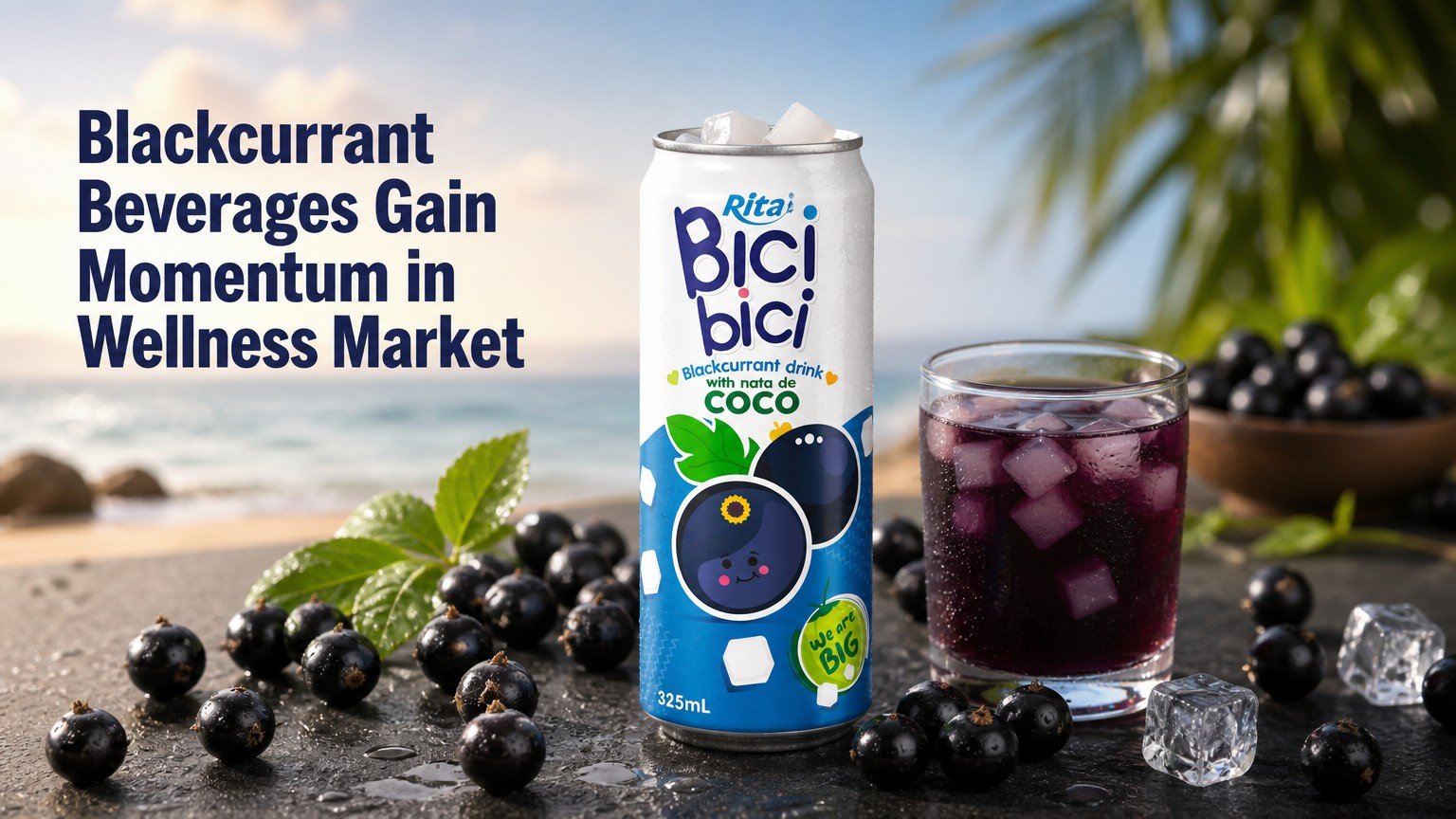
The global beverage landscape is undergoing a notable transformation, with consumers increasingly gravitating toward drinks that marry indulgent flavor with sophisticated formulations. Among the categories gaining traction, blackcurrant beverage products stand out for their distinctive tart flavor profile, deep color, and alignment with evolving wellness-conscious consumption patterns. For private label brands and distributors seeking to capitalize on this shift, partnering with a capable OEM manufacturer is essential — and Vietnamese producer RITA Food and Drink Co., Ltd. is positioning itself at the forefront of this opportunity with its Bici Bici 325ml Blackcurrant Drink with Nata De Coco.
This article examines the market forces driving blackcurrant-based beverages into the mainstream, the strategic significance of textural innovation through nata de coco integration, and the manufacturing capabilities that enable global brands to bring these products to market efficiently.
Key Takeaways
- The global blackcurrant beverage segment is expanding as consumers seek distinctive flavors with perceived wellness alignment
- Nata de coco integration adds a textural dimension that differentiates products in a crowded soft drink market
- RITA's 50+ automated production lines and 200+ country export footprint make it a scalable OEM partner for blackcurrant drink development
- Halal, Kosher, and BRC certifications open access to high-demand markets in the Middle East, Europe, and North America
- Wide-opening can formats support both direct consumption and cocktail/mocktail mixing, broadening consumer appeal
Why Blackcurrant Is Emerging as a Premium Flavor in the Global Beverage Market
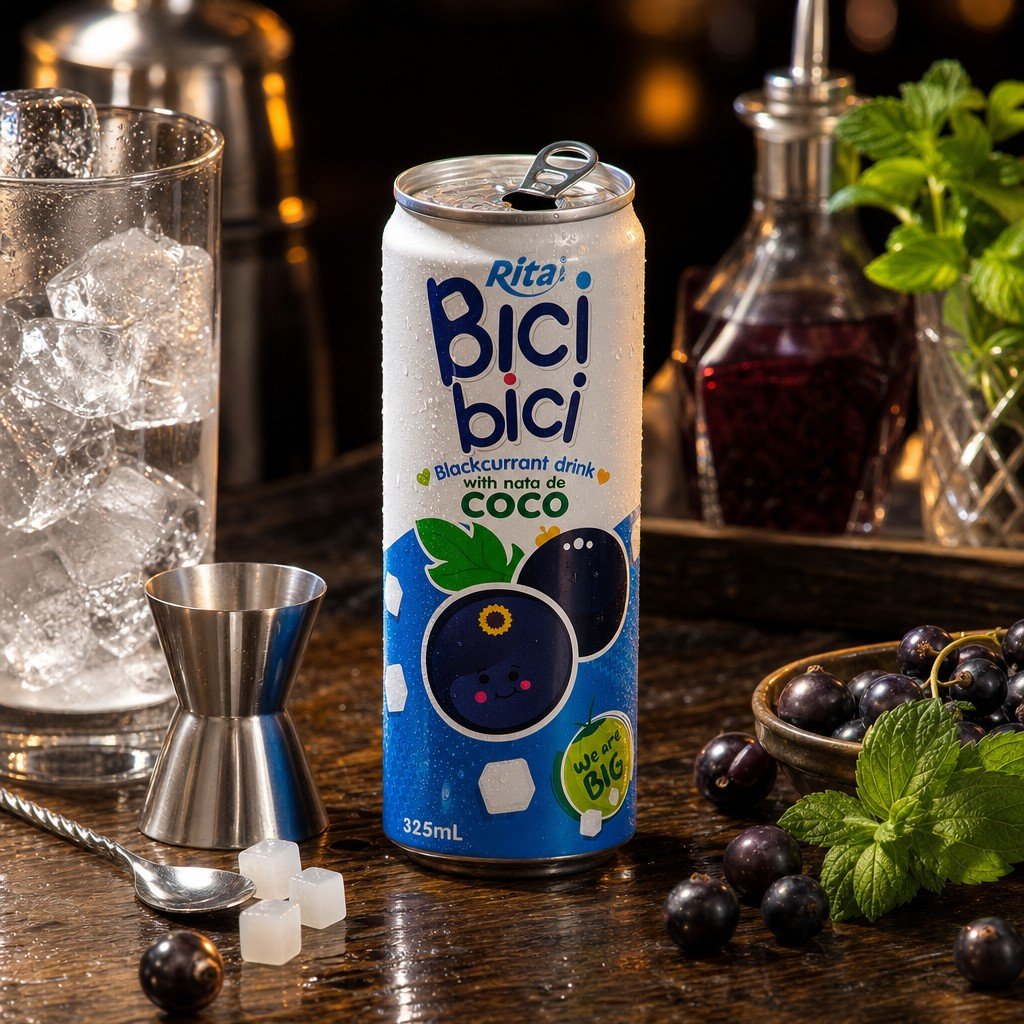
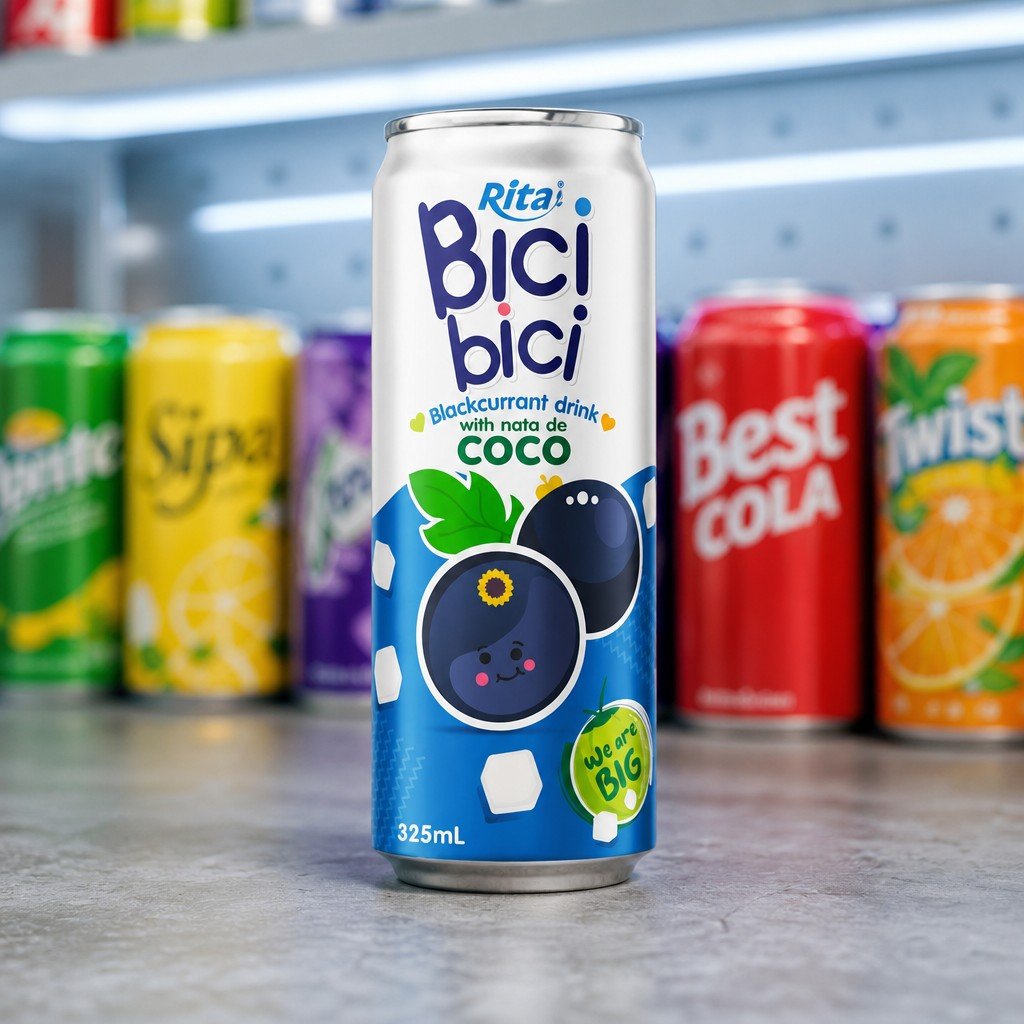
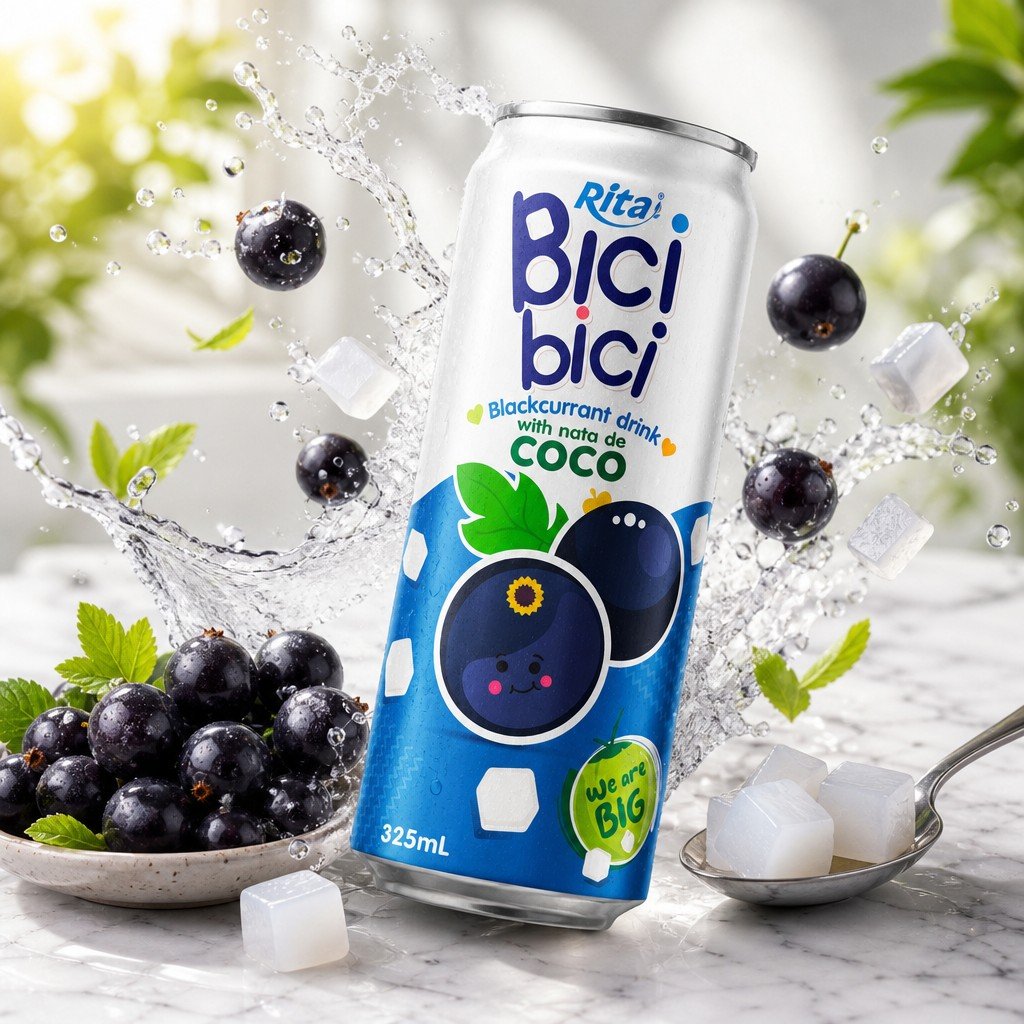
Blackcurrant occupies a unique position in the fruit beverage hierarchy. In Europe — particularly the United Kingdom, Germany, and Scandinavia — the berry has long been associated with concentrated flavor and vivid pigmentation. In Asia-Pacific and the Middle East, however, it remains relatively underexplored, creating a white-space opportunity for brands willing to invest in consumer education and shelf placement.
What sets blackcurrant apart from more conventional fruit flavors is its inherent complexity. The tartness pairs naturally with sweeteners without requiring excessive sugar, while the deep purple hue delivers visual impact that resonates on retail shelves. These attributes make it an attractive option for formulators seeking to develop beverages that stand apart from the lime-lemon-orange triad dominating most soft drink aisles.
Industry observers note that berry-based drinks — encompassing blackcurrant, elderberry, and açaí — have seen consistent growth across multiple retail channels. The appeal is not confined to any single demographic. Younger consumers in urban markets gravitate toward the distinctive flavor profiles, while older demographics recognize the traditional associations of blackcurrant in European food culture. This dual appeal creates a broader addressable market than many niche fruit flavors can achieve.
From a manufacturing standpoint, blackcurrant concentrates and extracts are well-suited to industrial-scale production. They offer consistent flavor profiles across batches, maintain stability through standard shelf-life periods, and integrate cleanly into existing production workflows. For OEM partners like RITA, which operates a comprehensive range of soft drink formulations, incorporating blackcurrant into their product portfolio represents a natural extension of existing capabilities rather than a disruptive process change.
The Role of Nata De Coco in Modern Beverage Formulations
Textural innovation has become a defining feature of contemporary beverage development. Consumers no longer expect drinks to be purely liquid; they seek multi-sensory experiences that engage beyond taste alone. Nata de coco — a translucent, chewy gel derived from coconut water fermentation — has emerged as one of the most versatile ingredients for achieving this objective.
Originally popularized in Southeast Asian dessert culture, nata de coco has migrated into mainstream beverage applications across multiple regions. Its neutral flavor profile allows it to complement rather than compete with the primary taste of a beverage, while its distinctive chewy texture creates an interactive consumption experience. In bubble tea, flavored waters, and fruit drinks, nata de coco has demonstrated the ability to drive repeat purchase behavior through the engagement factor alone.
The integration of nata de coco into a blackcurrant drink creates an intriguing product proposition. The tartness of blackcurrant and the subtle sweetness of nata de coco establish a balanced flavor dynamic, while the visual contrast between the deep purple liquid and translucent white gel pieces produces an aesthetically distinctive presentation. For brands targeting social media–savvy consumers, this visual dimension translates directly into organic content creation opportunities.
From a production perspective, nata de coco requires careful handling to maintain its textural integrity through the canning process. RITA's experience with textured beverage formulations — across its Bici Bici product line and related offerings — demonstrates the technical capability to preserve ingredient quality through fill, seal, and thermal processing stages. This is a non-trivial manufacturing challenge that distinguishes experienced producers from less specialized competitors.
RITA's Manufacturing Infrastructure and Global Export Capabilities
Established in 2004, RITA Food and Drink Co., Ltd. has evolved from a regional Vietnamese manufacturer into a significant player in the global OEM beverage market. The company's production infrastructure now encompasses over 50 automated production lines capable of handling multiple packaging formats — aluminum cans, glass bottles, PET containers, and PP bottles — across categories ranging from tropical fruit juices and coconut products to functional drinks and energy beverages.
Scale matters in OEM partnerships. RITA's monthly export volume of approximately 1,200 containers across more than 200 countries and territories represents a logistics capability that few regional manufacturers can match. For brands seeking to launch blackcurrant beverages in multiple markets simultaneously, this export infrastructure eliminates the supply chain uncertainty that often delays international product rollouts.
The certification portfolio further strengthens RITA's positioning. BRC, FSSC 22000, Halal Jakim, Halal HCA-GCC, Kosher, ISO, GMP, HACCP, and SMETA certifications collectively address the regulatory requirements of virtually every significant import market. For blackcurrant beverages specifically, Halal certification opens access to the rapidly growing Middle Eastern market, while BRC compliance satisfies the due diligence requirements of major European retail chains.
The wide-opening can format of the Bici Bici product represents a deliberate design choice with commercial implications. Beyond ease of consumption, the wider aperture accommodates the inclusion of nata de coco pieces and supports the emerging trend of using canned beverages as cocktail and mocktail bases. In home entertaining and on-premise mixing scenarios, a wider opening simplifies the addition of ice, garnishes, and complementary ingredients — extending the product's usage occasions beyond straightforward direct consumption.
Navigating the Soft Drinks Market Landscape
The global soft drinks market continues to evolve in response to shifting consumer preferences, regulatory developments, and competitive dynamics. While traditional carbonated beverages maintain significant volume, the growth momentum has shifted decisively toward non-carbonated, flavored, and textured drink categories. This structural shift benefits producers and brands positioned in the segments where innovation is most active.
Recent industry developments underscore the volatility and opportunity within the broader beverage sector. Major players are engaged in operational restructuring — from distribution realignments to production facility adjustments — creating openings for agile OEM partners and private label brands to capture market share during periods of transition. The ability to move quickly from concept to shelf is becoming a more significant competitive advantage than brand heritage alone.
For blackcurrant beverages, the market positioning opportunity is particularly compelling. The flavor sits at the intersection of several consumer trends: the preference for berry-forward profiles, the demand for texturally interesting formulations, and the broader shift toward beverages that feel premium without commanding premium pricing. At a 325ml serving size with a 24-month shelf life, the product format addresses both impulse purchase occasions and planned pantry stocking.
Market & Export Data
Annual Trade Trend
| Year | Shipments | Total Value (USD) | Total Weight (kg) | Total Quantity | YoY Change |
|---|---|---|---|---|---|
| 2025 | 8 | 13,352 | ~25,890 | 8,401 | — |
| 2026 | 15 | 26,346 | ~34,709 | 5,438 | +88% shipments, +97% value, +34% weight, -35% quantity |
Data source: Tradesparq Trade Data (tradesparq.com)
Top Origin Countries (by Transaction Frequency)
| Country | Transactions | Market Share | Total Value (USD) | Weight (kg) |
|---|---|---|---|---|
| South Africa | 10 | 36% | 462 | 84 |
| China | 9 | 32% | 23,166 | 11,728 |
| United States | 3 | 11% | N/A | ~45,518 |
| Bangladesh | 2 | 7% | 16,070 | 25,344 |
| Belgium | 2 | 7% | N/A | ~36,488 |
Data source: Tradesparq Trade Data (tradesparq.com)
Top Destination Countries (by Transaction Frequency)
| Country | Transactions | Market Share | Total Value (USD) | Weight (kg) |
|---|---|---|---|---|
| Botswana | 10 | 36% | 462 | 84 |
| Peru | 9 | 32% | 23,166 | 11,728 |
| United States | 3 | 11% | N/A | ~56,002 |
| Bahamas | 2 | 7% | N/A | ~28,889 |
| Netherlands | 2 | 7% | 16,070 | 25,344 |
Data source: Tradesparq Trade Data (tradesparq.com)
Trade activity nearly doubled year-over-year, with shipments rising from 8 in 2025 to 15 in 2026 (+88%) and total trade value surging 97% to USD 26,346. The average unit price climbed sharply from USD 1.59 to USD 4.84, indicating a shift toward higher-value product positioning. South Africa and China together account for 68% of all origin transactions, forming the core supply network, while Botswana and Peru dominate as destination markets with the same combined share.
On the destination side, the United States stands out by trade weight at ~56,002 kg despite only 3 transactions, suggesting strong demand for bulk quantities. The Netherlands recorded a high single-shipment value of USD 16,070, mirroring the pattern seen from Bangladesh on the origin side. Overall, the top five destination markets capture 93% of trade frequency, reflecting a highly concentrated but growing export footprint.
RITA's ability to support brands across this landscape — from initial formulation through to container-ready product — provides a significant competitive advantage. The company's R&D capabilities allow for flavor customization, sweetness adjustment, and textural modification to meet the specific requirements of target markets. Whether a brand seeks a more tart European-style blackcurrant profile or a sweeter iteration suited to Asian palate preferences, the manufacturing flexibility exists to deliver without compromising production efficiency.
Consumer Trends Driving Demand for Textured Blackcurrant Drinks
Several macro-level consumer trends converge to support the market potential for blackcurrant beverages with nata de coco. The first is the broader movement toward sensory engagement in food and drink. Consumers — particularly in the 18-to-35 demographic — increasingly evaluate beverages not just on taste but on the overall consumption experience. Texture, visual presentation, and even the physical act of drinking from a distinctive can format all contribute to this evaluation.
The second trend is the growing interest in berry-based flavors across non-European markets. As global food culture becomes more interconnected through social media, travel, and diaspora communities, flavors once considered regional are achieving broader recognition. Blackcurrant, long a staple in European juice and cordial categories, is benefiting from this cross-cultural flavor migration. Consumers in Southeast Asia, the Middle East, and parts of Africa are encountering blackcurrant in new product contexts and developing preferences that drive repeat demand.
A third factor is the premiumization of the canned beverage segment. Consumers are increasingly willing to pay modest premiums for canned drinks that offer something beyond basic refreshment — whether that is a distinctive flavor, an interesting texture, or a brand story that resonates with their values. The Bici Bici format, with its combination of blackcurrant flavor and nata de coco texture in a wide-opening can, positions itself squarely within this premiumization opportunity.
For private label brands and distributors, these trends translate into actionable market intelligence. The combination of blackcurrant and nata de coco is not yet widely available in most global markets, creating a first-mover advantage for brands that move quickly. RITA's low minimum order quantity of 500 cartons reduces the financial risk of market testing, while the 20-to-25-day delivery timeline from order confirmation enables responsive inventory management.
OEM Partnership Advantages for Blackcurrant Beverage Launches
Launching a new beverage product in today's market requires more than a compelling formulation. Brands need manufacturing partners who can navigate regulatory complexities, deliver consistent quality at scale, and adapt to the specific requirements of different distribution channels and geographic markets. RITA's OEM and ODM service model addresses these requirements through a comprehensive partnership framework.
The OEM process begins with product development consultation, where RITA's R&D team works with brand partners to refine formulations, adjust flavor profiles, and finalize packaging specifications. For blackcurrant beverages, this stage is particularly important given the flavor's sensitivity to sweetness balance and the textural considerations introduced by nata de coco inclusion. The company's experience across multiple beverage categories provides a knowledge base that accelerates this development phase.
Production scalability represents another critical advantage. RITA's supply ability of 300 twenty-foot containers per month across its product portfolio means that successful product launches can be scaled rapidly to meet demand. For brands operating in multiple markets — a common scenario for blackcurrant beverages that appeal across European, Asian, and Middle Eastern consumer segments — this production headroom eliminates the growth bottleneck that constrains many emerging beverage brands.
Logistics and documentation support complete the partnership value proposition. Exporting beverages to 200+ countries requires meticulous attention to customs documentation, phytosanitary certificates, and market-specific labeling requirements. RITA's established export infrastructure, centered on Ho Chi Minh Port, provides the logistical backbone for reliable international delivery. Payment flexibility through L/C and T/T terms, combined with competitive FOB pricing structures, further reduces the friction of cross-border OEM partnerships.
Market Access Through Certifications and Compliance
In the global beverage trade, certifications are not merely administrative checkboxes — they are market access credentials that determine where products can be sold and which retail channels are available. RITA's certification portfolio is strategically aligned with the requirements of the most commercially significant import markets for blackcurrant beverages.
FSSC 22000 and BRC certifications satisfy the food safety management standards required by major European retailers and food service operators. For brands targeting the UK, Germany, France, or the Nordic markets — regions where blackcurrant has strong consumer recognition — these certifications are prerequisites for shelf placement. The Halal certifications (Jakim and HCA-GCC) open access to the Middle Eastern and Southeast Asian Muslim consumer markets, which represent a substantial and growing demand base for flavored beverages.
Kosher certification extends market reach into North American and Israeli distribution channels, while ISO and GMP compliance provides the baseline quality assurance expected by sophisticated buyers across all regions. SMETA membership demonstrates ethical trading practices, an increasingly important consideration for European retailers conducting supply chain due diligence.
For brands evaluating OEM partners for blackcurrant beverage production, this certification matrix reduces the time and cost of market entry. Rather than navigating certification processes independently — which can take months and require significant investment — brands can leverage RITA's existing compliance infrastructure to access markets immediately upon product completion.
Frequently Asked Questions
What makes blackcurrant a compelling flavor choice for private label beverages?
Blackcurrant offers a distinctive tart flavor profile that differentiates products from conventional fruit drink options. Its deep color provides strong shelf presence, while its balanced acidity pairs well with sweeteners and textural ingredients like nata de coco. The flavor has established consumer recognition in European markets and growing awareness in Asia-Pacific and Middle Eastern regions, creating cross-market appeal for private label brands.
How does nata de coco affect the shelf life of canned blackcurrant beverages?
When properly formulated and processed, nata de coco maintains its textural integrity within canned beverages for extended periods. The Bici Bici 325ml Blackcurrant Drink carries a 24-month shelf life, consistent with standard aluminum can beverage products. RITA's production processes ensure that the nata de coco pieces retain their characteristic chewy texture throughout this period.
What is the minimum order quantity for blackcurrant beverage OEM production at RITA?
RITA operates with a minimum order quantity of 500 cartons, making it accessible for brands conducting initial market tests or launching in smaller distribution channels. This lower threshold allows private label partners to validate market demand before committing to larger production volumes, reducing the financial risk associated with new product introductions.
Which markets are most receptive to blackcurrant beverages with textural ingredients?
European markets — particularly the UK, Germany, and Scandinavia — have strong existing familiarity with blackcurrant as a beverage flavor. Southeast Asian and Middle Eastern markets show growing interest in texturally innovative drinks, partly driven by the influence of bubble tea culture. North America represents an emerging opportunity as consumer interest in berry-based beverages continues to expand across retail and food service channels.
Can RITA customize the blackcurrant flavor profile for different target markets?
Yes. RITA's ODM capabilities include flavor customization, sweetness adjustment, and formulation modification to suit specific market preferences. Whether a brand requires a more tart European-style profile or a sweeter variant suited to Asian consumer preferences, RITA's R&D team can develop tailored formulations while maintaining production efficiency and quality consistency.
Related news items:
Newer news items:
Older news items:
- Coconut Water Supply Chains Shift as Demand for Electrolyte-Enhanced Beverages Surges - 18/09/2026 06:56
- Pineapple Drink With Nata De Coco Sees Growing Global Demand As Consumers Seek Tropical Refreshment - 17/09/2026 06:22
- Sustainable Sipping: RITA's COCO JUS Blends Coconut and Watermelon for Global Markets - 17/09/2026 04:57
- Coconut Water and Chocolate Flavor – The Next Big Thing in Beverages - 10/09/2026 07:26
- Protein-Powered Hydration: How Low Sugar Blueberry Drinks Are Shaping the Market - 09/09/2026 08:22