
Premium Grape Juice Drives Fresh Opportunities in Global OEM Beverage Trade
The global grape juice market is entering a dynamic phase of transformation, and OEM manufacturers are at the center of this shift. As consumer demand for convenient, fruit-forward beverages rises across every major region—from North America and Europe to Asia-Pacific and the Middle East—brands are increasingly turning to premium grape juice OEM partnerships to secure reliable, scalable supply. The premium grape juice segment, in particular, is drawing attention from importers and distributors seeking products that combine clean-label simplicity with consistent quality and attractive packaging.
Key Takeaways
- Global demand for premium grape juice continues to rise, driven by convenience culture and the growing popularity of fruit-based non-carbonated beverages.
- Private-label and OEM grape juice offers brands fast market entry with customizable formulations, packaging, and branding.
- Aluminum can packaging for grape juice is gaining traction across retail, foodservice, and on-the-go channels worldwide.
- Certifications such as BRC, FSSC 22000, Halal, and Kosher remain essential for cross-border trade in the grape juice category.
- Vietnam-based manufacturers like RITA Food and Drink Co., Ltd. are leading exporters, supplying 200+ countries from a single origin point.
The trade landscape for grape juice has shifted considerably in recent years. While orange juice has long dominated the fruit juice aisle, the premium green grape juice category is carving out a distinct position, particularly in markets where consumers are seeking lighter, more refreshing alternatives to heavy citrus flavors. Green grape juice, with its naturally mild sweetness and clean finish, fits squarely into the broader movement toward balanced, fruit-forward taste profiles that appeal to both younger demographics and established juice drinkers.
Global Demand and Shifting Consumer Preferences
Across global beverage markets, the trajectory is clear: consumers want fruit juice that tastes real. The rise of green grape juice in export markets is not a passing trend—it reflects a structural shift in how beverages are positioned. In Southeast Asia, grape juice is increasingly seen as a premium alternative to traditional fruit flavors. In the Middle East and Africa, grape-flavored beverages hold deep cultural resonance, making OEM grape juice products especially attractive to regional brands looking to diversify their portfolios. European buyers, meanwhile, are focusing on aluminum can formats that align with established retail and foodservice distribution models.
The Americas present a particularly interesting opportunity. The United States and Brazil, both major grape-producing regions, have nonetheless seen growing imports of grape juice from Asian OEM manufacturers, driven by competitive pricing and the flexibility of private-label partnerships. For brands operating in North and South America, partnering with an established OEM grape juice manufacturer offers the ability to launch branded products without the capital expenditure of building production capacity from scratch.
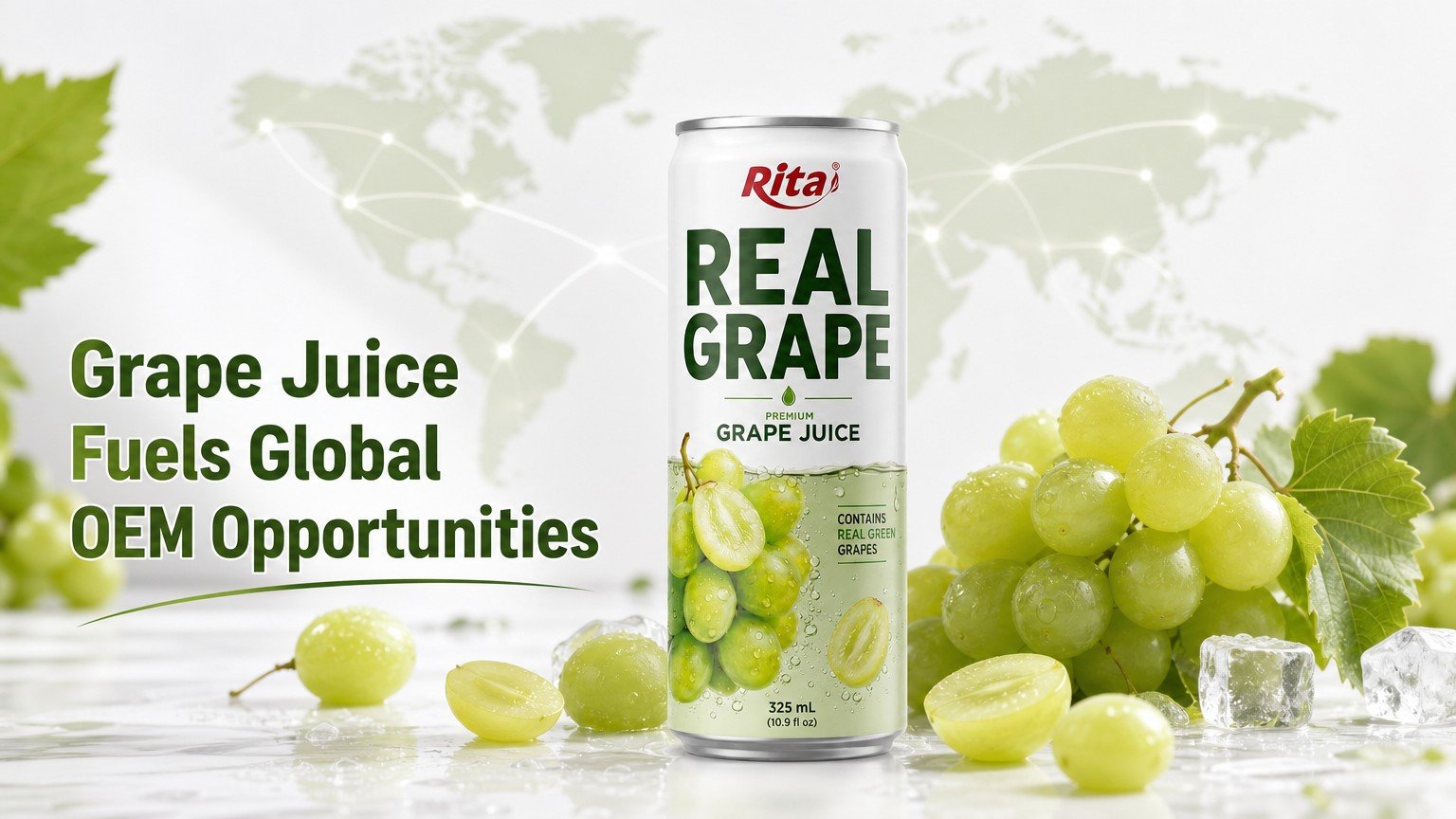
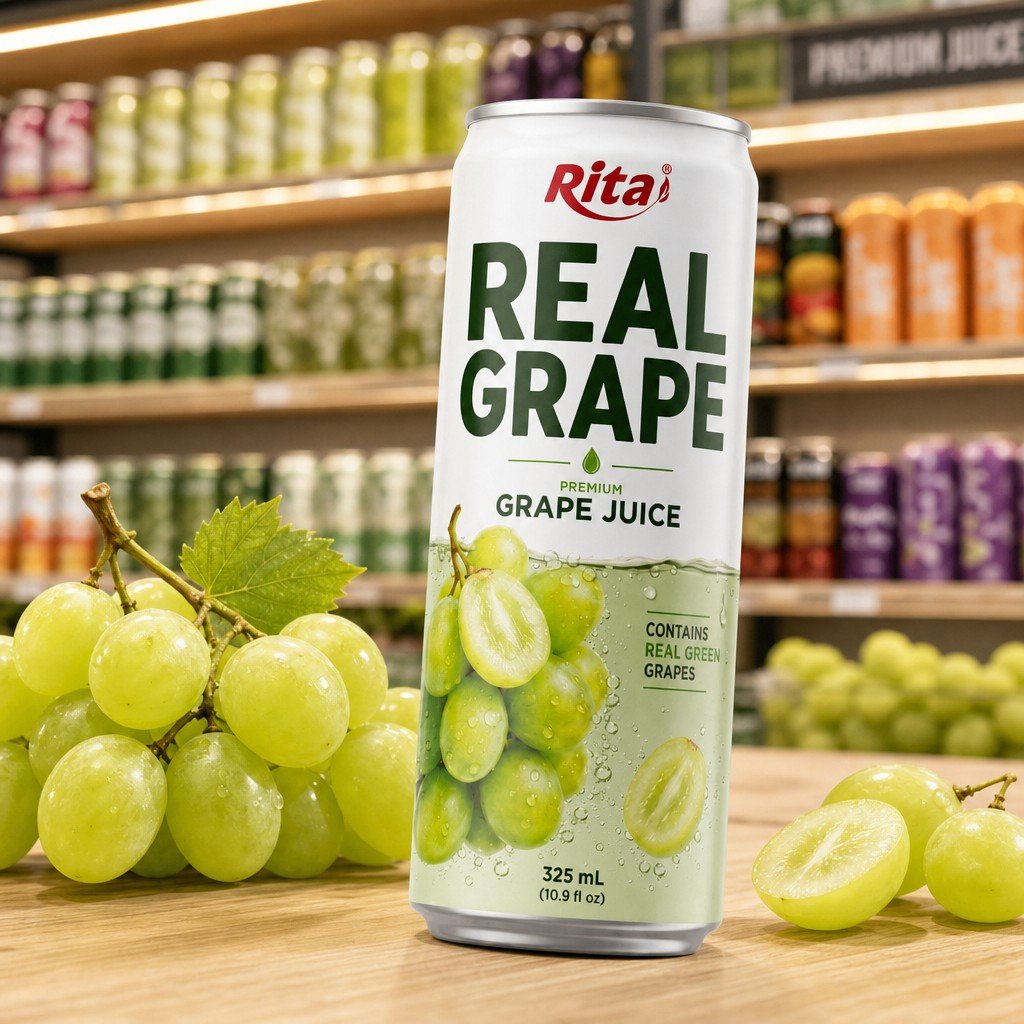
A 325ml aluminum can of premium real grape juice—such as the format offered by leading Vietnamese manufacturers—exemplifies the kind of product that is gaining traction in export markets. The 10.9 fluid ounce serving size is well-suited to convenience retail channels, while the real green grape formulation delivers the authentic taste profile that modern consumers expect. This is not a concentrate-based product with artificial flavoring; it is a genuine fruit juice positioned for markets where ingredient transparency matters.
Oceania and smaller Pacific Island markets also represent emerging demand centers. Importers in Australia and New Zealand are actively sourcing grape juice products from Southeast Asia, drawn by the combination of competitive FOB pricing, established logistics corridors through Ho Chi Minh Port, and the ability to private-label products under their own brand names. The ability to supply at scale—RITA Food and Drink Co., Ltd., for instance, maintains a production capacity of 300 twenty-foot containers per month—gives regional distributors the confidence to commit to long-term supply agreements.
OEM Manufacturing and Certification Standards
For brands considering private-label grape juice, the manufacturing partner's certification portfolio is a non-negotiable factor. Cross-border beverage trade demands rigorous compliance, and the difference between a product that clears customs and one that gets held at port often comes down to the certifications held by the manufacturer. Premium grape juice OEM manufacturers operating from Vietnam have invested heavily in this area, recognizing that certification is the gateway to global market access.
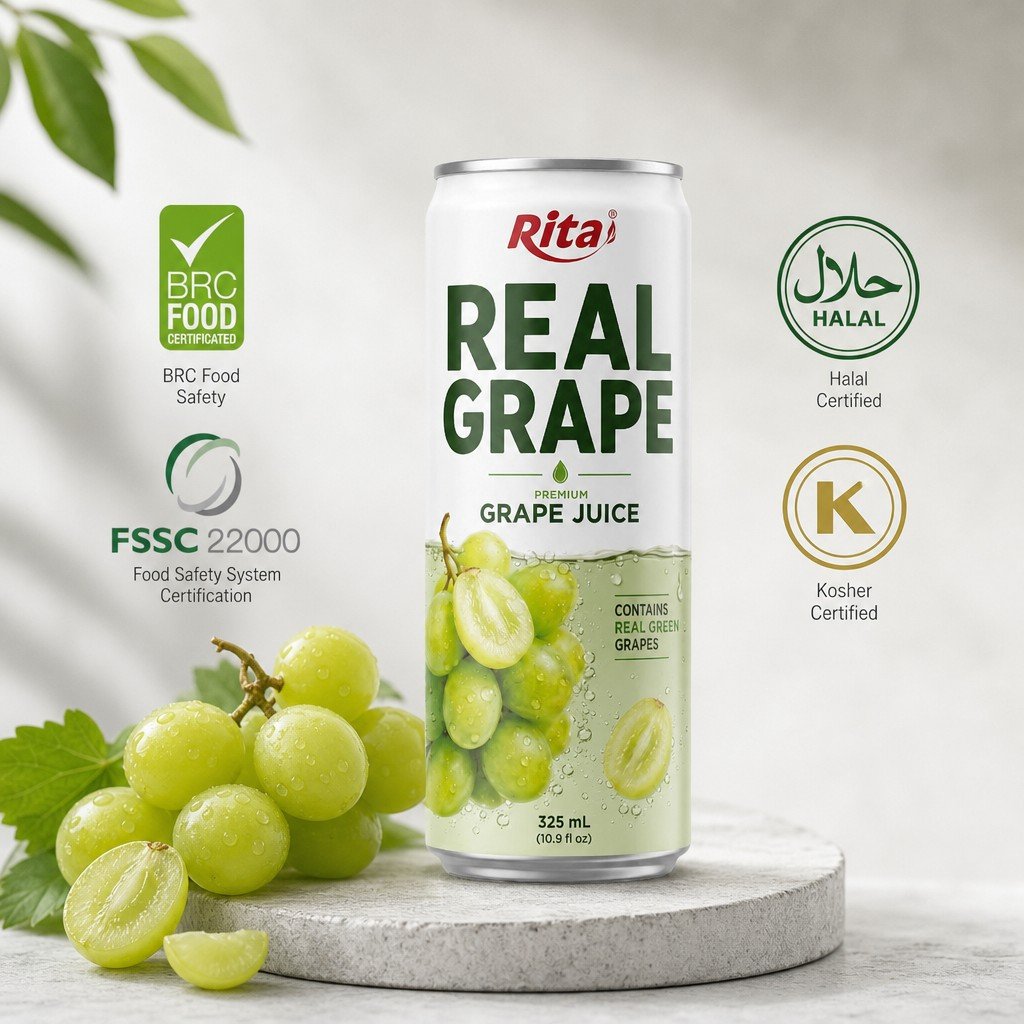
The certification landscape for grape juice exports is extensive. Buyers increasingly require BRC (British Retail Consortium) accreditation for UK and European retail channels, FSSC 22000 for food safety management, and Halal certification for markets across the Middle East, Southeast Asia, and North Africa. Kosher certification opens doors in specific retail segments, while ISO and GMP standards provide the baseline quality assurance that virtually every import market demands. HACCP compliance ensures that the entire production chain—from raw grape sourcing through bottling and shipping—is managed under a rigorous food safety framework.
SMETA (Sedex Members Ethical Trade Audit) compliance has emerged as another critical differentiator, particularly for buyers in Europe and North America who are increasingly scrutinizing the ethical and social standards of their supply chains. Manufacturers who can demonstrate SMETA compliance signal that their operations meet international labor and environmental standards, which is increasingly a requirement for shelf placement in major retail chains.
Why Certification Matters in Grape Juice Trade
The grape juice category occupies a unique position in the certification landscape. Unlike some beverages where a single certification may suffice, grape juice exporters typically need to hold multiple, overlapping certifications to serve diverse markets simultaneously. A manufacturer supplying grape juice to the Middle East needs Halal certification; the same product heading to Europe needs BRC and FSSC 22000; and a shipment destined for North American specialty retail needs Kosher certification. The ability to hold all of these certifications under one roof is a significant competitive advantage that reduces complexity for brands managing multi-market distribution.
Buyers should also evaluate the depth of the manufacturer's quality management system. A manufacturer that has maintained BRC certification for multiple consecutive years, for example, demonstrates a sustained commitment to quality that goes beyond a one-time audit. Similarly, a production facility that holds both FSSC 22000 and HACCP certifications provides redundant layers of food safety assurance—critical for a product category where raw material quality can vary significantly between harvest seasons.
The OEM model itself is particularly well-suited to the grape juice category because it allows brands to leverage the manufacturer's existing certification infrastructure. Rather than investing months—or years—in obtaining certifications for a new production facility, a brand can partner with an established OEM grape juice manufacturer and immediately access a fully certified supply chain. This speed-to-market advantage is one of the primary reasons the OEM model has become the preferred entry strategy for new grape juice brands in export markets.
Aluminum Can Packaging and Format Innovation
The packaging format for grape juice is evolving rapidly, and the aluminum can has emerged as the clear winner for export-oriented OEM products. The 325ml aluminum can format offers a compelling combination of product protection, shelf appeal, and logistics efficiency that makes it ideal for international trade. Unlike glass bottles, which add significant weight and fragility to shipments, aluminum cans are lightweight and virtually unbreakable during transit—factors that directly impact landed cost in distant markets.
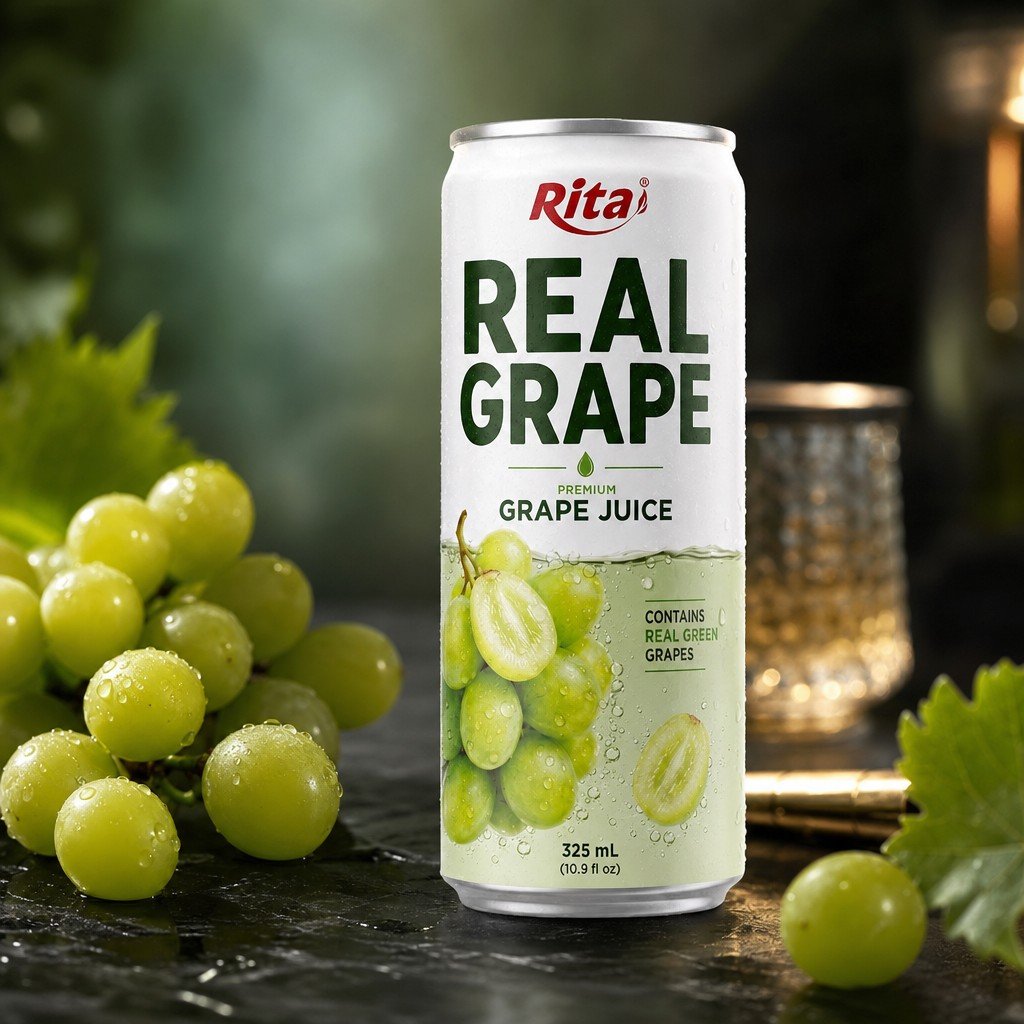
The visual design of aluminum can grape juice products has also become a key differentiator. Premium can designs featuring vibrant grape imagery—such as a white background with green grape illustrations, water droplet accents, and bold typography—convey freshness and quality at the point of sale. The translucency of green grape juice visible through the can's labeling creates an immediate visual association with real fruit, reinforcing the product's positioning as a genuine, fruit-based beverage rather than an artificially flavored alternative.
Shelf Life and Storage Considerations
A 24-month shelf life for canned grape juice is a critical specification for export trade. Extended shelf life enables ocean freight shipments to reach distant markets—including Oceania, Africa, and South America—without concerns about product degradation during transit. The combination of aluminum can packaging and a 24-month shelf life gives brands the flexibility to manage inventory across complex global distribution networks, including warehouse staging, cross-docking, and multi-market allocation from a single production run.
For manufacturers and brands, the storage advantages of aluminum cans extend beyond shelf life. The stackability and uniform shape of cans simplify warehousing and palletization, reducing handling costs throughout the supply chain. In markets where cold-chain infrastructure is limited—parts of Africa and Southeast Asia, for example—the shelf-stable nature of canned grape juice provides a significant advantage over refrigerated formats, enabling distribution through ambient retail channels that reach broader consumer bases.
From a sustainability perspective, aluminum is one of the most recyclable packaging materials available, with recycling rates exceeding 70% in many markets. This recyclability aligns with the growing consumer and regulatory demand for sustainable packaging solutions, particularly in European markets where extended producer responsibility (EPR) frameworks are driving a shift toward more recyclable packaging formats.
Sourcing and Supply Chain Considerations
Vietnam has established itself as a leading origin point for grape juice OEM manufacturing, and the reasons are both strategic and practical. The country's geographic position provides efficient access to major shipping lanes serving Asia, the Middle East, Europe, and the Americas. Ho Chi Minh Port, one of Southeast Asia's busiest container terminals, serves as the primary export gateway, with established freight routes to virtually every major importing country. The combination of competitive production costs, a well-developed logistics infrastructure, and proximity to raw material sources makes Vietnam an increasingly attractive sourcing destination for grape juice.
Fruit juice OEM manufacturers in Vietnam benefit from a mature ecosystem of raw material suppliers, packaging producers, and logistics providers. This ecosystem reduces lead times and production costs, enabling manufacturers to offer competitive FOB pricing while maintaining quality standards that meet the requirements of demanding import markets. For brands evaluating OEM partners, this ecosystem maturity is a practical consideration that directly impacts the reliability and cost-effectiveness of the supply relationship.
The typical minimum order quantity for grape juice OEM production is 500 cartons, a threshold that makes private-label grape juice accessible to both established beverage companies and emerging brands testing new markets. This relatively low MOQ, combined with production capacity of 300 twenty-foot containers per month, gives manufacturers the flexibility to serve clients ranging from boutique distributors to large-scale retail chains.
Payment Terms and Trade Financing
Standard trade payment terms for grape juice OEM exports typically include Letter of Credit (L/C) and Telegraphic Transfer (T/T), both of which provide security for buyers and sellers in cross-border transactions. L/C payment terms are particularly favored by first-time importers, as the bank guarantee mechanism reduces the risk for both parties. As the buyer-supplier relationship matures, T/T payment terms—often structured as a deposit against production with the balance payable before shipment—become the more common arrangement, offering greater flexibility and lower transaction costs.
Delivery timelines for grape juice OEM orders typically range from 20 to 25 days after order confirmation, a lead time that is competitive by global standards. This production timeline includes raw material sourcing, production, quality testing, canning, and packaging—a comprehensive process that, when managed by an experienced manufacturer, delivers consistent quality across production batches.
The premium real grape juice product line exemplifies the kind of turnkey OEM solution that is gaining traction in global trade. With free sample availability, clear specification sheets, and a transparent pricing structure, manufacturers who can offer this level of transparency build trust with international buyers—an essential factor in a market where buyers are often evaluating multiple potential suppliers simultaneously.
From Our Vineyards: Raw Material Sourcing
The quality of any grape juice product begins in the vineyard, and manufacturers who invest in direct relationships with grape growers gain a significant advantage in raw material consistency. RITA's grape sourcing journey from sun-kissed vineyards to refreshing fruit juice creations illustrates how leading manufacturers are building transparent supply chains that connect vineyard to production facility, ensuring that the grapes used in premium juice products meet strict quality criteria for flavor, sweetness, and freshness.
Direct vineyard relationships also enable manufacturers to manage seasonal variability—one of the most significant challenges in fruit juice production. By working closely with grape growers throughout the cultivation cycle, manufacturers can anticipate flavor profiles, adjust blending ratios, and maintain product consistency across production runs. This level of raw material management is particularly important for OEM products, where brand owners expect identical taste and quality from batch to batch, regardless of when the order is produced.
Fruit juice products across the broader OEM category—from tropical fruit blends to single-origin juices—all benefit from this same principle of raw material investment. The grape juice segment, however, demands particular attention because grape flavor profiles vary significantly between varieties and growing conditions. Green grapes, which are the foundation of premium grape juice products, require careful selection to achieve the right balance of natural sweetness and acidity that defines a high-quality juice product.
Key Market Segments and Distribution Channels
Understanding where premium grape juice fits within the broader beverage landscape is essential for brands and distributors evaluating this category. The product occupies a versatile position that enables distribution across multiple channels, each with distinct requirements and opportunities.
Retail channels—including supermarkets, hypermarkets, and convenience stores—remain the primary volume driver for canned grape juice. The 325ml aluminum can format is optimized for these environments, where single-serve convenience and attractive packaging design drive impulse purchases. For retail buyers, the combination of a 24-month shelf life, established brand credentials, and competitive pricing makes grape juice a reliable addition to the fruit juice assortment.
Foodservice and Hospitality
The foodservice and hospitality channel represents a growing opportunity for OEM grape juice. Hotels, restaurants, cafés, and airlines are increasingly sourcing private-label juice products to differentiate their beverage menus. Grape juice, with its broad consumer appeal and natural flavor profile, is well-suited to this channel. For foodservice operators, the consistency and reliability of OEM products—delivered in uniform packaging with consistent quality—simplifies procurement and reduces waste.
E-commerce channels are also emerging as a significant distribution pathway for canned grape juice, particularly in markets where online grocery shopping has gained substantial market share. The lightweight, durable nature of aluminum cans makes grape juice well-suited to direct-to-consumer shipping, where product damage during transit must be minimized. For brands building a direct-to-consumer presence, the combination of attractive can design and reliable packaging performance creates a strong first impression that supports repeat purchasing.
Competitive Landscape and Market Outlook
The competitive landscape for grape juice in global OEM trade is intensifying. Established juice manufacturers in Europe and the Americas face increasing competition from Asian OEM producers who offer comparable quality at more competitive price points. The key differentiators in this competitive environment are certification breadth, production scale, packaging quality, and the ability to offer comprehensive private-label services—from custom formulation and design through to logistics and documentation support.
RITA Food and Drink Co., Ltd., established in 2004, exemplifies the kind of integrated OEM partner that is reshaping the competitive landscape. With 50+ automated production lines, a portfolio spanning tropical fruit juices, coconut products, functional drinks, and more, and exports to 200+ countries and territories, the company represents the scale and capability that global brands increasingly demand from their OEM partners. The ability to manufacture grape juice alongside a diverse product portfolio—available in aluminum cans, glass bottles, PET bottles, and PP bottles—gives brands the flexibility to develop multi-SKU programs with a single manufacturing partner.
Looking ahead, the premium grape juice OEM segment is positioned for continued growth. The convergence of consumer demand for authentic fruit flavors, the expansion of private-label programs by major retailers, and the growing sophistication of OEM manufacturing capabilities in Southeast Asia all point to a category that will capture an increasing share of global juice trade. For brands and distributors seeking to enter or expand within this category, the time to establish OEM partnerships and secure supply commitments is now—before the competitive window narrows further.
The broader beverage industry context reinforces this opportunity. Recent industry developments—including shifts in distribution partnerships, restructuring at major beverage companies, and evolving consumer preferences—have created both disruption and opportunity in the fruit juice category. Brands that move quickly to secure reliable OEM partnerships for products like premium green grape juice will be well-positioned to capture market share as the category continues to evolve.
Frequently Asked Questions
What is the minimum order quantity for premium grape juice OEM production?
The minimum order quantity for premium grape juice OEM production is typically 500 cartons, making private-label grape juice accessible to both established beverage companies and emerging brands testing new markets. This MOQ threshold allows brands to evaluate market response before committing to larger production volumes.
What certifications are required for exporting grape juice internationally?
Certification requirements vary by destination market, but the most commonly required certifications for grape juice exports include BRC (British Retail Consortium), FSSC 22000, Halal (Jakim or HCA-GCC), Kosher, ISO, GMP, HACCP, and SMETA. A manufacturer holding all of these certifications under one roof provides significant competitive advantage for brands managing multi-market distribution.
What is the shelf life of canned grape juice?
Aluminum canned grape juice typically has a shelf life of 24 months, making it suitable for ocean freight shipments to distant markets without concerns about product degradation. This extended shelf life enables efficient inventory management across complex global distribution networks.
What packaging formats are available for OEM grape juice?
OEM grape juice is available in multiple packaging formats including aluminum cans (typically 325ml), glass bottles, PET bottles, and PP bottles. The aluminum can format is the most popular for export trade due to its lightweight, durable, and logistics-efficient characteristics.
How long does grape juice OEM production take from order confirmation?
Standard production lead time for grape juice OEM orders is 20 to 25 days after order confirmation. This timeline includes raw material sourcing, production, quality testing, canning, and packaging, with payment terms typically structured as L/C or T/T.
Newer news items:
Older news items:
- Blackcurrant Beverages Gain Momentum as Wellness Drinks Reshape Global Soft Drink Markets - 18/09/2026 07:25
- Coconut Water Supply Chains Shift as Demand for Electrolyte-Enhanced Beverages Surges - 18/09/2026 06:56
- Pineapple Drink With Nata De Coco Sees Growing Global Demand As Consumers Seek Tropical Refreshment - 17/09/2026 06:22
- Sustainable Sipping: RITA's COCO JUS Blends Coconut and Watermelon for Global Markets - 17/09/2026 04:57
- Coconut Water and Chocolate Flavor – The Next Big Thing in Beverages - 10/09/2026 07:26