
Yuzu Peach Electrolyte Water Rides Low-Sugar Beverage Wave
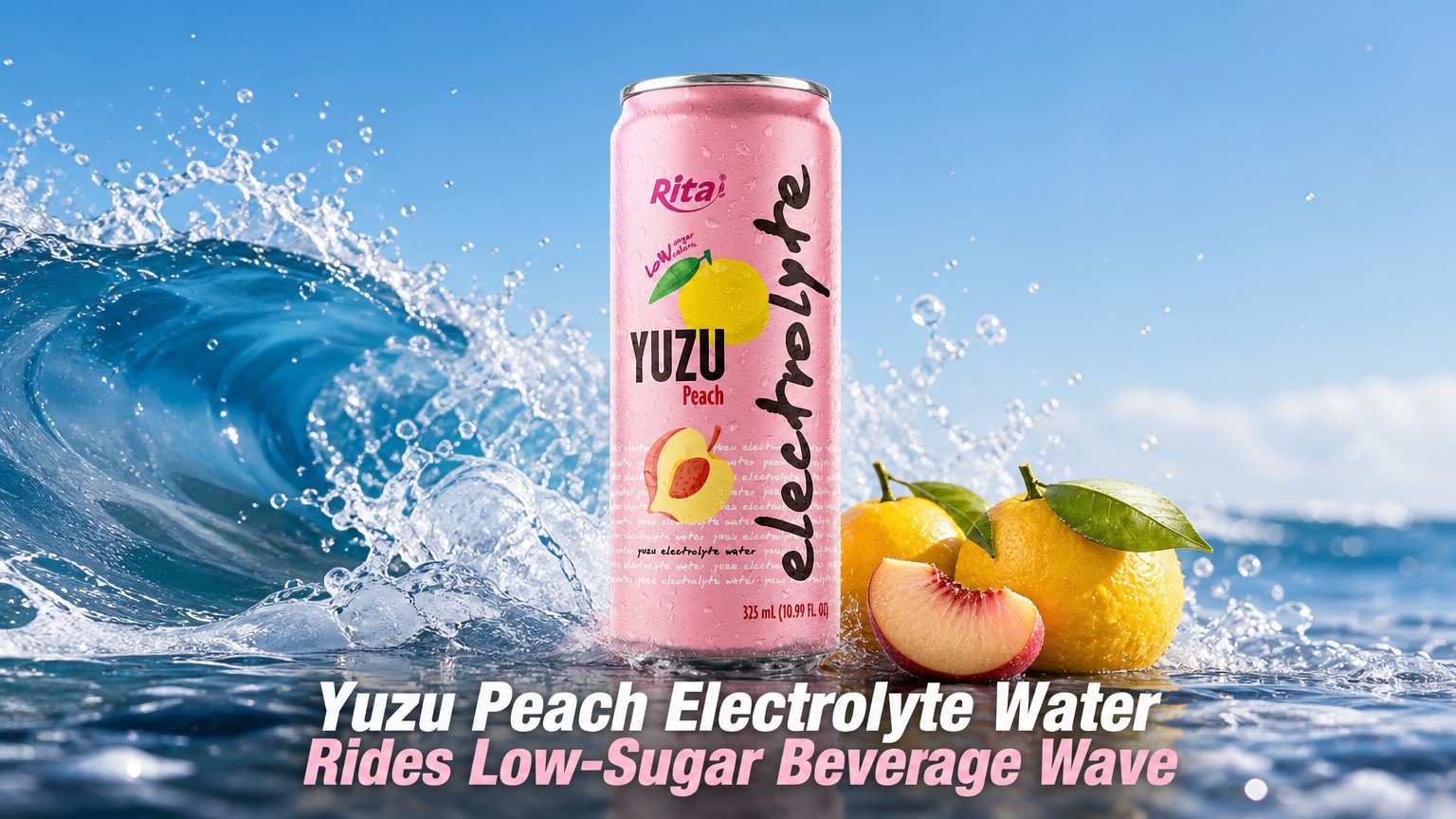
Low-sugar hydration has become one of the most closely watched categories in the global beverage industry, and the arrival of Yuzu Peach Electrolyte Water Drink 325ml illustrates how quickly the segment is moving from niche positioning to mainstream retail shelves. Produced by RITA Food and Drink Co., Ltd, a Vietnamese OEM/ODM manufacturer that has been exporting to brands in more than 180 countries since 2004, the drink pairs the bright acidity of yuzu citrus with the soft roundness of peach in a lightly formulated, low-calorie profile.
For buyers and private label teams, the significance goes beyond flavor. The product sits at the intersection of three commercial forces reshaping the category: reformulation toward lower sugar, functional-adjacent positioning that avoids overstated claims, and demand for ready-to-brand beverages that can travel across borders with regulatory flexibility. The Yuzu Peach Electrolyte Water Drink 325ml Low Sugar Hydration Beverage is designed to be evaluated on those terms rather than as a novelty item.
Key Takeaways
- Low-sugar electrolyte water is shifting from fitness channels into everyday grocery and convenience distribution.
- Yuzu and peach deliver a citrus-forward, fruit-sweet profile that works across warm and cool climates.
- RITA offers large-scale OEM production, Halal, FSSC 22000, BRC, ISO, GMP and HACCP certifications, and export to 200+ countries and territories.
- The 325ml aluminum can format supports premium shelf presence, portability and a 24-month shelf life.
- Private label buyers can combine 500-carton minimum orders with 20–25 day lead times from Ho Chi Minh Port.
Low-Sugar Electrolyte Water Enters the Mainstream Beverage Aisle
Category observers have noted a decisive shift: electrolyte water no longer lives only in the sports nutrition aisle. Across the Americas, Europe, Asia-Pacific, the Middle East, Africa and Oceania, similar formats are appearing in general beverage sections, travel retail and quick-service menus. The change has been driven less by any single campaign than by buyers rewriting the planogram around lighter drinks that consumers can drink throughout the day.
Retailers Rewriting the Water Category
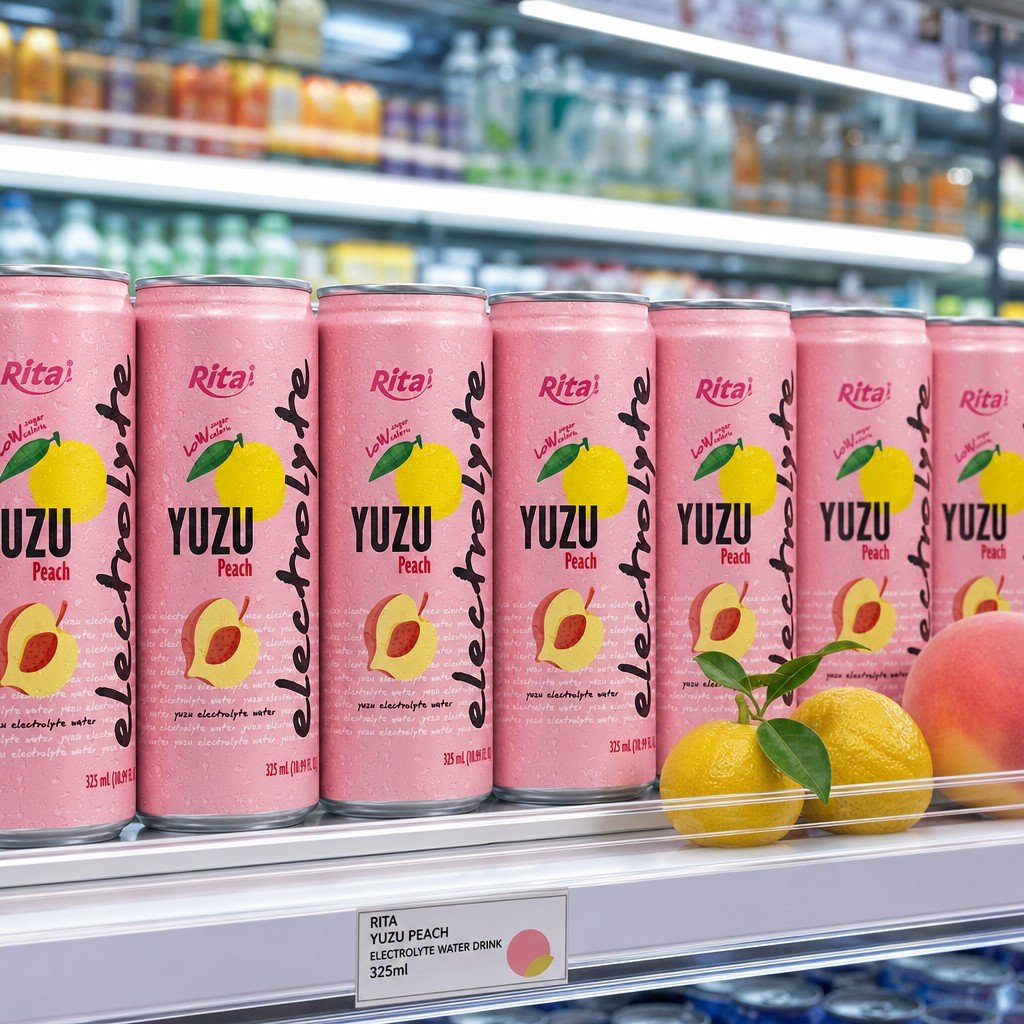
Merchandising teams are grouping low-sugar waters with sparkling flavors, aloe drinks and lightly sweetened teas rather than with traditional bottled water. That repositioning rewards brands that can offer recognizable flavor cues and clean packaging. The yuzu peach profile, rendered in pink and yellow tones with stylized fruit illustration on the can, performs well at shelf precisely because it communicates taste immediately.
Convenience channels are also expanding the format. A 325ml serving fits cooler placement, food service pairing and multi-can bundles, giving buyers a flexible unit that supports both single-serve and multipack strategies. The container size matters commercially: smaller volumes lower the barrier to trial while keeping the price point accessible in high-traffic locations.
Regional Demand Patterns
Warm-climate markets continue to lead in citrus- and peach-forward flavors, while European and North American buyers tend to emphasize formulation transparency and packaging sustainability. Middle Eastern and African importers frequently prioritize certification readiness, which is where Halal Jakim and Halal HCA-GCC documentation becomes a decisive factor in supplier selection.
Oceania and parts of Asia-Pacific show growing interest in lightly functional everyday drinks, but only where the label stays credible. This is a category where the line between hydration and implied medical claims must be carefully maintained, and suppliers that keep messaging neutral tend to retain long-term distribution relationships.
Inside the Yuzu Peach Flavor Architecture
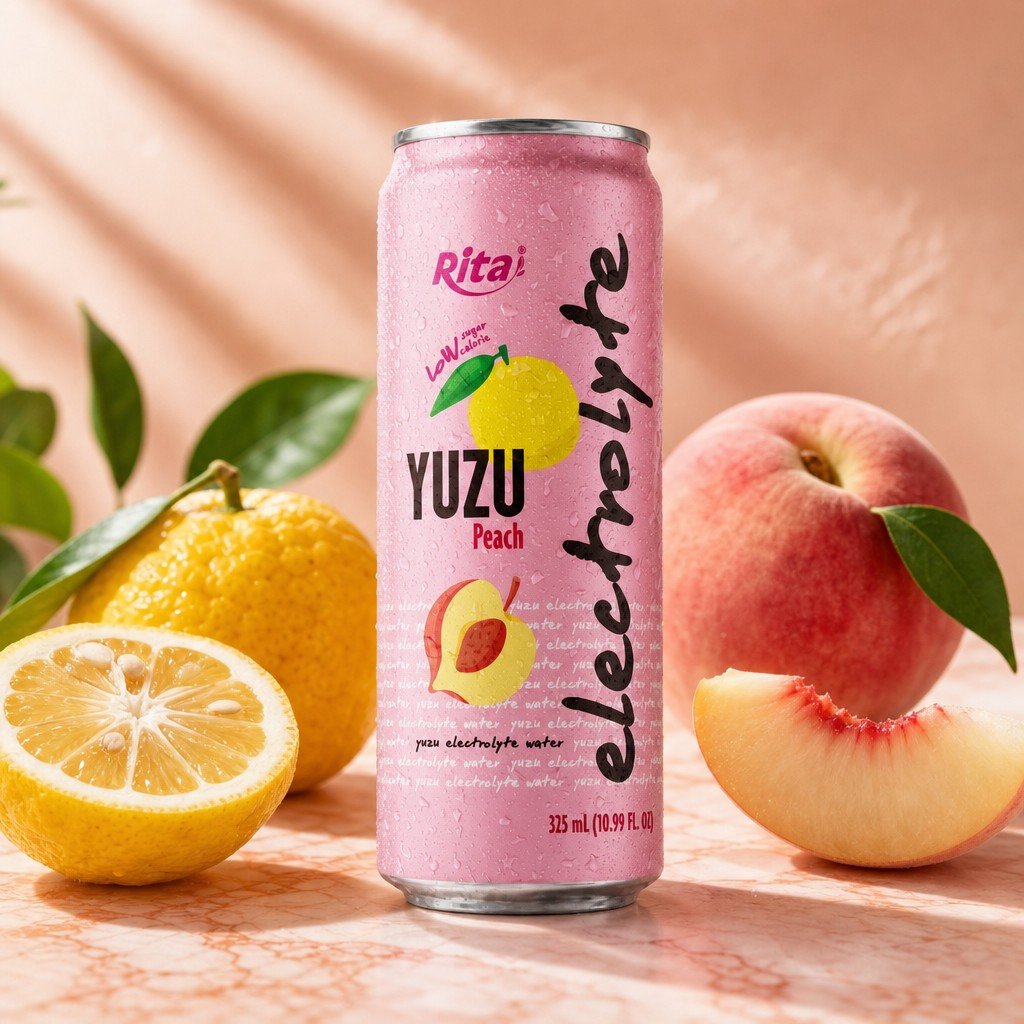
Flavor is the primary commercial variable in this category, and the combination of yuzu and peach is unusually well suited to cross-border distribution. Yuzu supplies a sharp, aromatic top note with a recognizable citrus identity, while peach contributes a rounded mid-palate that softens the overall profile and widens appeal beyond citrus enthusiasts.
Taste-First Design Choices
In sensory terms, the drink is built for a light, refreshing experience rather than heavy sweetness. The low-sugar formulation keeps the citrus brightness at the front of the tasting curve, with peach emerging as the drink warms slightly in the mouth. This structure is well matched to the format: a 325ml can is typically consumed quickly, so the initial impression needs to be clean and decisive.
The pairing also gives formulators a broad set of application angles. The same base profile can anchor seasonal releases, limited-edition cans, or co-branded promotions with retailers and food service partners, all while remaining within the existing specification and certification footprint.
Label Simplicity and Formulation Discipline
Private label buyers increasingly ask for ingredient lists that can be understood at a glance. The electrolyte water positioning supports that requirement because the story is straightforward: water, fruit flavoring, electrolytes and a controlled sugar level. The label keeps the sugar and calorie message prominent, which aligns with the reformulation trend that has driven category growth across multiple regions.
Consistency across production runs matters just as much as the first sample. For an OEM supplier, that means locked-in raw material specifications, standardized mixing protocols and documented process controls — the kind of discipline that shows up in repeat orders rather than in marketing claims.
RITA OEM Capacity and Global Export Reach
Behind the product sits a manufacturer built for scale. RITA Food and Drink Co., Ltd operates more than 50 automated production lines and ships over 1,200 containers monthly, positioning the company among the larger export-oriented beverage producers in the region. The firm serves brands in more than 180 countries and territories, with production capability spanning tropical fruit juices, coconut products, functional and energy drinks, and lightly formulated waters like this one.
Certifications That Open Markets
Market access in this category is rarely decided by taste alone. The company holds BRC, FSSC 22000, Halal Jakim, Halal HCA-GCC, Kosher, ISO, GMP, HACCP and SMETA certifications, covering the documentation that buyers in the Middle East, Europe and Asia-Pacific commonly request during supplier qualification. That certification breadth reduces onboarding time for new private label programs.
Commercial terms are equally practical. Minimum order quantity is set at 500 cartons, delivery runs 20 to 25 days after order confirmation, and the supply capability is listed at 600 twenty-foot containers per month, with shipment through Ho Chi Minh Port, Vietnam. Payment terms include L/C and T/T, and free samples are available for evaluation before commitment.
From Our Orchards — Sourcing Citrus and Stone Fruit Inputs
Flavor credibility in fruit-based beverages starts with raw material quality, and sourcing strategy is an increasingly visible part of the buyer conversation.
RITA draws much of its fruit base from the Mekong Delta, one of Vietnam's key fruit sourcing regions, where warm conditions and established grower networks support consistent supply of tropical and seasonal fruits used across the company's beverage portfolio.
For buyers interested in seeing how fruit inputs are cultivated and evaluated at origin, the company's field-to-factory documentation is available here:
Packaging Economics and Private Label Opportunity
The 325ml aluminum can is the product's most visible commercial advantage. Aluminum supports premium print finishes, rapid chilling, high fill rates and a 24-month shelf life, all of which matter for importers managing long lead times and multi-warehouse distribution. The packaging also travels well through e-commerce fulfilment and travel retail channels where breakage risk is a recurring concern.
For private label buyers, the format pairs naturally with the OEM structure. The Yuzu Peach Electrolyte Water Drink 325ml Low Sugar Hydration Beverage can be adapted for retailer-specific labeling within an existing certified production framework, and the wider special drink catalog offers adjacent formats for portfolio expansion.
Choosing the Right Container
Not every market wants the same vessel, and comparing formats helps buyers align the product with channel economics.
| Container | Best suited channel | Shelf life | Considerations |
|---|---|---|---|
| 325ml aluminum can | Convenience, food service, travel retail | 24 months | Premium print, fast chill, low breakage |
| PET bottle | Modern trade, multipack bundles | 12–18 months | Lightweight, resealable, flexible sizing |
| PP bottle | Regional retail, on-premise | 12 months | Cost-efficient, widely recyclable |
| Glass bottle | Premium retail, gift packs | 12–24 months | High shelf appeal, heavier logistics |
The selection decision typically follows the channel rather than the formulation. A can-led program suits high-turnover locations, while PET supports value-oriented multipacks and refillable positioning in selected markets.
What Buyers Should Evaluate Next
The most useful next step for prospective partners is a structured evaluation: request samples, confirm formulation details against local labeling rules, and review certification documents for the specific destination market. Because the product is positioned for wide distribution rather than a single region, the qualification process benefits from early clarity on claims, sugar declaration and ingredient nomenclature.
Buyers seeking a broader beverage portfolio will also find related categories on the platform, including the soft drinks catalog, which sits alongside fruit drinks, aloe drinks, milk series and energy formats. That breadth allows distributors to build a coherent range rather than sourcing from multiple fragmented suppliers.
The full product listing for the Yuzu Peach Electrolyte Water Drink 325ml includes current specifications, packaging options and the latest pricing request flow, making it a practical reference point during supplier comparison.
Frequently Asked Questions
What is the Yuzu Peach Electrolyte Water Drink 325ml?
It is a low-sugar, low-calorie hydration beverage supplied in a 325ml aluminum can, combining yuzu citrus and peach flavoring with an electrolyte water base. It is produced by RITA Food and Drink Co., Ltd for OEM and private label programs in multiple markets.
What certifications are available for export?
The production facility holds BRC, FSSC 22000, Halal Jakim, Halal HCA-GCC, Kosher, ISO, GMP, HACCP and SMETA certifications, supporting market access across the Americas, Europe, Asia, the Middle East, Africa and Oceania.
What is the minimum order quantity and lead time?
Minimum order quantity is 500 cartons, with delivery scheduled 20 to 25 days after order confirmation from Ho Chi Minh Port, Vietnam. Free samples are available for evaluation, and payment terms include L/C and T/T.
Can the product be adapted for private label branding?
Yes. The product is offered as an OEM/ODM solution, allowing buyers to apply their own branding within the existing certified production framework while retaining the specified formulation, packaging format and shelf life.
Related news items:
Older news items:
- RITA Grape Prebiotic Soda Attracts Global OEM Buyers - 11/10/2026 18:27
- Sparkling Mango Juice With Protein Rides New Global Supply Chains - 08/10/2026 18:22
- Rita Team Building 2026: Ready for Hon Rom, Phan Thiet - 07/10/2026 23:55
- Coconut Water With Pineapple Juice Faces New Regulatory Scrutiny - 06/10/2026 18:00
- From Arrival to Adventure: Rita’s Hòn Rơm Team Building Itinerary - 05/10/2026 18:55