
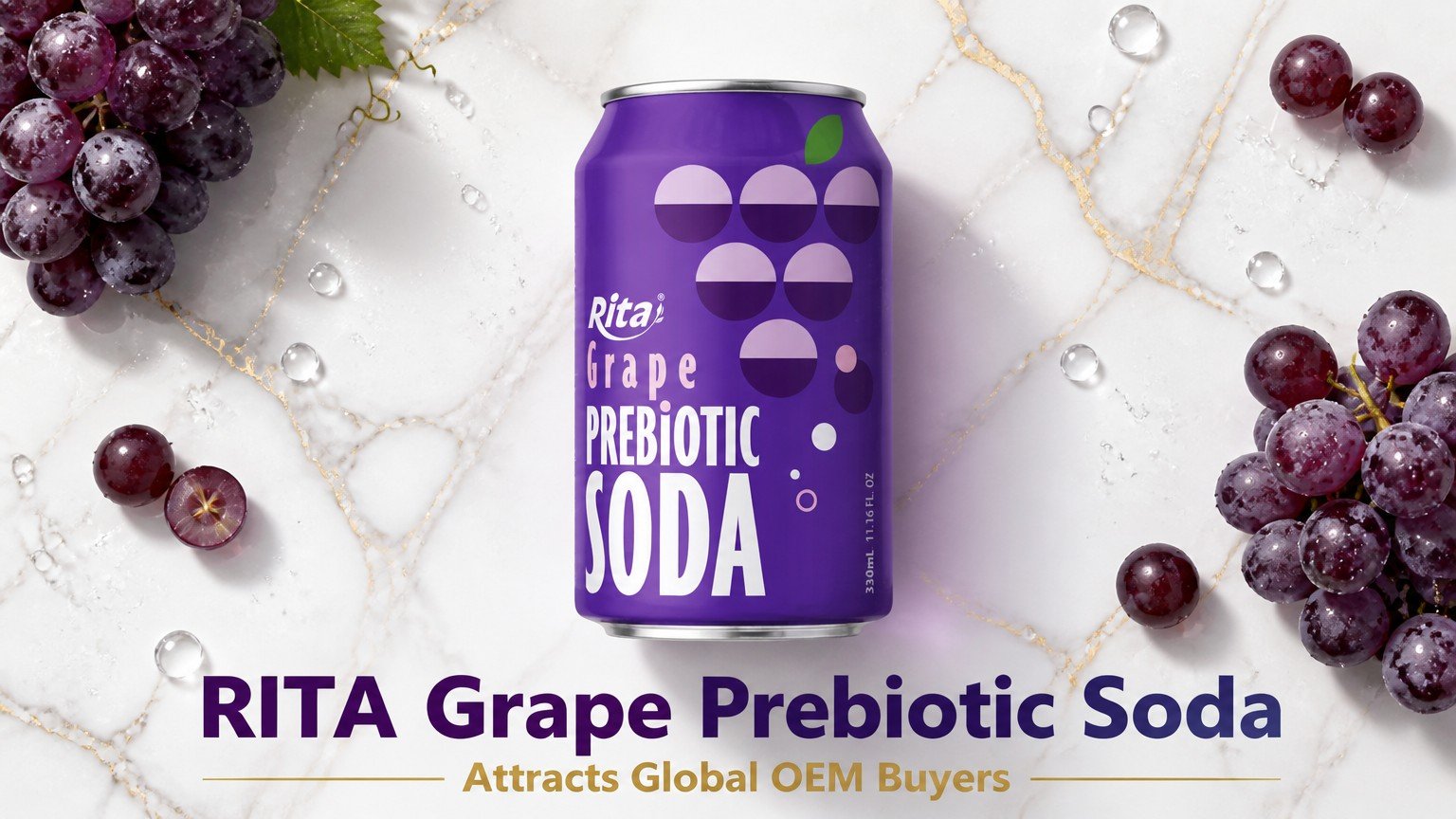
RITA Grape Prebiotic Soda Attracts Global OEM Buyers
The global beverage aisle is being redefined by a question that rarely appeared on supermarket shelves a decade ago: what exactly is in the can? In private label programs spanning the Americas, Europe, Asia, the Middle East, Africa and Oceania, sparkling drinks with clearly printed ingredient lists are pulling ahead of legacy cola formats, and buyers are now treating flavor, format and formulation as a single purchasing decision rather than three separate ones. Against that backdrop, grape prebiotic soda has moved from experimental specialty shelf to repeat-order staple, and RITA Food and Drink Co., Ltd. has built a production-ready version of the format in its 330ml short can.
For brand owners and distributors hunting for a stable, high-margin sparkling SKU, flavor novelty alone no longer decides a listing. The format has to ship across multiple climate zones, hold shelf life through long distribution chains, survive retail handling and arrive on schedule. Those are precisely the variables that a veteran OEM beverage manufacturer in Southeast Asia has spent two decades optimizing.
Key Takeaways
- Grape prebiotic soda is gaining private label traction across the Americas, Europe, Asia, the Middle East, Africa and Oceania.
- The 330ml short aluminum can is a compact, lightweight format suited to chilled retail, foodservice and travel retail distribution.
- RITA supplies the format with a 24-month shelf life, a 20 to 25 day delivery window and monthly capacity of 300 twenty-foot containers.
- Production runs under BRC, FSSC 22000, ISO 22000, HACCP, GMP, SMETA, Halal Jakim, Halal HCA-GCC and Kosher certification.
- Buyers receive free samples, a minimum order of 500 cartons, and FOB Ho Chi Minh Port terms payable by L/C or T/T.
Sparkling Drinks With Ingredient Transparency Are Winning Shelf Space
Category leaders are quietly rewriting their portfolio maps.
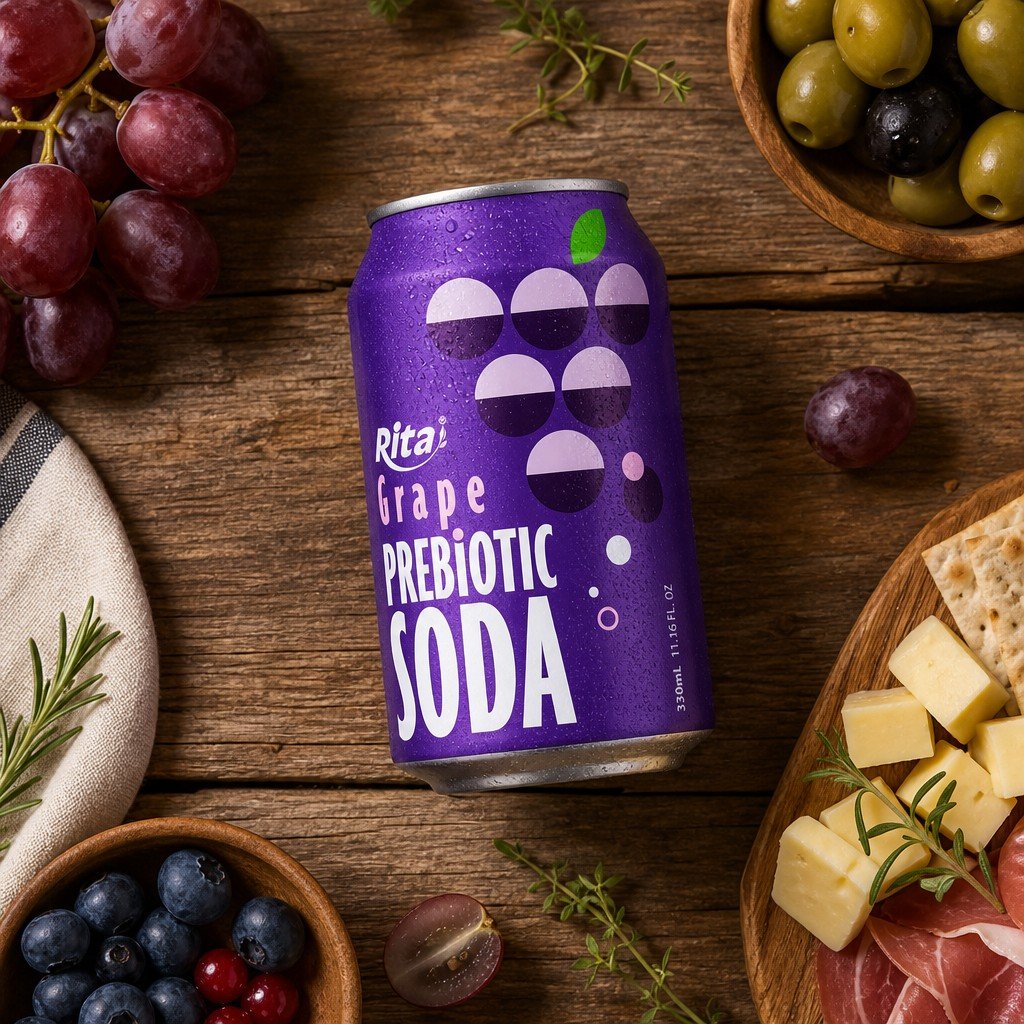
Across almost every major distribution channel, the same pattern is emerging. Shoppers are scanning ingredient panels more closely, distributors are asking for cleaner label language, and regional buyers want sparkling drinks that travel well and read consistently on shelf. That combination has turned what used to be a novelty flavor into a dependable line item for private label soda programs, with grape variants performing especially well because the flavor is instantly recognizable across almost every consumer culture without the taste-translation risk carried by more exotic fruit profiles.
The trend also sits at the intersection of two purchasing habits that used to be seen as separate. On one side, shoppers are gravitating toward sparkling formats that feel lighter and less syrupy than traditional cola. On the other side, ingredient-driven products are moving off the specialist shelf and onto the standard chiller door. Prebiotic soda lands between those two behaviors rather than competing against either, which is why it has been adopted so quickly by regional importers and supermarket own-brand teams that rarely take flavor gambles.
Why Grape Prebiotic Soda Fits Private Label Strategy
Private label buyers tend to evaluate sparkling drinks on three practical criteria before they ever taste them: does the pack format fit the cooler, does the flavor sell in the first placement, and can the supplier deliver consistently at container scale. A prebiotic soda 330ml aluminum can format answers all three, because the short can height fits standard cooler trays, the deep purple grape identity photographs well in digital catalogs, and the production base behind it already runs at exporter scale rather than pilot scale.
- Flavor recognition. Grape reads as familiar in Latin American, European, Middle Eastern and Southeast Asian retail environments alike.
- Format flexibility. A short can supports chilled single-serve placement, multipack bundling and foodservice pouring without a second SKU.
- Label consistency. Printed can graphics stay stable across production runs, which protects distributor branding over long campaigns.
- Channel range. The same unit can be positioned in convenience, canteen, travel retail and club store environments.
For buyers already reviewing the company's sparkling range, the wider soft drinks catalogue offers an immediate point of comparison against other carbonated lines, while the shorter list of prebiotic variants keeps range planning simple for brands introducing the format for the first time.
Inside the Grape Flavor Prebiotic Soda 330ml Short Can
The pack itself does most of the shelf work before the first sip.
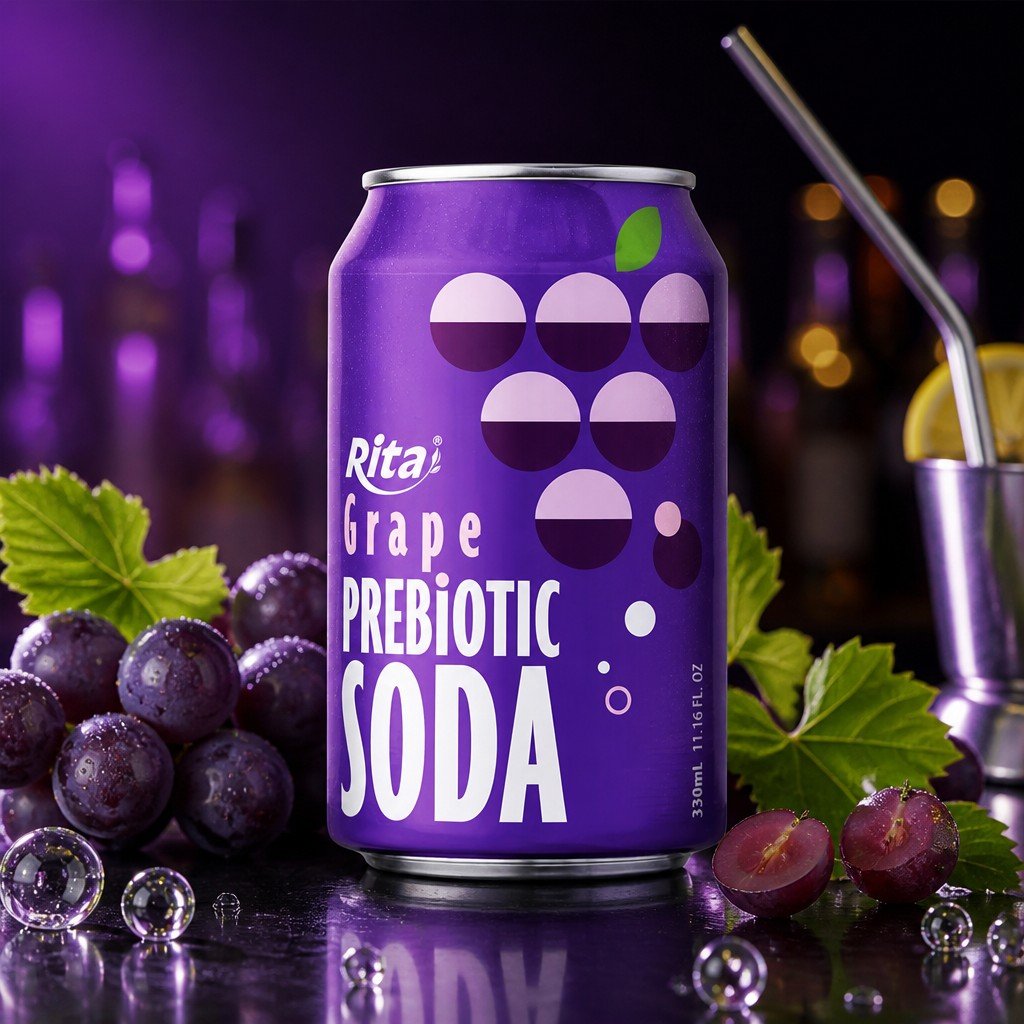
Designed around a deep purple base, the can carries a stylized grape cluster built from layered half-circles, supported by small bubble motifs, white and light purple lettering and a single green leaf accent that breaks up the field of color. The result is a visual identity that stays legible at compact can height and holds its own next to taller sparkling water packs in the same cooler. The volume is stated plainly at 330ml, or 11.16 FL OZ, which keeps the unit in the range most convenient and club-store programs already buy in.
Grape Prebiotic Soda Format Specs at a Glance
| Attribute | Specification |
|---|---|
| Product | Grape Flavor Prebiotic Soda |
| Volume | 330ml (11.16 FL OZ) |
| Packaging | Aluminum short can |
| Shelf life | 24 months |
| Minimum order quantity | 500 cartons |
| Delivery time | 20 to 25 days after order confirmation |
| Monthly supply ability | 300 twenty-foot containers |
| Port of loading | Ho Chi Minh Port, Vietnam |
| Payment terms | L/C, T/T |
| Sampling | Free sample available |
The complete specification for the grape flavor prebiotic soda 330ml short can is published on the manufacturer's OEM platform, where buyers can review pack dimensions, container loading guidance and certification scope before opening a quote request. Distributors comparing lines will also find the can positioned alongside the company's broader soft drinks product range, making range-building straightforward for programs that want sparkling, non-carbonated and tea-based lines from a single supplier.
How the Short Can Performs Across Distribution Channels
Format choice is increasingly a channel decision rather than a packaging preference, and this SKU was built with that reality in mind.
- Chilled convenience retail: the short can height clears standard cooler door bars and supports quick single-serve grab-and-go placement.
- Club and multipack formats: the same unit runs in cartons for bundling, keeping one SKU active across multiple price tiers.
- Foodservice and canteen pours: the wider pour diameter suits dispensed and fountain-adjacent applications without a reformulated variant.
- Travel retail: a stable 24-month shelf life and compact pack weight reduce obsolescence risk on rotating shelves.
Brand owners interested in co-branded or private label versions can begin with the existing template and adjust artwork, secondary flavor language or multipack configuration without rebuilding the supply chain from scratch.
For procurement teams that prefer to evaluate the format physically before committing, the manufacturer offers a free sample of the grape prebiotic soda short can, which typically arrives with artwork proofing options and loading calculations for the first container order.
From Sun-Kissed Vineyards to a Finished Sparkling Can
Flavor credibility starts well upstream of the canning line.
RITA's grape sourcing has been documented in the company's own reporting, and the RITA grape story from sun-kissed vineyards to refreshing fruit juice creations traces how raw material selection, harvest timing and pressing standards are carried through to finished beverage profiles across the sparkling portfolio.
Video documentation of the grape growing regions and harvest operations is available at
, giving buyers an on-the-ground view of the raw material base that supports the wider fruit beverage range.Upstream traceability matters more than it did five years ago, because importers are being asked to substantiate supply continuity in their own tenders, and grape-based sparkling programs are no exception.
Distillery Turmoil Signals a Bigger Shift in Beverage Demand
The spirits sector is absorbing shocks that non-alcoholic suppliers can read as an early signal.
Diageo, one of the world's largest drink groups, is facing sustained labor unrest with additional strikes reported at its Cameronbridge distillery, while a US judge dismissed a separate tequila-related lawsuit the company had pursued. In the same period, the group announced plans to close the Guinness Open Gate brewery in the United States, Holyrood, the Scottish distiller, temporarily halted production, and Australian Vintage moved to sell its Nepenthe cellar door and vineyard. Each event is small on its own; together they describe an industry where volume assumptions are being actively reassessed.
For sparkling drink buyers, the signal is straightforward. Capital and shelf attention are flowing toward formats that can be produced year-round, sold across several channels and explained to shoppers in one sentence. Distilled spirits face weather, harvest and aging dependencies that a carbonated can simply does not, and that contrast has become harder for retail buyers to ignore as they rebuild assortment after a volatile several years.
OEM Infrastructure That Keeps Global Soda Programs on Schedule
Capacity claims only matter when the underlying system is already proven at volume.
RITA Food and Drink Co., Ltd. was established in 2004 and today operates as a Vietnamese OEM and ODM beverage manufacturer with more than 50 automated production lines, supplying brands in over 180 countries and exporting more than 1,200 containers monthly to over 200 countries and territories. The production portfolio spans tropical fruit juices, coconut products, sparkling and tea-based drinks, and is packaged across aluminum cans, glass bottles, PET and PP bottles, which means a distributor can source a grape sparkling line and a complementary juice or coconut SKU without splitting the supply chain.
Certification Coverage Across Markets
- BRC and FSSC 22000 for global retail audit readiness
- ISO 22000 and HACCP for food safety management systems
- GMP for consistent manufacturing practice across facilities
- Halal Jakim and Halal HCA-GCC for Middle Eastern and Gulf market access
- Kosher certification for specialty retail and export programs
- SMETA for responsible supply chain documentation
That certification stack is the practical difference between a product that can be listed in one market and one that can be listed in several at the same time. Buyers can review the full company background at RITA's company profile, or scope a dedicated formulation through the OEM production service when a private label grape soda needs artwork, flavor tuning or a different can format.
Private Label Opportunity for Distributors and Retailers
The commercial case for this SKU is built around low entry friction rather than high risk.
At 500 cartons minimum per order and a 20 to 25 day delivery window after confirmation, the entry point is accessible to regional distributors testing a new sparkling line while still leaving enough volume headroom to scale once the format proves itself. Monthly supply ability of 300 twenty-foot containers, loaded from Ho Chi Minh Port and payable by L/C or T/T, means the supplier can support national rollouts rather than one-off pilot shipments. Free samples remove the last variable from early-stage evaluation, and the after-sales support model extends from order placement through artwork, loading and delivery.
Procurement Checklist for Soda Programs
Buyers screening suppliers for a grape sparkling line tend to work through the same sequence.
- Confirm flavor fit with an actual product sample rather than a flavor sheet alone.
- Check the can format against cooler, shelf and multipack requirements in the target channel.
- Verify certification scope covers the destination market, including Halal and Kosher where applicable.
- Model loading volumes, MOQ and lead time against the launch calendar.
- Review port terms, Incoterms and payment instruments before contract signature.
Working through that checklist against a supplier that already exports at scale is what turns a promising flavor into a dependable RITA beverage line. The grape prebiotic soda 330ml short can page carries the current specification sheet, sample request form and loading guidance for buyers moving from shortlist to purchase order.
Frequently Asked Questions
What is grape prebiotic soda and what makes the 330ml short can format different?
It is a carbonated grape-flavored drink formulated with prebiotic fiber and produced in a 330ml aluminum can rather than a standard tall can. The shorter can height fits standard cooler trays and supports both single-serve and multipack placement without a second SKU.
What is the shelf life and delivery time for this product?
The Grape Flavor Prebiotic Soda 330ml Short Can carries a 24-month shelf life, with delivery scheduled 20 to 25 days after order confirmation. Monthly supply ability reaches 300 twenty-foot containers from Ho Chi Minh Port, Vietnam.
Can the product be produced as a private label soda?
Yes. RITA offers OEM and ODM solutions that cover artwork adaptation, flavor adjustment and alternative packaging formats across aluminum cans, glass bottles, PET and PP bottles. Minimum order quantity is 500 cartons, and free samples are available before the first production run.
Which certifications back the product for export?
Production is certified under BRC, FSSC 22000, ISO 22000, HACCP, GMP, SMETA, Halal Jakim, Halal HCA-GCC and Kosher, supporting listings across the Americas, Europe, Asia, the Middle East, Africa and Oceania.
Related news items:
Older news items:
- Sparkling Mango Juice With Protein Rides New Global Supply Chains - 08/10/2026 18:22
- Rita Team Building 2026: Ready for Hon Rom, Phan Thiet - 07/10/2026 23:55
- Coconut Water With Pineapple Juice Faces New Regulatory Scrutiny - 06/10/2026 18:00
- From Arrival to Adventure: Rita’s Hòn Rơm Team Building Itinerary - 05/10/2026 18:55
- Yuzu Peach Electrolyte Water Drink Sees Global Export Momentum - 05/10/2026 09:05