
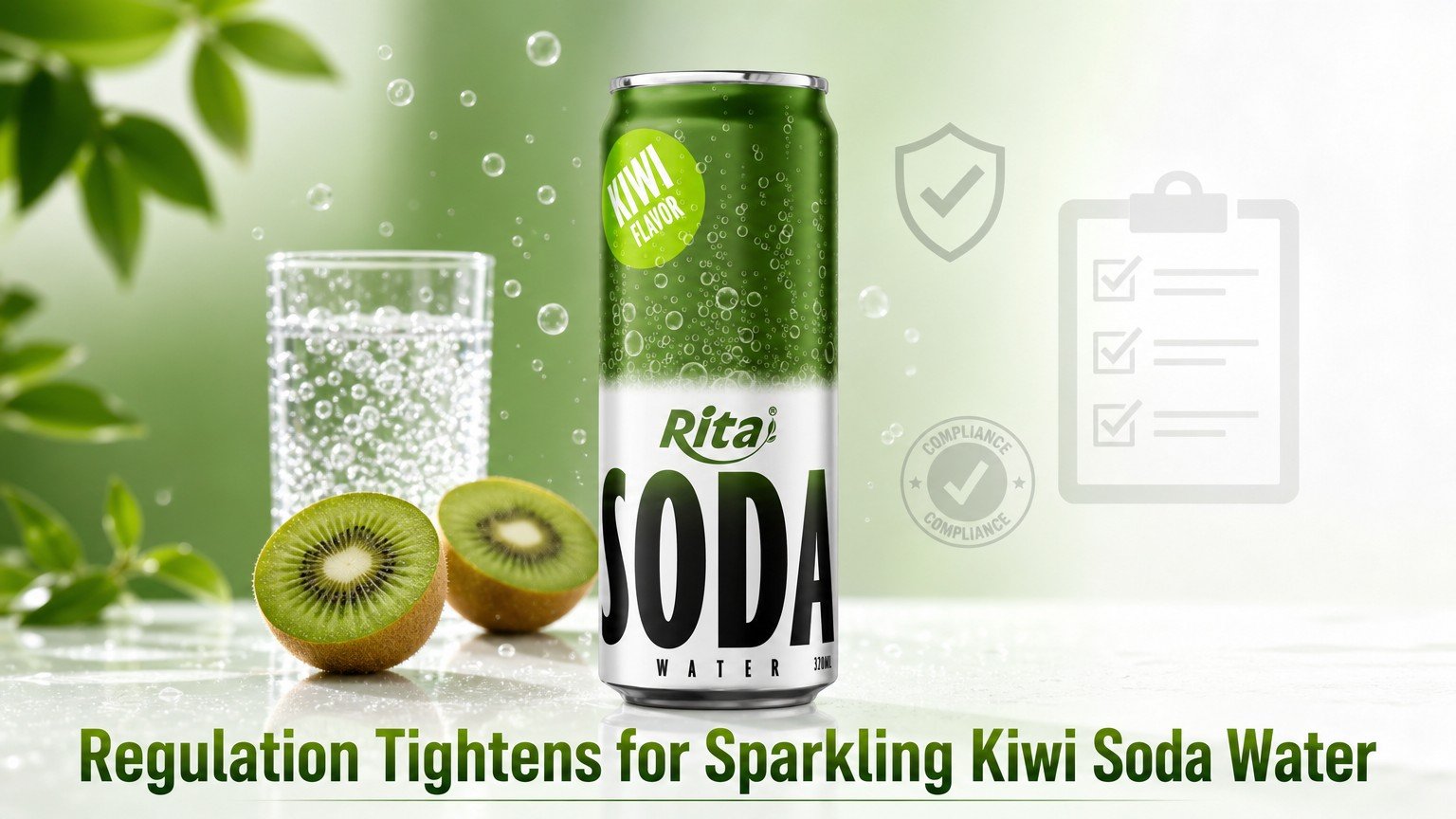
Regulation Tightens as Sparkling Kiwi Soda Water Gains Global Ground
Regulatory scrutiny is intensifying across the global beverage trade, and sparkling kiwi soda water sits at a useful intersection of flavour development and compliance. As authorities across the Americas, Europe, Asia, the Middle East, Africa and Oceania revisit labelling rules, tax proposals and environmental standards, manufacturers are being asked to prove that every can on the shelf can clear a fast-moving rulebook. The 320ml aluminum can format, long favoured for shelf stability and portability, has become a practical test case for how quickly a mid-size soft drink line can adapt to change without losing its position with distributors.
Key Takeaways
- Regulatory activity around carbonated drinks is accelerating in every major region, from tax policy to environmental enforcement.
- The 320ml aluminum can balances portability, a 24-month shelf life and efficient container loading for export.
- Certification stacks including BRC, FSSC 22000, Halal, Kosher, ISO, GMP and HACCP increasingly decide market access.
- OEM partners with large-scale capacity help private label brands respond to rule changes within a single production cycle.
- Sparkling fruit sodas remain one of the steadier pockets inside a soft drinks category under policy pressure.
Regulatory Pressure Reshapes the Global Soft Drink Trade
Compliance, not novelty, has become the first filter for new beverage launches across every major trading region.
Recent headlines underline how quickly the operating environment can shift. Carlsberg was ordered to shut a brewery in India over emissions violations, a reminder that environmental enforcement now sits alongside food safety inside supplier audits. In France, a cyberattack on supermarket chains disrupted retail operations and pushed buyers to demand tighter data and traceability safeguards from their vendors. Meanwhile, Constellation Brands has re-entered the mergers and acquisitions conversation even as the domestic beer market stays flat, and Rosemount TWE has returned to family ownership while its parent continues a disposal strategy. For beverage suppliers, the message is consistent: ownership structures, security posture and environmental performance are now part of the commercial conversation.
The regulatory angle also sharpens closer to the category itself. German state governments have criticised proposed sugar tax plans, reopening a debate that could reshape formulation and portion decisions if levies advance. Policy discussions of this kind rarely arrive overnight; they build through consultations, pilot schemes and lobbying cycles, which means brands need formulations and packaging that can be adjusted without re-engineering an entire product line.
What Buyers Now Ask Before Signing
Procurement teams across import markets have become noticeably more detailed in their questionnaires. Certificates of analysis, allergen statements, shelf-life verification and audit reports are requested earlier in the conversation than they were a few years ago. For a product such as sparkling kiwi soda water, that means the paperwork trail matters as much as the carbonation level.
This is where supplier selection becomes a risk decision. Buyers weigh lead times, documentation quality and the ability to produce under recognised schemes such as BRC and FSSC 22000, because a rejected container at port costs far more than a slightly higher unit price ever would.
Retailers have also started linking vendor approval to cybersecurity and business continuity questions following the French supermarket incident. Smaller brands relying on a single production site feel that pressure most, which is another reason multi-line manufacturers with diversified capacity attract attention from importers.
Inside the Sparkling Kiwi Soda Water 320ml Can
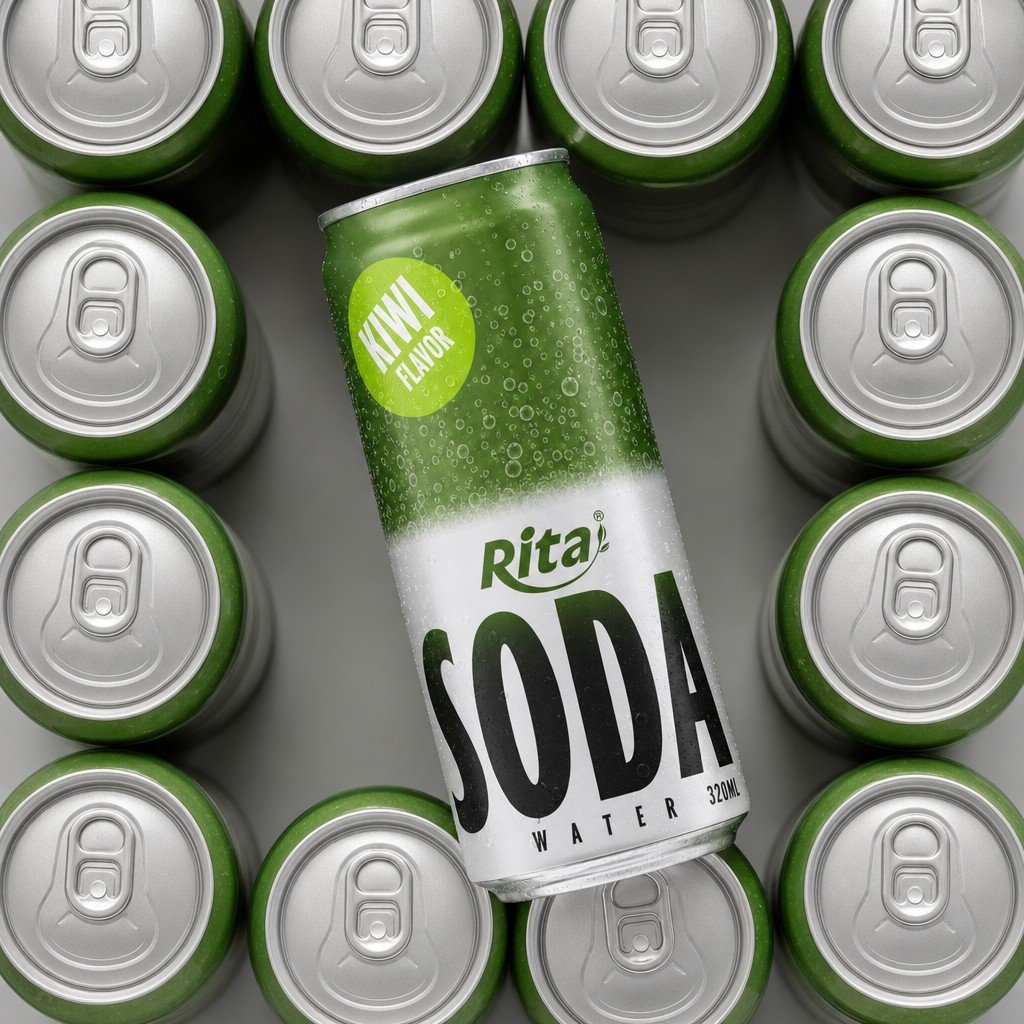
The product pairs a crisp kiwi character with fine carbonation in a compact 320ml can built for modern retail shelves.
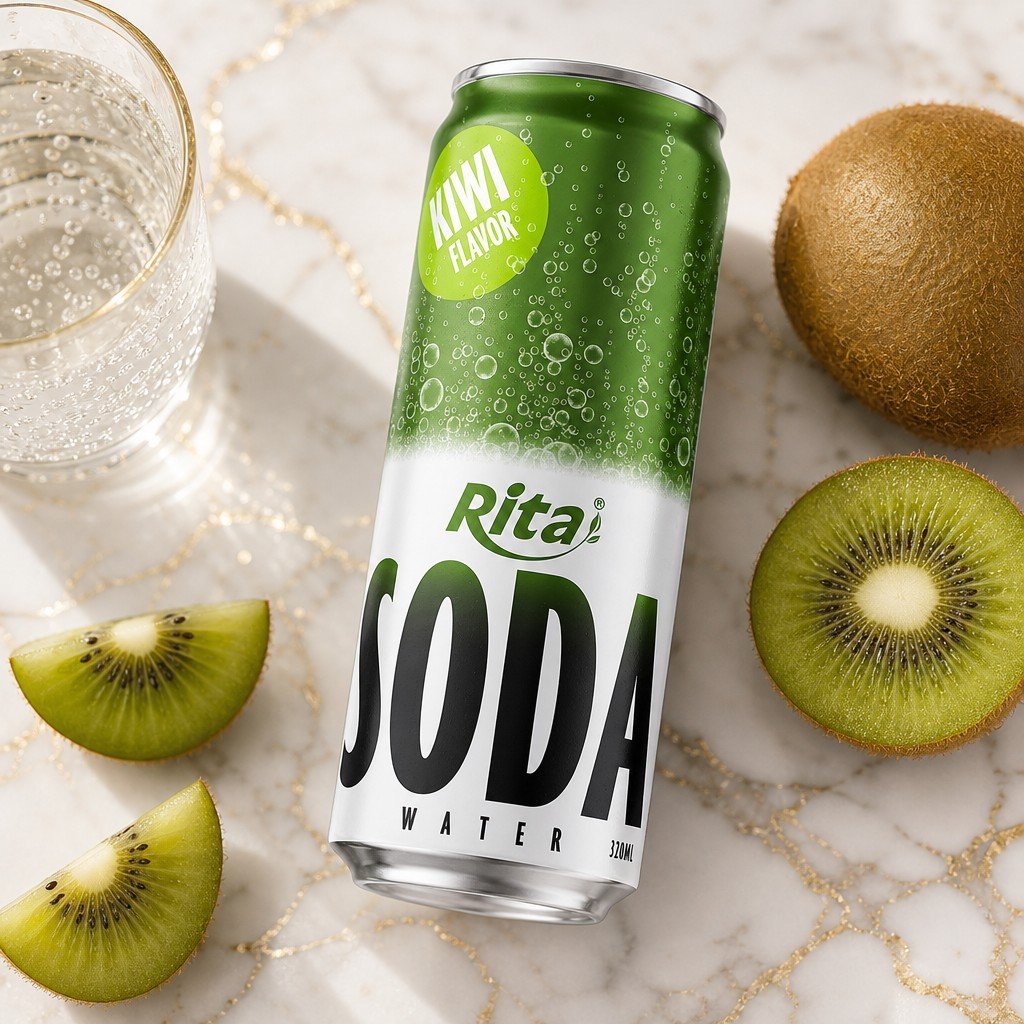
The visual identity is deliberately simple and shelf-friendly. A green and white palette carries a bubble motif across the can, with bold black lettering that stays legible from a distance. That combination works in cooler displays where shoppers scan flavours in seconds, and it translates cleanly onto secondary packaging and shelf strips. Kiwi occupies a distinctive space as a soda flavour: tart enough to feel crisp, familiar enough to avoid the hesitation that unfamiliar profiles sometimes trigger. The result reads as a soda first, with the fruit note carrying the experience rather than sweetness dominating it.
Product Specifications and Packaging Advantages
The specification sheet behind the sparkling kiwi soda water drink 320ml can is straightforward, which is exactly what importers want when comparing suppliers. At its core, this aluminum can beverage format is designed for ambient distribution over long distances:
- Volume - 320 ml single-serve aluminum can
- Shelf life - 24 months under standard storage conditions
- Packaging - aluminum can, suited to ambient distribution
- Minimum order quantity - 500 cartons
- Supply ability - 300 twenty-foot containers per month
- Lead time - 20 to 25 days after order confirmation
- Load port - Ho Chi Minh Port, Vietnam
- Payment terms - L/C and T/T
- Samples - free samples available before order commitment
Aluminium remains the format of choice for carbonated drinks travelling long distances. It withstands internal pressure, chills quickly and stacks efficiently in twenty-foot containers, which keeps freight cost per unit competitive on routes to the Americas, Europe, Africa and Oceania. A 24-month shelf life further eases the pressure on distributors managing slower-moving specialty flavours, giving buyers room to build a listing without an aggressive sell-through deadline. Full details are published on the product specification page for buyers conducting preliminary comparisons.
Certification Stack for Cross-Border Compliance
Certification coverage is arguably the most important line item for regulated markets. The kiwi soda is produced under a framework that includes BRC, FSSC 22000, ISO, GMP and HACCP, alongside Halal Jakim and Halal HCA-GCC approvals and Kosher certification, with SMETA completing the social compliance picture. That combination addresses food safety, religious suitability and ethical sourcing inside a single supplier relationship.
For distributors in markets where Halal paperwork is a condition of listing, having both Jakim and GCC-recognised coverage removes a common bottleneck. The same applies to Kosher certification, which several retail buyers in Europe and North America request as standard, and to the documentation expected of any halal certified beverage moving through formal import channels. Certification breadth is one reason RITA has been able to supply brands across more than 200 countries and territories.
From the Orchard Belt to the Kiwi Soda Can
Flavour consistency begins with raw material control, and RITA treats sourcing as part of the product specification rather than an afterthought. The company draws fruit inputs from a broad Vietnamese growing network, anchored by the Mekong Delta raw material belt, which supplies a wide range of fruits used across the manufacturer's juice and soft drink lines.
Buyers who want to see how sourcing is managed in practice can review regional field footage at
Kiwi itself has expanded into Vietnam's northern highland provinces in recent seasons, adding a domestic option alongside contracted imports. Either way, incoming fruit is assessed against the same incoming-specification discipline applied to every other input, so the kiwi note in each can stays consistent from run to run. Consistency matters more than it sounds: a soda with a drifting flavour profile generates complaints that a retailer cannot easily resolve at shelf.
Why Sparkling Kiwi Soda Water Suits Global Retail
Category watchers point to sparkling fruit sodas as one of the steadier performers inside a soft drinks market under pressure from tax proposals and reformulation demands.
The appeal is partly structural. Sparkling fruit sodas sit between plain carbonated water and full-strength juices, giving retailers a mid-tier option that shoppers understand immediately. Sparkling kiwi soda water strengthens that positioning because the flavour reads as crisp and lightly tart rather than candy-sweet, a distinction that matters as buyers trim sugar levels across their ranges in response to policy debates such as the German proposals.
Format also helps. A 320ml can is a single-serve purchase with a clear portion, it fits standard cooler shelves, and it travels well in mixed pallets alongside other flavours. Importers building a small multi-SKU range can therefore place the kiwi variant within an existing soft drinks selection without reworking planograms, while the matching carbonated soft drink range from RITA offers complementary profiles for range extension.
Private label buyers get a further advantage. Because the format, shelf life and certification set are already established, a distributor can move from sampling to a first shipment inside a single planning cycle. The kiwi soda can listing is structured for exactly that kind of evaluation, with free samples and specification data available before any commitment is made.
OEM Capacity, Order Terms and Export Logistics
Scale determines whether a promising SKU can actually be supplied on schedule, and RITA Food and Drink Co., Ltd has operated at export volume since 2004.
The company runs more than 50 automated production lines and ships over 1,200 containers each month, supplying brands in 180-plus countries with a portfolio spanning tropical fruit juices, coconut products, functional drinks, energy drinks and carbonated formats in cans, glass bottles, PET and PP. Operating as a beverage OEM manufacturer rather than a single-brand producer, RITA supports both OEM and ODM programmes for distributors building their own labels.
That footprint matters when a regulation changes mid-contract. A supplier able to reallocate capacity across dozens of lines can absorb a label revision or a documentation update without pushing a buyer's shipment into the following quarter. It also explains why importers increasingly treat the manufacturing partner as a compliance resource rather than a pure production vendor, with specification questions, certificate renewals and audit coordination handled from the first enquiry through to post-shipment support.
Order Terms and Commercial Practicalities
For the kiwi soda 320ml can, the commercial terms are published clearly: a 500-carton minimum order, 20 to 25 days from confirmation to dispatch, L/C or T/T payment, and loading at Ho Chi Minh Port. A supply capacity of 300 twenty-foot containers per month gives buyers room to scale a listing once sell-through is proven, without renegotiating the basic framework.
The company describes its approach as full-service coverage from before the order to after the sale, with product quality and taste consistency treated as the constant focus. In practice, that means the same team that answers pre-order specification questions remains reachable after the first container lands, a detail that becomes significant when a customs query or shelf-life question surfaces in an import market.
Buyers comparing partners in the current environment should weigh certification breadth, monthly container capacity and documentation discipline alongside unit cost. Those three factors increasingly decide whether a shipment clears a port on schedule, and they sit behind the steady growth in soft drink export volumes recorded across the Americas, Europe, Asia, the Middle East, Africa and Oceania.
Frequently Asked Questions
What volume does the Sparkling Kiwi Soda Water Drink come in?
The product is filled in a 320ml aluminum can, a single-serve format suited to cooler displays, foodservice and mixed-pallet distribution, with a 24-month shelf life under standard storage conditions.
Which certifications support this soda for export?
Production operates under BRC, FSSC 22000, ISO, GMP and HACCP schemes, complemented by Halal Jakim, Halal HCA-GCC, Kosher and SMETA certification, covering food safety, religious suitability and social compliance requirements in import markets.
What is the minimum order quantity and lead time?
The minimum order is 500 cartons, with delivery scheduled 20 to 25 days after order confirmation, loaded at Ho Chi Minh Port under L/C or T/T payment terms, and free samples available before the order is placed.
Can the product be supplied as a private label beverage?
Yes. RITA provides OEM and ODM solutions across its soft drinks portfolio, including aluminium can formats, with artwork, specification and documentation support handled by the same project team.
How much can be supplied per month?
Supply ability is 300 twenty-foot containers per month, backed by more than 50 automated production lines and over 1,200 containers exported monthly across the company wider portfolio.
Related news items:
Older news items:
- Rita at SIAL Paris 2026: Vietnamese Beverage Innovation on the International Stage - 23/10/2026 00:20
- Honoring the Women of Rita Beverage on Vietnamese Women's Day 2026 - 21/10/2026 06:55
- Mangosteen Juice Drink Supply Chains Under Pressure as Demand Expands - 21/10/2026 04:50
- Rita Protein Coffee Opens New Market Avenues for RTD Brands - 20/10/2026 04:43
- Rita Beverage Team Building 2026: A Journey of Connection, Joy and Togetherness - 19/10/2026 06:31