
Protein Coconut Water Gains Ground in Global Beverage Markets
The global beverage industry continues to search for formats that combine familiar ingredients with convenient, ready-to-drink packaging, and protein coconut water has emerged as one of the most closely watched launches of the past two years. As brands across the Americas, Europe, Asia, the Middle East, Africa and Oceania look to refresh their portfolios, coconut-based drinks fortified with protein are drawing attention from retailers, distributors and private label buyers alike. The 325ml aluminum can format, long favored for on-the-go consumption, has become the packaging of choice for this category, offering shelf stability, portability and a premium shelf presence that appeals to modern consumers.
Against this backdrop, Vietnamese manufacturer RITA Food and Drink Co., Ltd has positioned its RITA Original Protein Coconut Water 325ml Can as a reference product for importers evaluating the protein-plus-coconut segment. The product delivers 15g of protein per serving in a compact can, and it arrives backed by a certification portfolio that covers the requirements of most major import markets. For procurement teams, the combination of formulation, packaging and documentation matters as much as the taste profile itself.
Key Takeaways
- Protein-enriched coconut water is one of the fastest-moving sub-categories in the ready-to-drink beverage segment, with 325ml aluminum cans dominating new product introductions.
- Export-ready certifications including BRC, FSSC 22000, Halal, Kosher, ISO, GMP, HACCP and SMETA give buyers a single-source compliance path across multiple regions.
- Large-scale OEM capacity, with supply ability reaching 600 twenty-foot containers per month, supports both national retail chains and regional private label programs.
- Coconut sourcing from established Vietnamese growing regions, notably the Mekong Delta, underpins consistent flavor and year-round availability.
- Payment terms of L/C or T/T, a minimum order quantity of 500 cartons and delivery within 20 to 25 days after order confirmation make the product practical for mid-size importers.
Why Protein Coconut Water Is Capturing Buyer Interest
Coconut water has moved well beyond its origins as a niche tropical refreshment. Over the past decade it has become a mainstream shelf staple in convenience stores, gyms, airports and supermarkets across virtually every region. What has changed recently is the layering of protein into the format, creating a hybrid drink that sits at the intersection of two high-velocity categories: coconut beverages and protein-enriched beverages.
For retailers, this intersection matters because it reduces SKU complexity. Rather than stocking separate coconut water and protein drink lines, a single 325ml can can serve both missions. For distributors, the compact can translates into favorable freight economics: more units per pallet, more pallets per container, and lower landed cost per unit compared with larger formats. And for brand owners exploring private label, a protein coconut water can offers a differentiated proposition without requiring a complete shelf reset.
Flavor Profile and Consumption Occasions
The taste of the RITA Original Protein Coconut Water can is deliberately clean. Coconut water provides a light, slightly sweet base, while the protein addition is formulated to blend smoothly rather than dominate the palate. The result is a drink that works across multiple consumption occasions, from a mid-morning desk break to a post-workout refreshment to a chilled afternoon pick-me-up. The 325ml (11 fl. oz) volume aligns with the portion sizes that most global retailers list as standard for single-serve cans.
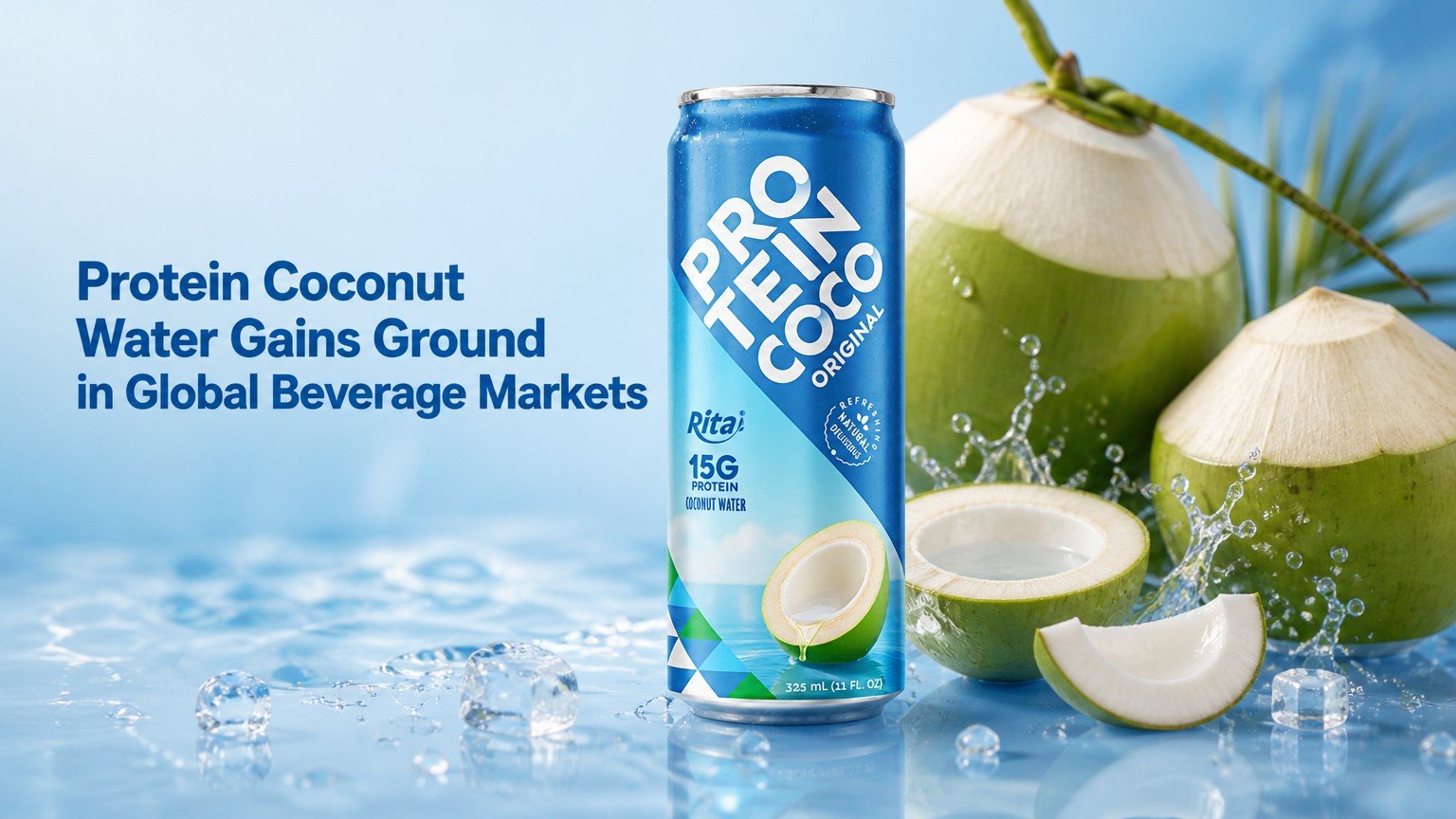
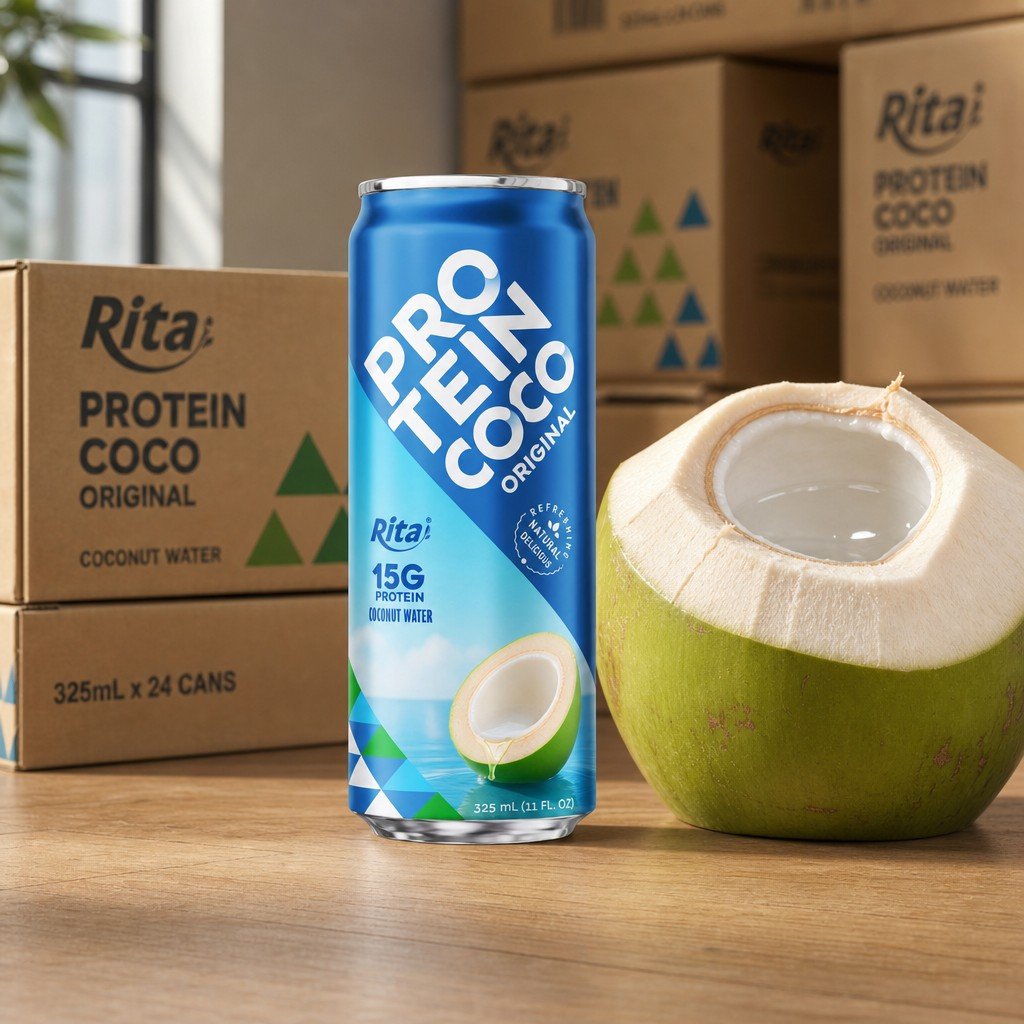
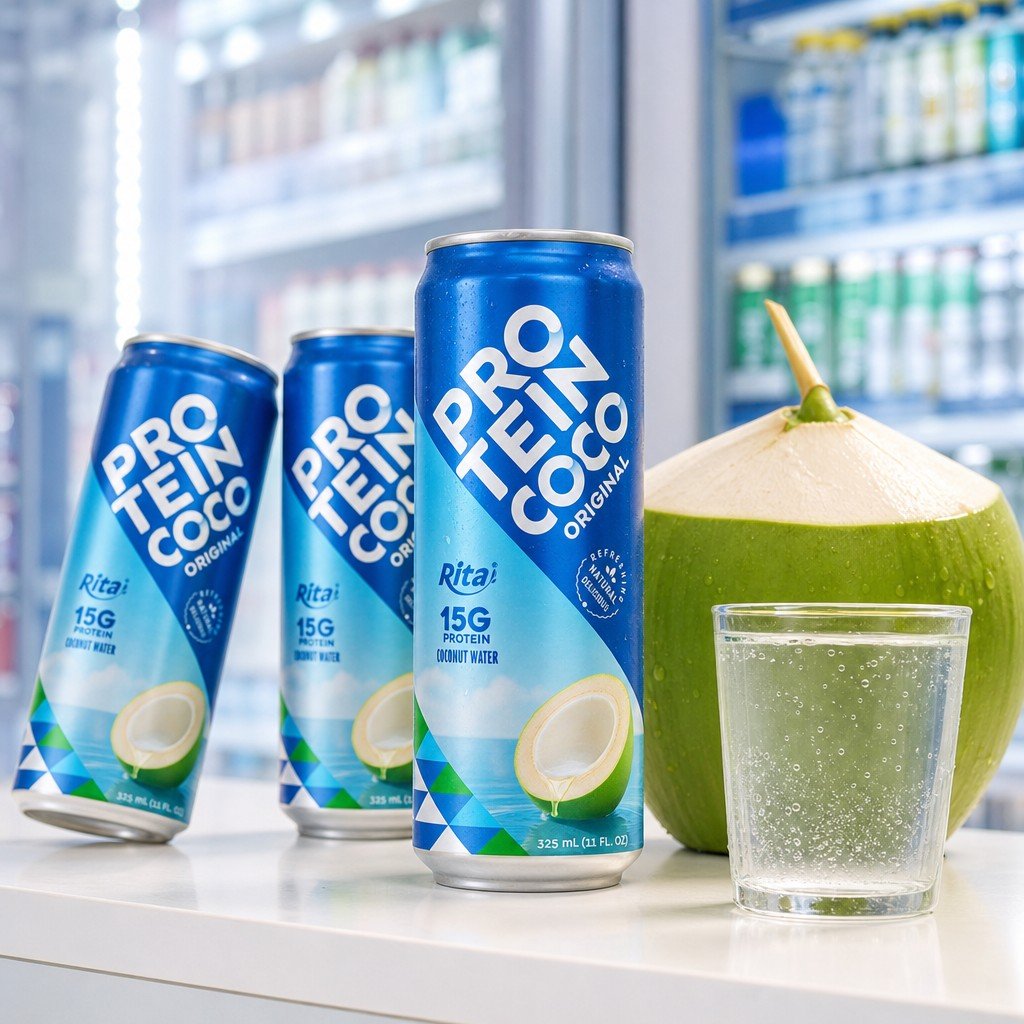
Packaging design reinforces the proposition. The blue-and-white can artwork features a halved green coconut graphic, the words "PROTEIN COCO" and "ORIGINAL" in bold diagonal type, and a clear "15G PROTEIN COCONUT WATER" callout. A "refreshing natural delicious" badge and green-and-blue geometric accents complete the visual identity, giving the can a contemporary look that photographs well for e-commerce listings and social media.
How the Format Suits Private Label Programs
Private label remains one of the strongest growth engines in global beverages, and protein coconut water is a natural fit. The aluminum can format accepts full-body shrink sleeves or direct print, allowing retailers to apply their own branding without retooling. Shelf life of 24 months gives distributors comfortable inventory windows, particularly for buyers shipping to markets with longer ocean transit times.
For brands evaluating a private label entry, the practical questions are capacity, certification and lead time. The product in question ships from Ho Chi Minh Port with a minimum order quantity of 500 cartons and a delivery window of 20 to 25 days after order confirmation. Supply ability of 600 twenty-foot containers per month means that even a national rollout can be supported without phased delivery schedules. Buyers interested in reviewing the full specification can visit the product page for RITA Original Protein Coconut Water or explore the broader coconut products catalog for complementary formats.
Market Opportunity Across Global OEM Regions
The addressable market for protein coconut water spans every region served by global OEM suppliers, and the demand signals differ meaningfully from one territory to another.
Americas and Europe
In North and South America, coconut water has already achieved mainstream distribution, and the protein variant is being trialed by mid-tier retailers looking to differentiate from private label commodity SKUs. European buyers, meanwhile, tend to prioritize certification depth. Halal, Kosher and FSSC 22000 credentials open doors in Western Europe, while SMETA and BRC documentation satisfy the due diligence requirements of major grocery groups.
Asia, Middle East, Africa and Oceania
Across Asia, ready-to-drink cans continue to gain share as urban convenience retail expands. In the Middle East, Halal certification is a baseline requirement rather than a differentiator, making Jakim and HCA-GCC approvals essential. African importers often focus on shelf life and packaging durability, where the 24-month aluminum can format performs well under variable distribution conditions. In Oceania, clean-label positioning and transparent sourcing stories resonate with buyers, and Vietnamese coconut sourcing provides a credible origin narrative.
| Region | Primary Buyer Priority | Key Certification Focus |
|---|---|---|
| Americas | Shelf differentiation and private label speed-to-market | BRC, ISO, GMP |
| Europe | Regulatory compliance and audit readiness | FSSC 22000, SMETA, Kosher |
| Asia | Format convenience and price positioning | HACCP, ISO, Halal |
| Middle East | Halal compliance as market entry condition | Halal Jakim, Halal HCA-GCC |
| Africa | Shelf life and distribution resilience | HACCP, BRC, GMP |
| Oceania | Sourcing transparency and packaging standards | BRC, FSSC 22000, ISO |
Manufacturing Scale and Export Capability
Scale separates a sample order from a sustainable supply relationship. RITA Food and Drink Co., Ltd, established in 2004, operates more than 50 automated production lines and exports over 1,200 containers per month to brands in more than 200 countries and territories. That infrastructure supports a portfolio spanning tropical fruit juices, coconut products, functional drinks, energy drinks and more, packaged in aluminum cans, glass bottles, PET and PP bottles.
For a buyer evaluating protein coconut water, the relevant question is whether the manufacturer can hold quality steady across repeat orders. The certification stack answers that question directly: BRC, FSSC 22000, Halal Jakim, Halal HCA-GCC, Kosher, ISO, GMP, HACCP and SMETA cover the audit regimes most commonly invoked by global retail and foodservice customers. Free samples are available for evaluation, and payment terms of L/C or T/T provide the transactional flexibility that international buyers expect.
What Procurement Teams Should Ask
When shortlisting a supplier for protein coconut water, experienced procurement teams typically work through a standard set of checks:
- Formulation consistency — confirm protein content per can and batch-to-batch tolerance.
- Certification relevance — match the supplier's certificate portfolio to the specific import market.
- Capacity headroom — verify monthly container availability against projected volumes.
- Lead time and port — confirm shipping port, production window and incoterms.
- Sample availability — request physical samples before committing to a purchase order.
The RITA Original Protein Coconut Water 325ml Can checks each of these boxes, and the manufacturer's OEM service team supports buyers from initial specification through after-sale follow-up.
From Our Orchards Raw Material Farms
Consistent flavor in a coconut beverage starts long before the can is filled. The raw material base for coconut water products originates in Vietnam's established coconut growing regions, where sourcing programs are designed to deliver steady volume and predictable quality across harvest cycles.
The Ben Tre coconut farm program traces coconut supply from plantation through to finished product, giving buyers visibility into the origin of the liquid that fills each can.
Broader ingredient sourcing draws on the Mekong Delta raw material area, which supplies a wide range of tropical inputs used across the manufacturer's beverage portfolio.
For a closer look at coconut sourcing operations, this field video documents the journey from plantation to processing:
Industry Signals Worth Watching
Several recent developments across the beverage sector illustrate the environment in which protein coconut water is being launched. Shepherd Neame has announced that its new brewery will be redirected to prioritize developing its own brand portfolio, a reminder that even heritage producers are reallocating capacity toward owned brands rather than contract volume. Varun Beverages has disclosed plans for another manufacturing facility in India, signaling continued confidence in domestic beverage demand and the capital intensity required to serve it.
On the regulatory side, India's duty-free sugar quota is expected to offer only limited relief for beverage producers, keeping input cost pressure on sugar-sweetened lines. That dynamic indirectly favors formats like protein coconut water, where the sweetness profile relies less on added sugar. Packaging innovation continues to attract attention as well, with Innocent Drinks piloting edible seaweed pods as a sustainable packaging solution, and Sazerac drawing criticism for a controversial ice-cream van promotional stunt. Together, these stories underscore a market in which formulation, packaging and brand execution are all under active scrutiny.
Frequently Asked Questions
What is the shelf life of RITA Original Protein Coconut Water?
The product carries a 24-month shelf life in its 325ml aluminum can format, which supports extended distribution windows and inventory planning for importers shipping to multiple regions.
What certifications accompany this protein coconut water product?
The product is produced under BRC, FSSC 22000, Halal Jakim, Halal HCA-GCC, Kosher, ISO, GMP, HACCP and SMETA certifications, covering the compliance requirements of most major import markets worldwide.
What is the minimum order quantity and lead time?
The minimum order quantity is 500 cartons, with delivery scheduled 20 to 25 days after order confirmation. Orders ship from Ho Chi Minh Port, Vietnam, and payment terms of L/C or T/T are accepted.
Can the product be supplied under a private label program?
Yes. The manufacturer offers OEM and ODM services, and the aluminum can format accepts custom branding. Free samples are available for evaluation before a purchase order is placed.
What is the monthly supply capacity?
Supply ability reaches 600 twenty-foot containers per month, supported by more than 50 automated production lines and an export network spanning over 200 countries and territories.
Related news items:
Older news items:
- Ready for Takeoff: Rita Beverage Prepares for the 2026 Employee Appreciation Trip to China - 02/11/2026 21:49
- Red Grape Juice Cans Gain Ground in Global Export Trade - 01/11/2026 20:17
- Rita Beverage Halloween 2026: Tricks, Treats, and Team Spirit in the Office - 31/10/2026 03:47
- Vanilla Protein Milkshake in a Sleek Can Opens Global OEM Doors - 29/10/2026 22:11
- Sparkling Kombucha Peach Flavour Gains Ground in Global Retail - 27/10/2026 22:04