
How Export Rules Reshape the Bird's Nest Lychee Rose 315ml Market
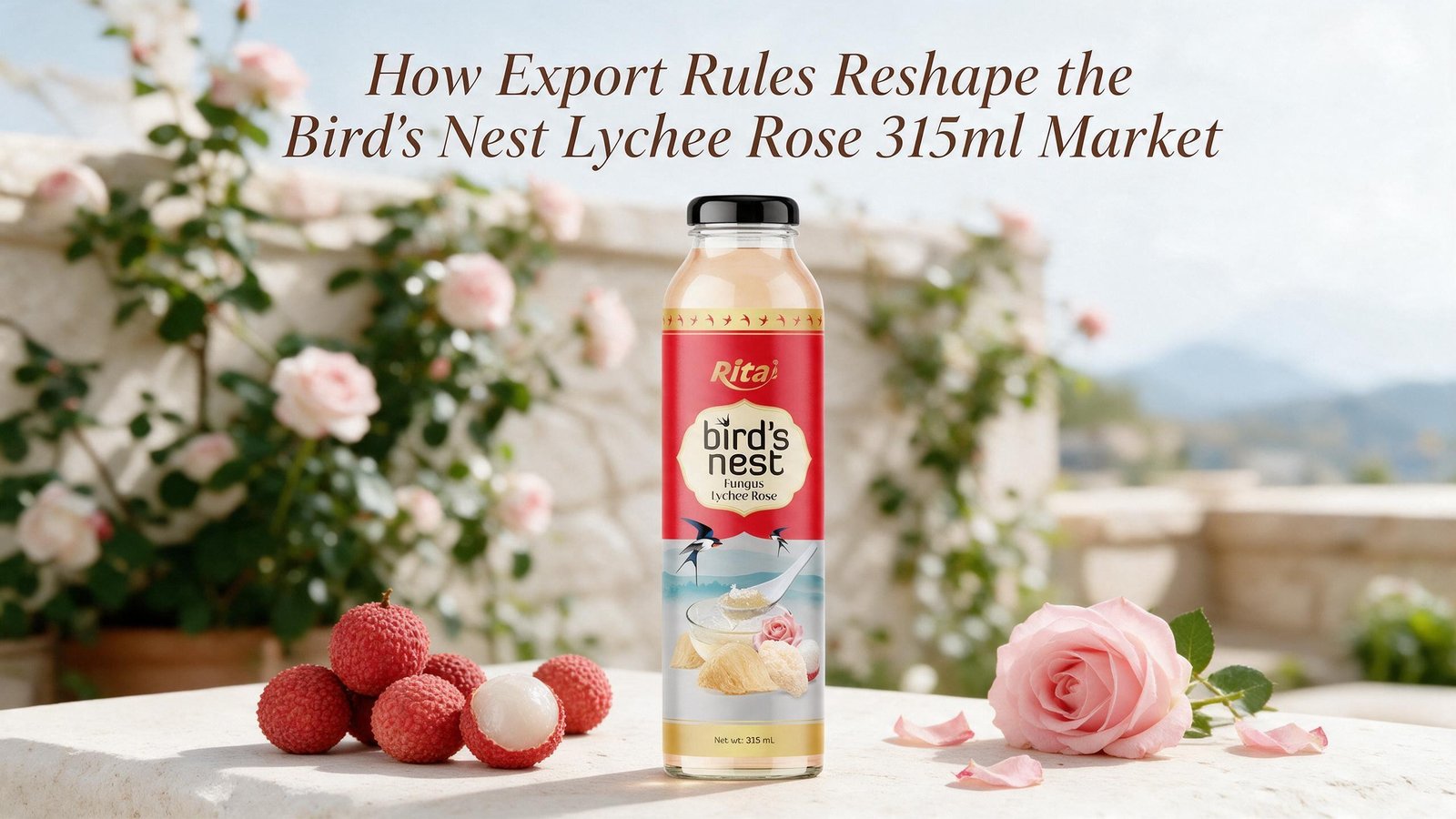
The Bird's Nest Fungus Lychee Rose 315ml has become a useful case study in how compliance dossiers, rather than advertising budgets, decide which premium bottled drinks actually cross borders. RITA Food and Drink Co., Ltd, a Vietnamese beverage OEM manufacturer established in 2004, produces the drink for private-label buyers and export brands serving more than 200 countries and territories across the Americas, Europe, Asia, the Middle East, Africa and Oceania. As importers face tighter labeling rules, wider Halal scrutiny and more frequent food-safety audits, products that arrive with a complete certificate set move to the front of the buyer queue.
Key Takeaways
- Regulators in the European Union, the Gulf states, Southeast Asia and North America are tightening documentation requirements for specialty bottled drinks.
- Certifications including Halal Jakim, Halal HCA-GCC, Kosher, BRC, FSSC 22000, ISO, GMP, HACCP and SMETA decide which shelves a 315ml glass bottle can reach.
- Consolidation among global beverage groups is pushing suppliers to prove traceability from raw material sourcing through to the final seal.
- Practical trading terms, with a 500-carton minimum order, 20 to 25 day lead time and shipment from Ho Chi Minh Port, make trial orders realistic for mid-size importers.
- Free samples and an 18-month shelf life let buyers validate taste, packaging and documentation before committing volume.
Why Bird's Nest Fungus Lychee Rose 315ml Is Drawing Buyer Attention
Specialty bottled drinks built on Asian delicacies are moving out of ethnic aisles and into mainstream listings.
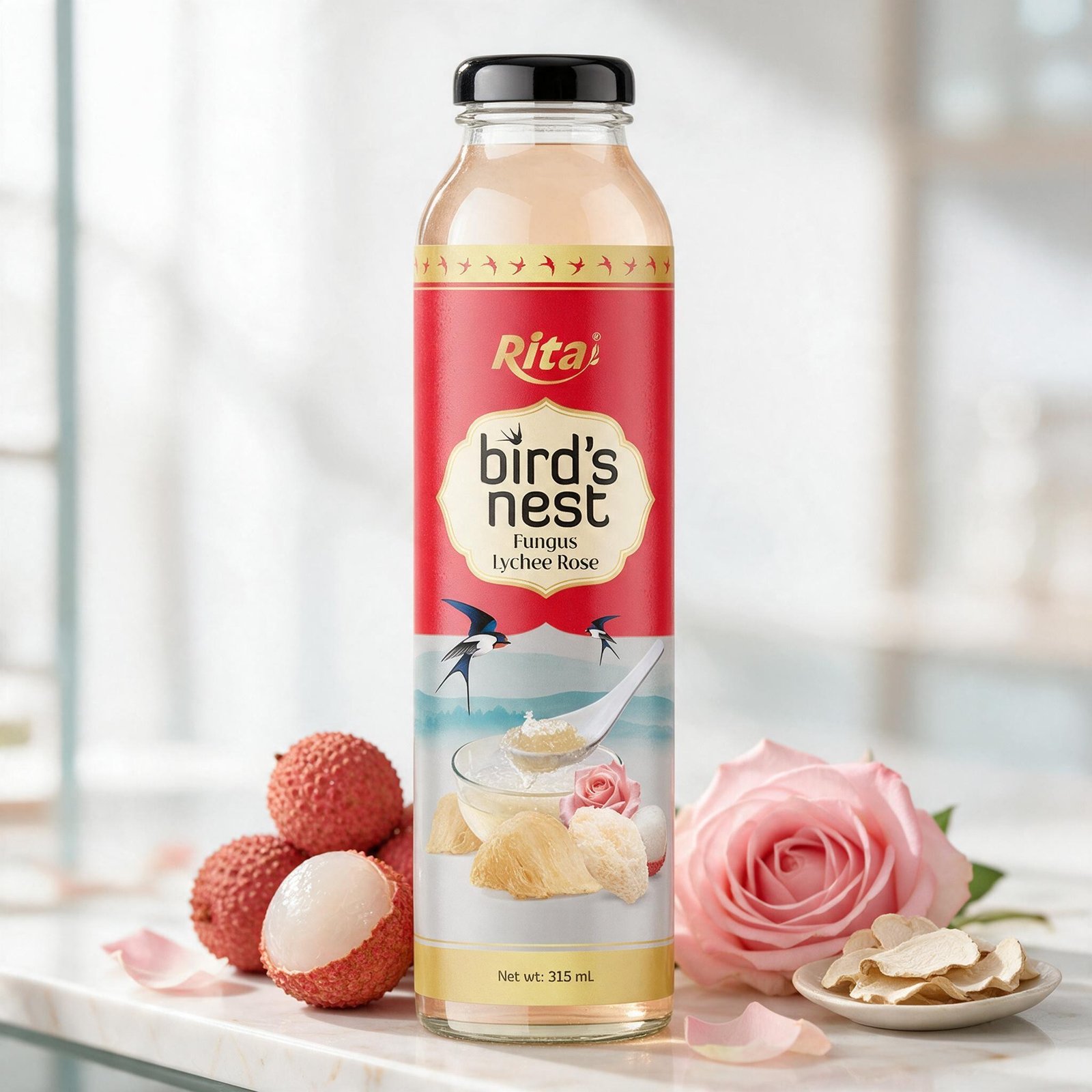
Lychee and rose is a pairing shoppers already know from desserts, teas and confectionery, which lowers the education cost for retail buyers. Bird's nest fungus adds a textural element that feels premium in the glass without shifting the drink away from its clean, lightly floral profile. That combination is why the lychee rose drink format keeps surfacing in buyer conversations about premium gifting and modern trade.
The 315ml glass bottle format matters commercially. Glass protects aroma in a category where fragrance carries much of the appeal, and it photographs well for e-commerce listings and gift packs. An 18-month shelf life gives importers room to plan distribution across several ports, while the clear body lets the pale peach liquid and its fine suspended strands present themselves on shelf. Buyers reviewing the wider range often begin with the Bird's Nest Fungus Lychee Rose 315ml before comparing adjacent listings in the special drink catalog.
Inside the Bird's Nest Fungus Lychee Rose 315ml flavor profile
Floral notes tend to travel better than heavy sweetness across unfamiliar markets.
Rose water and lychee juice form the aromatic backbone, while the fungus component contributes a silky, slightly gelatinous mouthfeel that separates the drink from an ordinary nectar. The result reads as delicate rather than sugary, a balance that tends to hold the attention of adult shoppers stepping away from carbonated soft drinks. Serving temperature also matters: chilled, the rose note lifts; at room temperature, the lychee takes the lead.
RITA's development team works with buyers on sweetness curves, label copy and case configurations before production begins, an approach that sits at the center of its OEM service model. Private-label clients can adjust flavor intensity, choose bilingual or multilingual artwork, and align packaging with local retail standards. That flexibility matters when a single shipment has to satisfy Gulf labeling conventions in one destination and European ingredient-declaration rules in another.
Certification and Labeling Rules That Decide Market Entry
Certification functions as the gatekeeper; flavor only walks through the door afterwards.
RITA's portfolio reads like a compliance checklist: BRC, FSSC 22000, Halal Jakim, Halal HCA-GCC, Kosher, ISO, GMP, HACCP and SMETA. Each mark answers a different question that a buyer's technical team will raise during onboarding, and each one is tied to a specific destination market. For any FSSC 22000 certified beverage program, that documentation is reviewed long before the first container is booked.
Halal and Kosher credentials open two corridors
Two certifications, two very different buyer conversations.
Halal Jakim, issued under Malaysian standards, carries weight across Southeast Asia and parts of Africa, while Halal HCA-GCC aligns with expectations for imports entering Saudi Arabia, the United Arab Emirates and neighboring Gulf states. Kosher certification unlocks listings with retailers that maintain dedicated certification programs in North America and Europe. For a rose-and-lychee drink positioned as a premium gifting item, holding both credentials means a single production run can serve several regions without reformulation, which is the economics behind any serious halal certified beverage export plan.
Food safety audits buyers run before signing
Documentation now precedes the first purchase order.
Importers routinely request hazard-analysis records, batch traceability and social-compliance evidence before they commit to volume. SMETA, the Sedex Members Ethical Trade Audit, has become a standard ask for suppliers selling into European grocery accounts, while HACCP and ISO records are usually screened at the qualification stage rather than at shipment. The table below maps the most frequently requested credentials to the markets where they carry weight.
| Certification | Typical destination | What it signals to a buyer |
|---|---|---|
| Halal Jakim | Southeast Asia, parts of Africa | Alignment with Malaysian Halal standards recognized across ASEAN |
| Halal HCA-GCC | Gulf Cooperation Council states | Compliance with Gulf requirements for imported bottled drinks |
| BRC and FSSC 22000 | Europe, United Kingdom, Australia | GFSI-benchmarked food safety management systems |
| Kosher | North America, Europe | Access to certified retail programs |
| SMETA | Europe, North America | Ethical audit covering labor, health and environmental conditions |
Label language is the second half of the equation. Arabic copy is expected across the Gulf, Spanish or Portuguese panels are common in parts of Latin America, and European listings require a full ingredient and allergen declaration in the local language. Artwork approval therefore becomes a scheduling item, not an afterthought, and buyers who request proof files early tend to avoid the revision loops that delay first shipments.
Regional Compliance Pathways for Exporters
Every region reads the same bottle through a different regulatory lens.
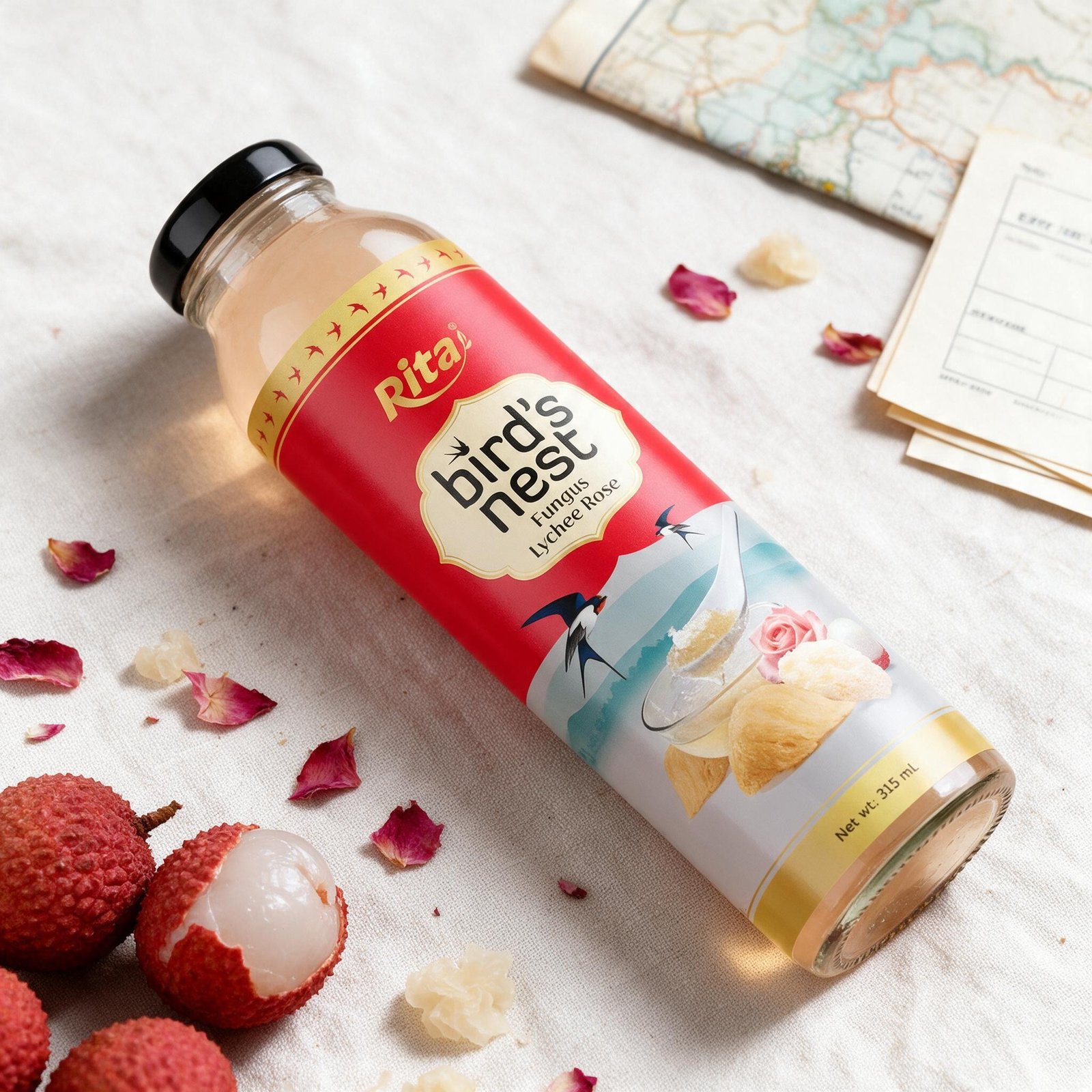
A shipment that clears one market can still stall at another border if the label, certificate set or ingredient declaration does not match local expectations. Pre-clearance checks with the importer's customs broker are far cheaper than a rejected container, and they are where most first-time importers of specialty drinks lose weeks.
What each region asks of a 315ml glass bottle
Six regions, six different starting points for compliance.
| Region | Common entry requirements | Practical note for this product |
|---|---|---|
| Americas | Facility registration, preventive controls records, nutrition panel, Spanish copy where required | Glass bottle weight must be factored into freight costing |
| Europe | Novel food screening, Regulation (EU) No 1169/2011 declarations, GFSI-benchmarked certificates | Ingredient wording should be reviewed before artwork lock |
| Asia | Halal where required, local-language labels, import permits | Fastest route for trial orders and repeat programs |
| Middle East | Halal HCA-GCC, Arabic labeling, legalized certificates | Certificate legalization adds lead time to plan |
| Africa | Halal acceptance, English or French labeling, customs inspection | Longer clearance windows suit 18-month shelf life stock |
| Oceania | Food standards compliance, English labeling, packaging biosecurity checks | Case dimensions and pallet patterns matter for retail intake |
Buyers targeting the European Union should confirm with their own regulatory counsel whether bird's nest derived ingredients fall within the scope of Regulation (EU) 2015/2283 on novel foods, and should verify declarations against Regulation (EU) No 1169/2011 on food information to consumers. The Bird's Nest Fungus Lychee Rose 315ml ships with the standard certificate package, but destination-specific wording remains the importer's responsibility in most contracts.
Across the Gulf and North Africa, certificate legalization through chambers of commerce is the step most often underestimated. In Southeast Asia, by contrast, the bottleneck is usually label translation rather than certification. Knowing which of those two scenarios applies to a given order is the difference between a 25-day cycle and a 45-day one.
From Our Orchards: Raw Material Sourcing
Flavor consistency starts long before the bottle is filled.
Lychee, the fruit that defines the drink's top note, is cultivated across Vietnam through a concentrated summer harvest, and RITA's procurement team supplements that window with contracted growers and supplier relationships that include the Mekong Delta raw material area. Sugar level, aroma and flesh firmness are specified before purchase, because variation at intake shows up directly in the finished profile.
Rose petals and dried fungus pieces are sourced on the same specification-driven basis, with incoming lots checked against reference samples held by the quality team.
A recorded field walkthrough of the sourcing region is available here
Consolidation and Governance Shifts Raise the Bar
The ownership map of the global drink industry keeps moving.
Heineken's acquisition of Better Drinks, a Brazilian beer and yerba-mate producer, is the latest example of large groups buying their way into adjacent categories rather than building them from scratch. Super Bock's decision to elevate its chief financial officer to chief executive sends a similar signal: finance-led leadership is being asked to defend margins in a cost-pressured market.
Governance disputes at Castel remain unresolved, and a Russian firm is pursuing control of Coca-Cola HBC assets, both reminders that brand portfolios can change hands faster than supplier contracts do. For manufacturers serving private-label programs, that churn means due-diligence questionnaires are getting longer and ownership-disclosure sections are appearing in standard vendor forms. Suppliers that can produce audit records on request shorten that cycle considerably.
Zevia's decision to raise its full-year forecast after a strong third quarter shows shoppers are still trading up in selected premium segments even as overall volumes soften. Importers reading those signals are widening supplier lists and testing smaller first orders, which is exactly the scenario where a 500-carton minimum and a free sample policy change the conversation.
What Buyers Verify Before Ordering Bird's Nest Fungus Lychee Rose 315ml
A short checklist prevents most late-stage surprises.
Beyond certificates, importers typically confirm bottle weight and case dimensions for freight costing, artwork approval timelines, and whether a supplier can hold a consistent taste across repeat orders. RITA's published terms, 20 to 25 days after order confirmation, payment by L/C or T/T, FOB Ho Chi Minh Port and supply capacity of around 300 twenty-foot containers per month, give procurement teams enough detail to model landed cost before signing. As a glass bottle beverage supplier working across all six world regions, the company also supports smaller trial runs alongside container-level programs.
- Free sample available before the first purchase order
- Minimum order quantity of 500 cartons per SKU
- 315ml glass bottle with an 18-month shelf life
- Certifications covering Halal Jakim, Halal HCA-GCC, Kosher, BRC, FSSC 22000, ISO, GMP, HACCP and SMETA
- Export record spanning more than 200 countries and territories
The company's scale, more than 50 automated production lines and over 1,200 containers shipped monthly, underpins both large allocations and pilot listings, and its range extends from the fruit drinks range to coconut, tea and special drink categories. Buyers running a private label beverage Vietnam program usually review the Bird's Nest Fungus Lychee Rose 315ml listing alongside samples of adjacent SKUs before selecting a first order, and that comparison step is where documentation quality tends to separate suppliers.
Frequently Asked Questions
What certifications come with this product?
The drink is manufactured under BRC, FSSC 22000, ISO, GMP and HACCP systems, with Halal Jakim and Halal HCA-GCC for Muslim-majority destinations, Kosher for certified retail programs and SMETA for ethical-audit requirements in European accounts. The certificate set is issued with the quotation package so technical teams can review it before sampling.
What are the standard export order terms?
Minimum order quantity is 500 cartons, lead time is 20 to 25 days after order confirmation, payment is by L/C or T/T, and shipment is FOB Ho Chi Minh Port, Vietnam, with free samples available on request.
Which markets typically ask for Halal certification?
Halal Jakim is generally requested across Southeast Asia and parts of Africa, while Halal HCA-GCC is the reference for Gulf states such as Saudi Arabia and the United Arab Emirates. European and North American buyers more often ask for BRC or FSSC 22000 records, Kosher certification where their program requires it, and SMETA audit evidence for supplier qualification.
How is the drink packaged and how long does it keep?
It is filled in a 315ml glass bottle with an 18-month shelf life, packed in cartons suited to container loading, with private-label artwork options available for buyers building their own listings.
Related news items:
Older news items:
- RITA Vanilla Protein Coffee Strengthens Global Supply Chain - 08/11/2026 21:10
- Six Days Across Yunnan: The Rita Beverage 2026 Appreciation Trip to Dali, Lijiang, and Shangrila - 07/11/2026 04:15
- Consumer Shifts Fueling the Rise of Less Sugar Turmeric Drinks - 05/11/2026 22:51
- Beyond the Workplace: How Rita Beverage Builds a Stronger Team Through Shared Experiences - 04/11/2026 22:50
- Protein Coconut Water Gains Ground in Global Beverage Markets - 03/11/2026 22:46