
Peach Tea Innovation Reshapes the Global Ready-to-Drink Beverage Market
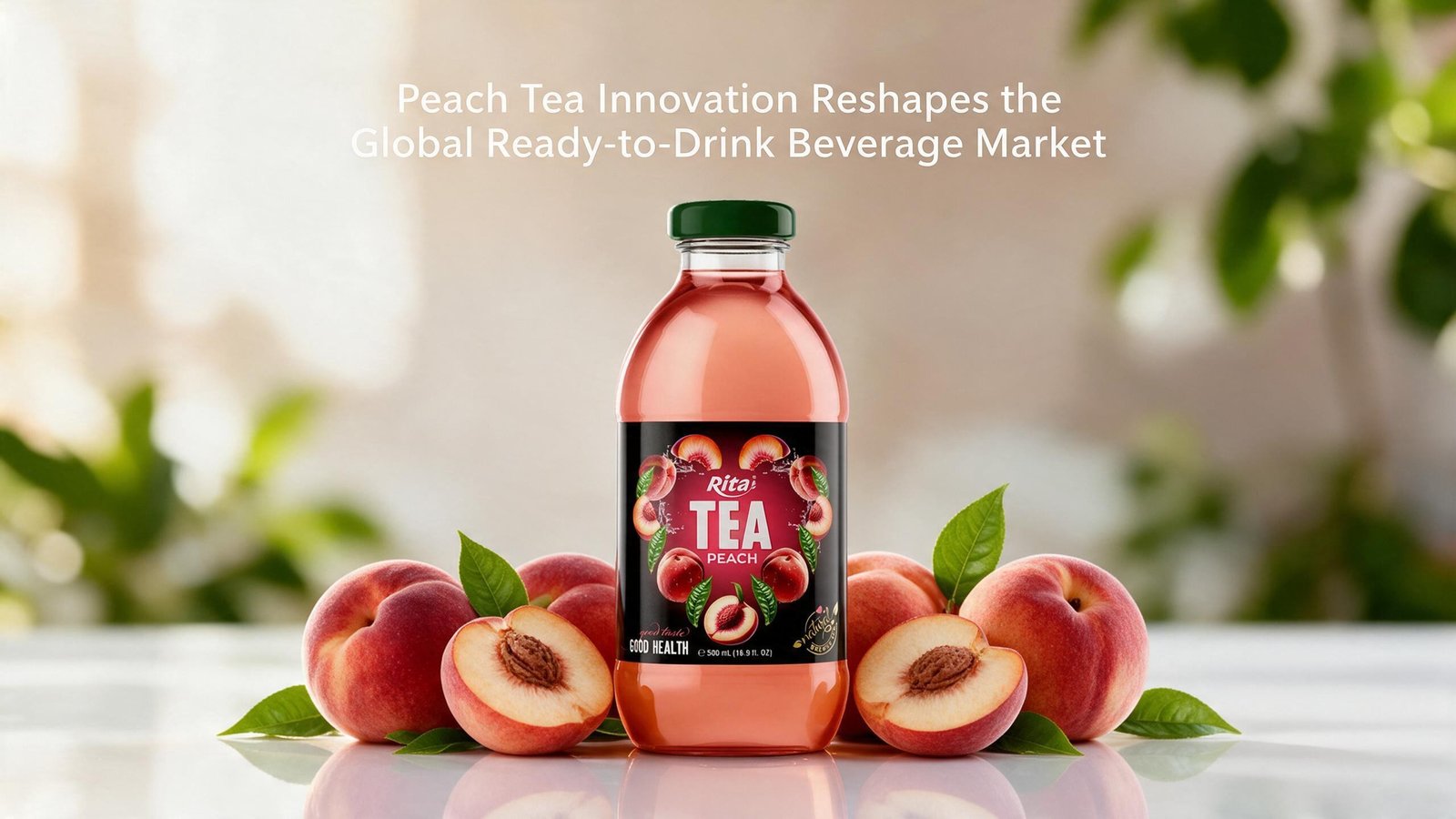
The global ready-to-drink tea segment is entering a new phase of innovation, and peach-flavored variants are capturing attention from buyers across the Americas, Europe, Asia, the Middle East, Africa, and Oceania. As consumers gravitate toward lightly sweetened, fruit-forward refreshments, manufacturers are racing to deliver distinctive flavor profiles in premium packaging formats. One notable example is the Tea Drink With Peach Flavor 500ml Glass Bottle, a product that combines a familiar stone-fruit taste with the shelf appeal of glass. Industry observers note that innovation in flavor layering, packaging, and sourcing is now the primary battleground for beverage brands seeking differentiation in crowded retail environments.
Key Takeaways
- Peach-flavored ready-to-drink tea is emerging as a high-growth flavor family within the global RTD beverage category.
- Glass bottle packaging is regaining favor among premium brands seeking visual appeal and extended shelf life.
- OEM and ODM manufacturing partners with multi-certification portfolios give importers a faster route to market.
- Export-oriented producers with large-scale capacity are better positioned to serve multi-region distribution strategies.
- Innovation in flavor blending, sweetness balance, and presentation is now as important as price competitiveness.
Peach Flavor Leads a New Wave of RTD Tea Innovation
Flavor remains the single most powerful purchase driver in the ready-to-drink tea aisle, and peach consistently ranks among the most requested profiles by both retailers and end consumers.
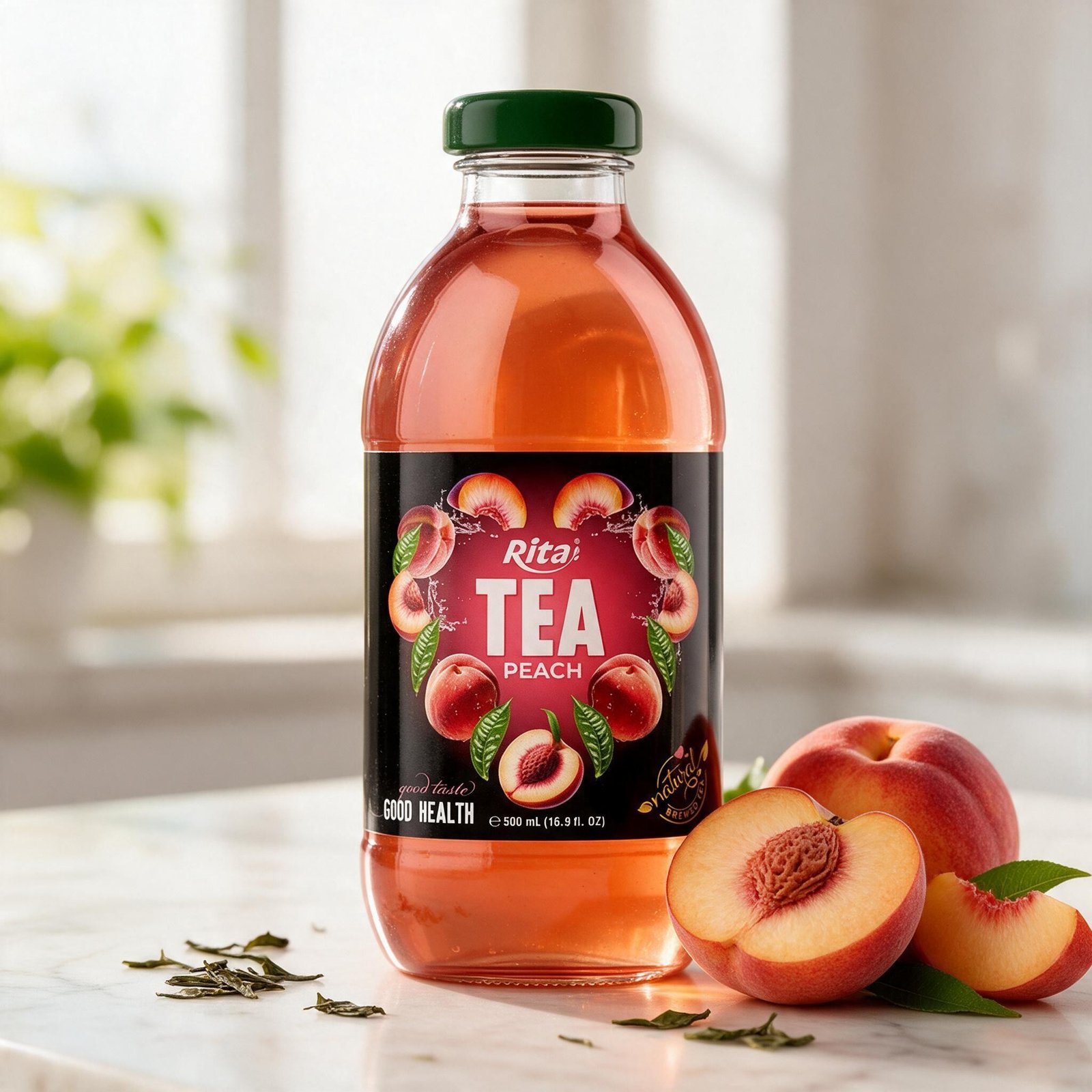
The fruit's natural sweetness pairs smoothly with black and green tea bases, allowing formulators to create a taste that is approachable without being cloying. This balance is critical in markets where consumers are actively moderating sugar intake while still seeking an enjoyable drinking experience.
Beyond taste, the visual identity of peach-flavored tea plays a meaningful role in shelf performance. The soft amber-pink hue of the liquid, when displayed in a transparent container, signals freshness and fruit authenticity at a glance. Brands that invest in this kind of sensory presentation are seeing stronger trial rates among first-time buyers.
Flavor Engineering and Consumer Expectations
Modern beverage development teams approach peach flavor as a layered composition rather than a single-note accent. The interplay between ripe peach aroma, subtle tea tannins, and controlled sweetness creates a profile that appeals across age groups and cultural preferences. Manufacturers with dedicated research and development capabilities can fine-tune these layers to match the specific palate expectations of different regional markets.
This level of customization is increasingly important for importers and private-label brands. A formulation tuned for one distribution channel may need adjustment for another, and flexible OEM partners can accommodate those shifts without disrupting production timelines.
- Layered peach aroma combined with a clean tea finish
- Adjustable sweetness levels to suit regional preferences
- Compatibility with both still and lightly carbonated variants
- Stable color and flavor profile throughout the shelf life
Glass Bottle Packaging Returns to the Premium Beverage Shelf
Glass is making a decisive comeback in the premium beverage segment.
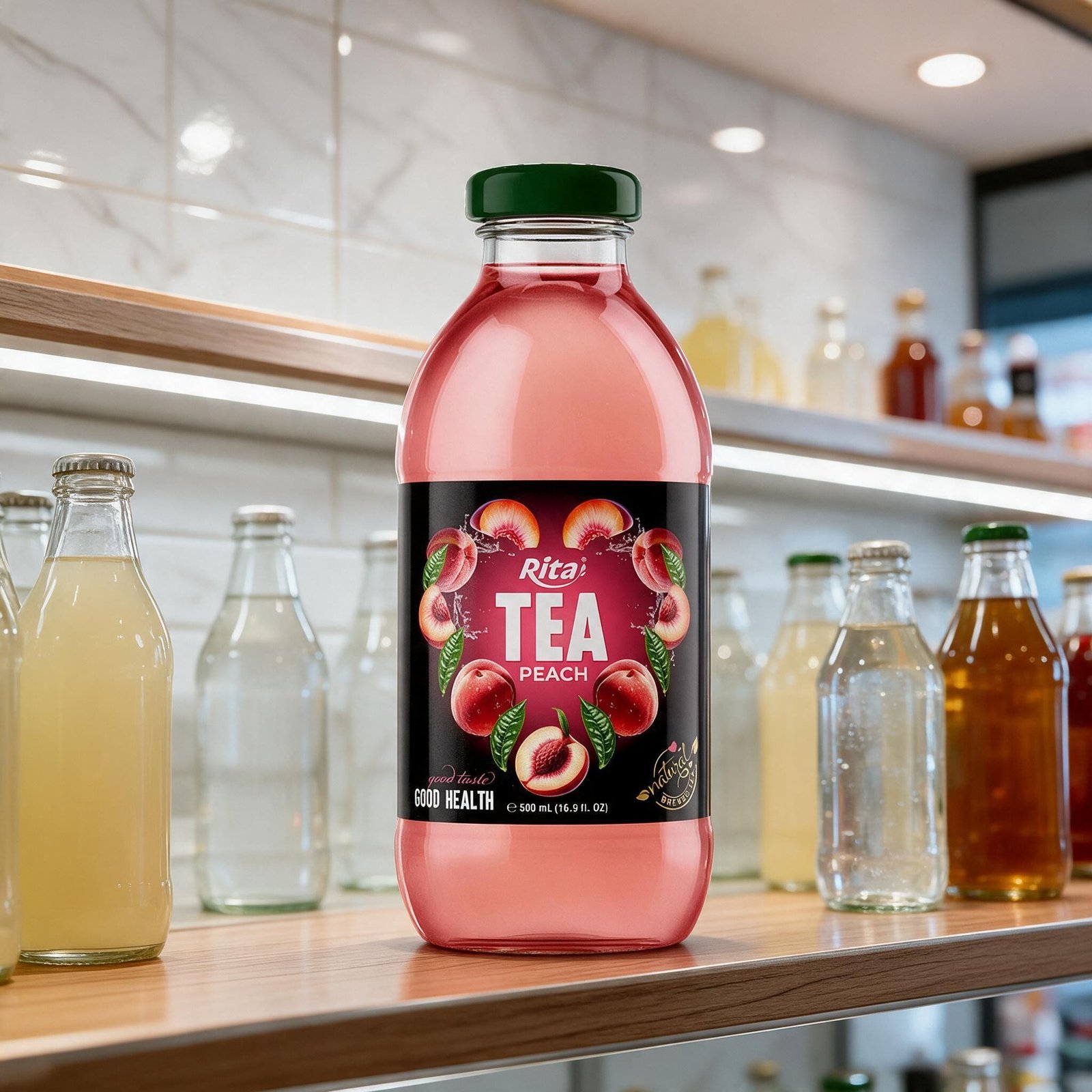
The 500ml format strikes a practical balance between single-serve convenience and perceived value, making it suitable for restaurants, hotels, convenience stores, and grocery retail alike. For brands positioning themselves above the mass-market tier, glass communicates quality in a way that plastic struggle to match.
The material also offers functional advantages that matter on the shelf. Glass provides an excellent barrier against oxygen and moisture, helping beverages maintain their intended taste profile across an 18-month shelf life. This durability is particularly valuable for exporters shipping products across long distances and through varied climate conditions.
Packaging as a Brand Differentiator
In crowded retail environments, packaging often decides which product gets picked up first. A well-designed label on a clear glass bottle allows the natural color of the tea to serve as its own marketing asset. Design teams can layer brand storytelling, flavor imagery, and certification marks onto the label without overwhelming the visual field.
For private-label operators, this format offers a ready-made premium canvas. The same bottle can carry a flagship brand or a retailer's own label with minimal retooling, reducing the lead time between concept and shelf presence.
| Packaging Format | Barrier Properties | Perceived Premiumness | Recyclability |
|---|---|---|---|
| Glass Bottle 500ml | Excellent | High | Highly recyclable |
| PET Bottle | Good | Moderate | Widely recyclable |
| Aluminum Can | Excellent | Moderate to High | Highly recyclable |
| PP Bottle | Moderate | Standard | Recyclable in select streams |
Source: Packaging format comparison based on general industry characteristics for ready-to-drink beverages.
From Our Orchards Raw Material Farms
Consistent peach flavor begins with consistent fruit sourcing. RITA maintains raw material relationships across Vietnam's key growing regions to secure the fruit inputs that define its tea and juice portfolio. The company's sourcing strategy emphasizes traceability and seasonal planning so that flavor profiles remain stable year-round.
The Mekong Delta raw ingredients area supplies a broad range of fruits and botanical inputs used across RITA's beverage lines, providing a dependable foundation for large-volume production runs.
For buyers evaluating provenance, this farm-to-bottle visibility adds a layer of confidence when placing large orders. Consistent raw material quality translates directly into consistent finished-product quality, which is essential for brands building long-term retail relationships.
OEM Manufacturing Capabilities Power Global Distribution
Scale is the quiet enabler behind every successful private-label launch. RITA Food and Drink Co., Ltd, established in 2004, operates more than 50 automated production lines and exports over 1,200 containers per month to buyers in more than 200 countries and territories. This infrastructure allows the company to support simultaneous launches across multiple regions without compromising delivery schedules.
The manufacturer's OEM service model gives brands full flexibility over formulation, packaging, and labeling while RITA handles the production complexity. For companies entering the ready-to-drink tea category for the first time, this arrangement dramatically shortens the path from concept to commercial shipment.
Certification Portfolio Builds Buyer Confidence
International buyers increasingly evaluate manufacturers on their certification footprint before discussing price. RITA holds BRC, FSSC 22000, Halal Jakim, Halal HCA-GCC, Kosher, ISO, GMP, HACCP, and SMETA certifications, covering the regulatory requirements of virtually every major import market. This breadth eliminates the need for buyers to source from multiple suppliers to satisfy different regional standards.
A single certification portfolio spanning Halal, Kosher, and food safety management standards is particularly valuable for distributors operating across the Middle East, Europe, and North America simultaneously. It simplifies compliance documentation and accelerates customs clearance.
- BRC and FSSC 22000 for global retail readiness
- Halal Jakim and Halal HCA-GCC for Middle East and Southeast Asia markets
- Kosher certification for specialty retail channels
- ISO, GMP, HACCP, and SMETA for comprehensive quality and ethical compliance
Export Logistics and Commercial Terms for Importers
Commercial clarity matters as much as product quality in cross-border trade. The peach tea in 500ml glass bottle is offered on standard international terms, with a minimum order quantity of 500 cartons, delivery of 20 to 25 days after order confirmation, and a supply capacity of 600 twenty-foot containers per month. Payment is accepted via L/C or T/T, with FOB pricing available on request from Ho Chi Minh Port, Vietnam.
These terms are designed for importers who need predictable lead times and transparent cost structures. The 18-month shelf life further supports distributors managing inventory across wide geographic territories, reducing the risk of premature expiry during transit and warehousing.
Supply Capacity Meets Multi-Region Demand
Handling simultaneous orders from the Americas, Europe, Asia, the Middle East, Africa, and Oceania requires more than production capacity; it requires scheduling discipline. RITA's monthly output of 600 twenty-foot containers provides the headroom necessary to absorb seasonal demand spikes without forcing buyers into extended waits.
Free samples are available for qualified buyers, allowing quality assessment before committing to a full container order. This low-friction entry point has become a standard expectation among professional importers evaluating new suppliers.
| Commercial Term | Detail |
|---|---|
| Volume | 500 ml |
| Packaging | Glass Bottle |
| Shelf Life | 18 months |
| Minimum Order Quantity | 500 Cartons |
| Delivery Time | 20-25 days after order confirmation |
| Supply Ability | 600 Twenty-Foot Container per month |
| Port | Ho Chi Minh Port, Vietnam |
| Payment Terms | L/C, T/T |
Source: Product commercial specifications for the peach tea 500ml glass bottle.
Market Context and Competitive Landscape
The broader beverage industry continues to see significant corporate maneuvering. Heineken's acquisition of Brazilian beer and yerba-mate company Better Drinks signals continued interest in diversified refreshment portfolios, while Zevia's raised full-year guidance following strong third-quarter results underscores consumer appetite for better-positioned beverage brands. Meanwhile, governance disputes at Castel and leadership transitions at Super Bock illustrate how operational stability remains a differentiator in a consolidating market.
For manufacturers and importers focused on the ready-to-drink tea segment, these developments reinforce a simple truth: brands that pair distinctive products with reliable supply chains are best positioned to capture share. The tea, honey, and fruit beverage range from RITA reflects this philosophy, offering a portfolio approach that lets buyers mix and match flavors under a single manufacturing relationship.
As distribution networks expand and shelf space becomes more contested, the combination of innovative flavor development, premium packaging, and export-ready manufacturing capacity will define the next wave of winners in the global beverage trade.
Frequently Asked Questions
What is the shelf life of the peach tea 500ml glass bottle?
The product carries an 18-month shelf life from the date of production, which supports long-distance shipping and extended retail display across multiple regions.
What is the minimum order quantity for this product?
The minimum order quantity is 500 cartons. Free samples are available for qualified buyers before placing a full order.
Which certifications does the manufacturer hold?
RITA holds BRC, FSSC 22000, Halal Jakim, Halal HCA-GCC, Kosher, ISO, GMP, HACCP, and SMETA certifications, covering a wide range of international market requirements.
What are the payment and shipping terms?
Payment is accepted via L/C or T/T on FOB terms from Ho Chi Minh Port, Vietnam. Delivery is 20 to 25 days after order confirmation.
Can this product be produced under a private label?
Yes. RITA offers OEM and ODM services that allow buyers to customize formulation, packaging, and labeling for their own brand.
Related news items:
Older news items:
- Rita Food & Drink Co., Ltd. at FHC Shanghai 2026: Discover Innovative Vietnamese Beverages - 12/11/2026 07:03
- How Export Rules Reshape the Bird's Nest Lychee Rose 315ml Market - 10/11/2026 22:25
- RITA Vanilla Protein Coffee Strengthens Global Supply Chain - 08/11/2026 21:10
- Six Days Across Yunnan: The Rita Beverage 2026 Appreciation Trip to Dali, Lijiang, and Shangrila - 07/11/2026 04:15
- Consumer Shifts Fueling the Rise of Less Sugar Turmeric Drinks - 05/11/2026 22:51