
Supply Chains Rethink Grape Drinks as Nata De Coco Cans Gain Ground
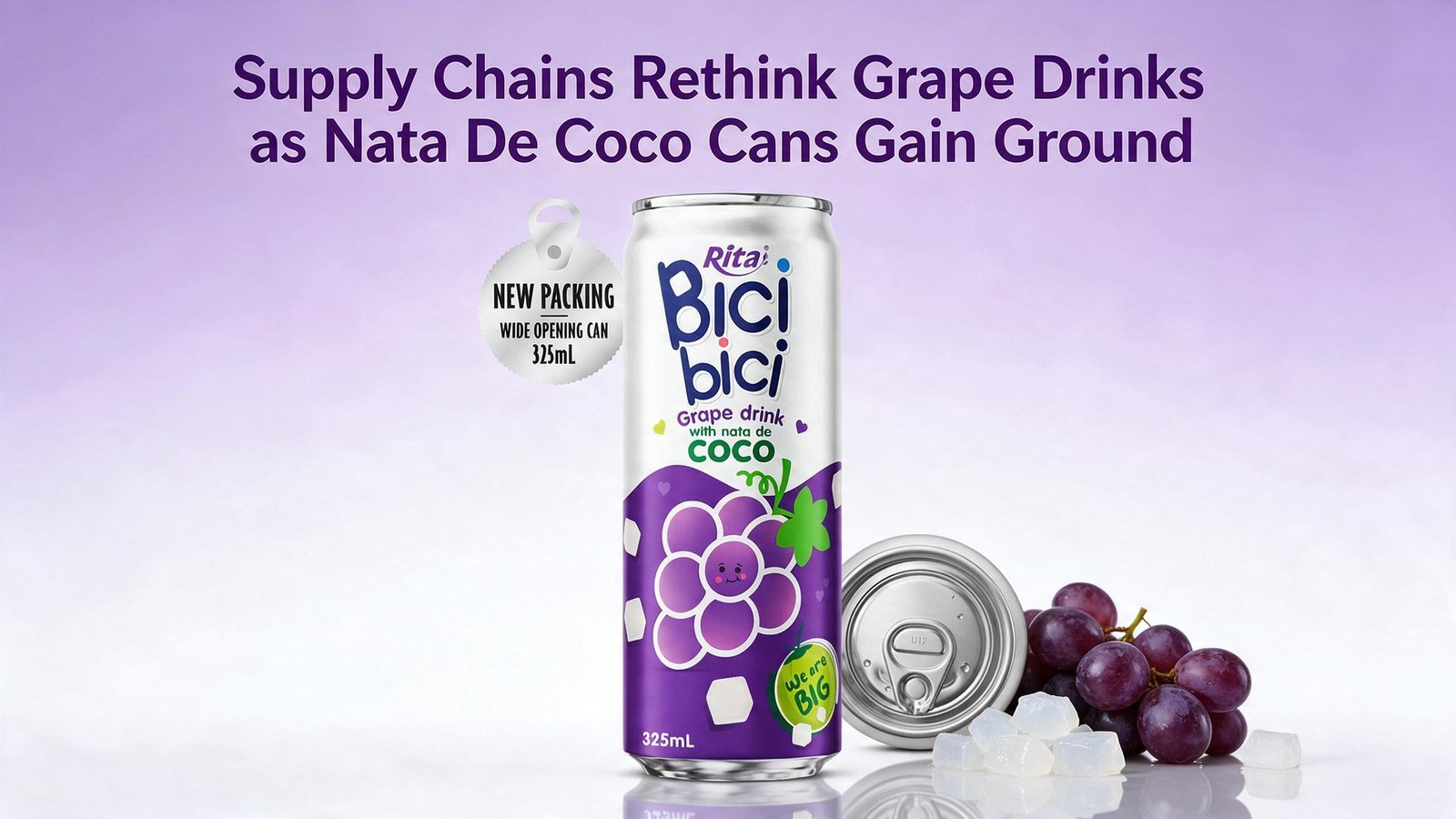
The global beverage trade is being pushed toward formats that travel well, hold shelf life through long transit legs and still deliver something distinctive at the point of sale. Against that backdrop, the Bici Bici grape drink with nata de coco from RITA Food and Drink Co., Ltd has surfaced as a compact 325ml offering that pairs a familiar grape flavor profile with suspended coconut gel cubes, packed in a wide opening aluminum can built for easier sipping. For importers, distributors and private label buyers, the product sits at the intersection of two live conversations in the industry: how to simplify sourcing without narrowing consumer choice, and how to package drinks so they arrive on shelf exactly as intended.
Key Takeaways
- The Bici Bici grape drink with nata de coco ships in a 325ml wide opening aluminum can with a 24-month shelf life, suited to long-haul distribution.
- Texture-forward drinks are moving from novelty to shelf staple, and nata de coco gives this format a point of difference against flat grape sodas.
- Lead times, certification depth and container economics now decide beverage sourcing deals, not unit price alone.
- RITA runs 50+ automated lines and exports more than 1,200 containers monthly to buyers in over 200 countries and territories.
- Free samples, a 500-carton entry point and 20-25 day lead times lower the barrier for first-time importers testing the format.
A Grape Drink With Nata De Coco Built for Global Supply Chains
The can itself is small, but the logistics footprint behind it reaches buyers across the Americas, Europe, Asia, the Middle East, Africa and Oceania.
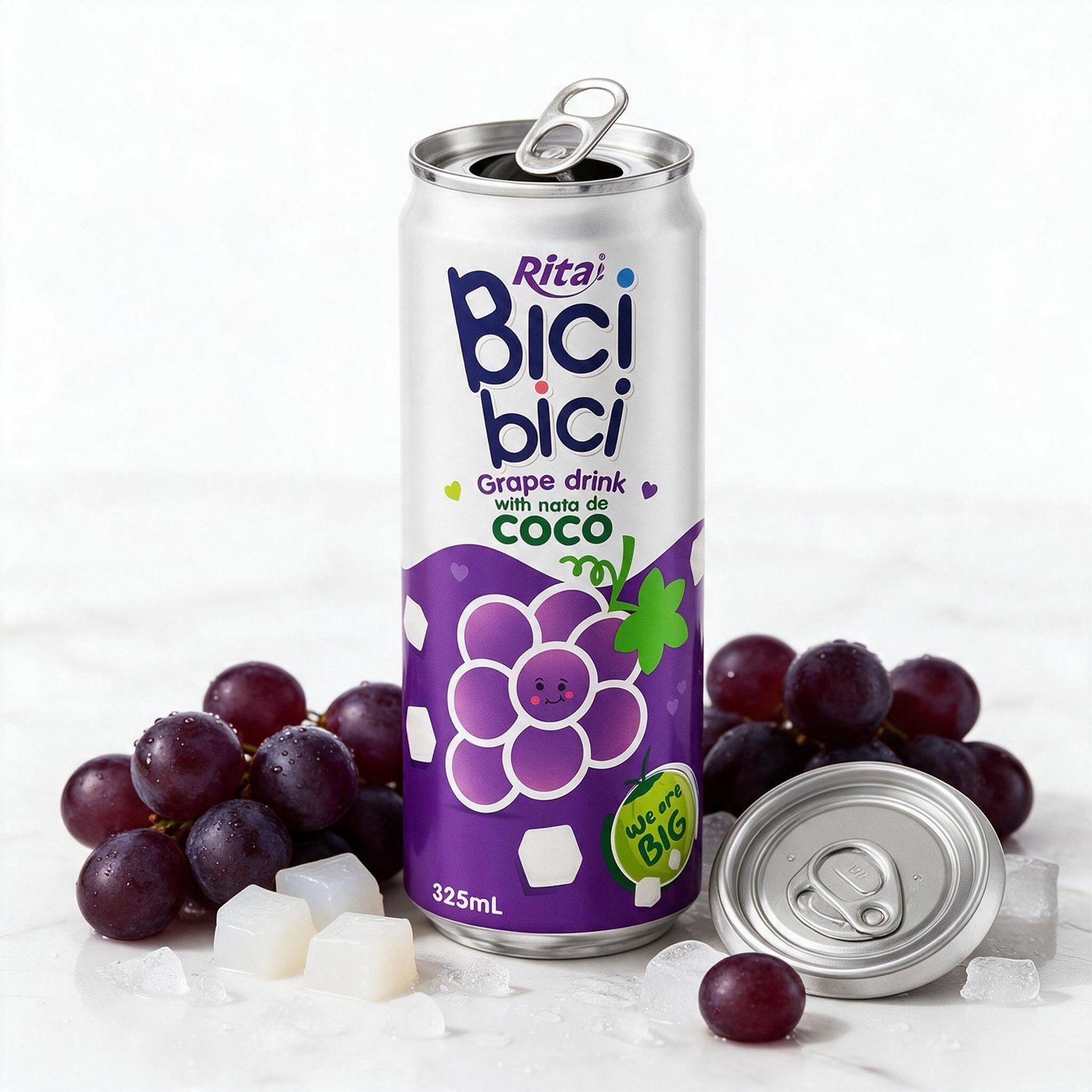
Visually, the pack is built to read quickly in a crowded cooler. A white upper body meets a purple lower panel, with the RITA wordmark set above the stylized Bici bici name. The label spells out Grape drink with nata de COCO in purple and green type, illustrated with a smiling purple grape character, a green leaf, scattered white cube shapes and small hearts. A green badge reading we are BIG anchors the lower panel, while a circular stamp flags the new packing wide opening can at 325mL. Silver aluminum ends finish the pack, giving it the familiar premium feel shoppers associate with canned drinks.
Why the Wide Opening Can Matters in Transit and on Shelf
Wide opening cans have quietly become a differentiator in the ready-to-drink category. The larger aperture changes how the drink is consumed, allowing the coconut gel pieces to pass through more easily and giving drinkers a fuller sip without tilting the can at an awkward angle. For distributors, the format also photographs well in retail displays and social content, which matters as more beverage discovery happens on screens.
From a supply chain standpoint, the aluminum can remains one of the most reliable formats for long transit. It stacks densely, resists light and temperature swings better than clear PET, and recycles at scale in most collection systems. A 24-month shelf life on this SKU means importers can plan larger, less frequent shipments without racing expiration dates, which is particularly useful for buyers consolidating several SKUs into a single container load.
Nata De Coco as a Texture Differentiator
Nata de coco, the chewy coconut gel derived from fermented coconut water, has travelled far beyond its origins in Southeast Asian dessert culture. It now appears in bubble-tea style drinks, canned juices and sparkling formats across multiple continents, and consumers increasingly expect something to chew on rather than just drink.
Pairing it with grape flavor is a deliberate choice. Grape is one of the most universally recognized soft drink flavors, which lowers the education cost when a new SKU lands in an unfamiliar market. The coconut gel cubes add a second layer of interest without changing the core flavor promise. The result is a nata de coco drink that behaves like a familiar grape soda at first taste and then delivers texture on the second sip.
That combination is why texture beverages keep showing up in new product pipelines. Buyers looking for a wide opening can beverage that stands apart from standard grape sodas can review the full specification on the Bici Bici 325ml grape drink product page.
Supply Chain Pressures Reshape Beverage Sourcing Decisions
Sourcing decisions in beverages are being rewritten by freight costs, certification requirements and shelf-life math rather than by flavor alone.
Recent industry moves illustrate the shift. AB InBev has reinvested in production capacity for Cutwater Spirits as ready-to-drink volumes continue to expand, while founders behind the Nultrl brand have put money into a nootropic drink venture, signalling that investors still see room for new beverage propositions. Premiumisation continues to drive spirits growth, with Volcan de mi Tierra pointing to ongoing craft tequila opportunity. On the agricultural side, a European lobby has forecast a 4 percent decline in wine output for 2026, a reminder that raw material availability can move independently of demand. Meanwhile, Tesco has joined a platform designed to gather supplier emissions data, putting supply-chain transparency directly into commercial conversations.
For a canned grape drink, these pressures translate into concrete questions. How much of the landed cost is freight? Can the supplier hold a 24-month shelf life across a long ocean leg? Are the certifications recognized by the destination market's retailers? Each answer narrows the field of viable partners.
| Specification | Detail |
|---|---|
| Product | Bici Bici 325ml Grape Drink With Nata De Coco |
| Volume | 325 ml |
| Packaging | Aluminum can, wide opening |
| Shelf life | 24 months |
| Minimum order quantity | 500 cartons |
| Supply ability | 300 twenty-foot containers per month |
| Lead time | 20-25 days after order confirmation |
| Port of loading | Ho Chi Minh Port, Vietnam |
| Payment terms | L/C, T/T |
| Certifications | HALAL, FSSC 22000, HACCP, BRC, ISO, GMP |
The numbers matter less in isolation than in combination. A 300-container monthly supply ability paired with a 500-carton entry point means a buyer can start small and scale without renegotiating the entire relationship from scratch.
From Our Vineyards: Grape Sourcing Behind the Drink
Flavor consistency starts long before the can is filled, and grape sourcing is where that consistency is won or lost.
RITA documents its grape sourcing story directly, tracing fruit from sun-kissed vineyards through to juice and drink formulations in a published account of the journey from field to finished beverage. The grape vineyard sourcing story outlines how harvest timing, fruit selection and handling practices feed into the flavor profile that ends up in the can. For buyers auditing a supplier, that kind of traceability narrative is increasingly part of the standard due diligence checklist rather than a nice-to-have.
A visual walkthrough of the same supply chain is available at
Raw material discipline also protects buyers against seasonal swings. Grape crops vary by year, and a manufacturer that plans formulations around consistent input quality reduces the chance of a mid-contract reformulation that would force relabeling or re-certification.
OEM Capacity and Export Infrastructure Behind the Can
Behind this single SKU sits an export operation built over two decades, which is what makes volume commitments credible.
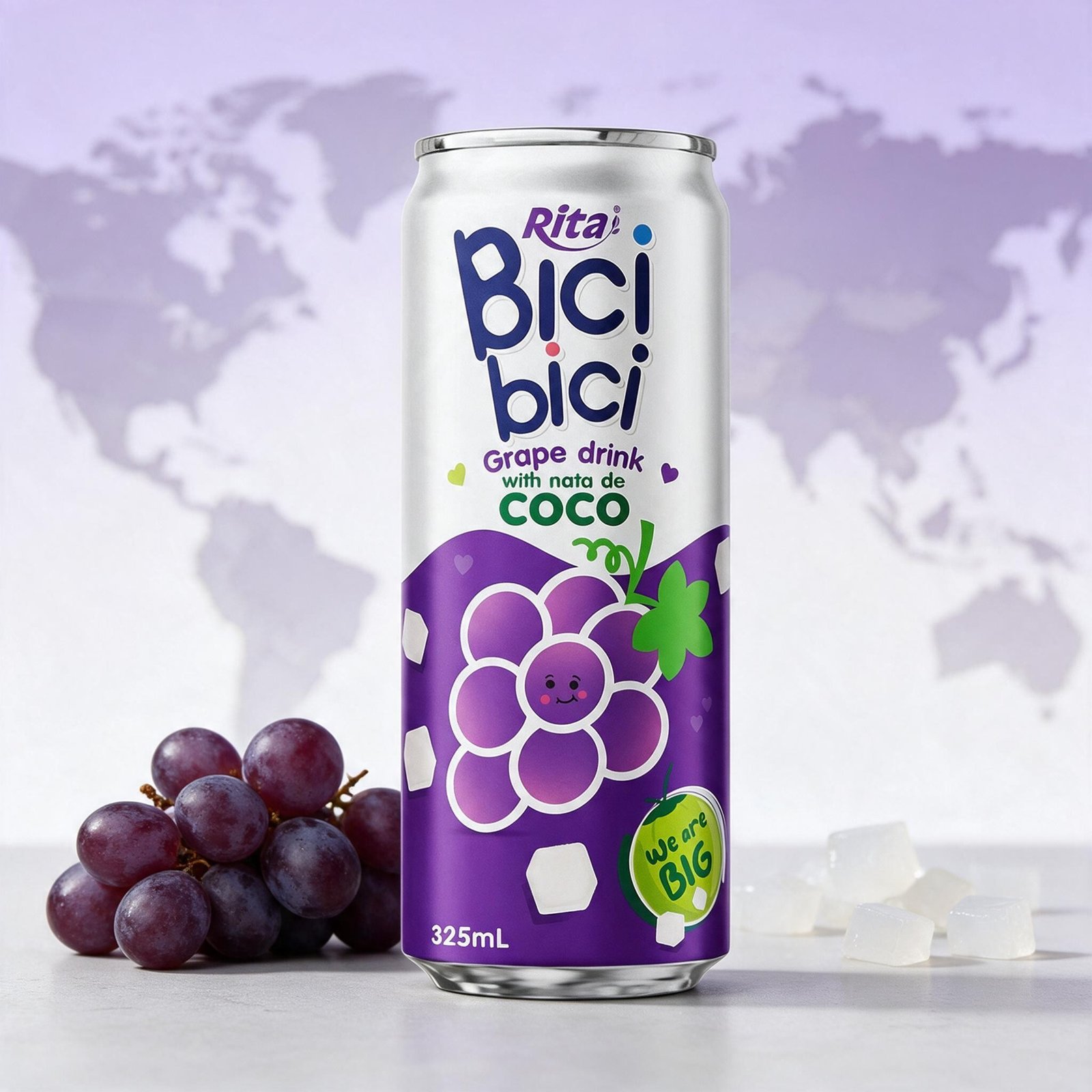
RITA Food and Drink Co., Ltd was established in 2004 and has grown into a Vietnamese OEM/ODM beverage manufacturer supplying brands in more than 180 countries, with exports reaching over 200 countries and territories. The company runs 50+ automated production lines and ships more than 1,200 containers per month, covering tropical fruit juices, coconut products, functional drinks, energy drinks and more across aluminum cans, glass bottles, PET and PP formats. That breadth matters to buyers who want to consolidate several categories with a single partner.
The Bici Bici grape drink listing is one of several canned formats available under the same production umbrella, so a buyer testing grape can later extend into adjacent SKUs without changing suppliers or repeating the full qualification process.
Category depth is visible across the catalog. Buyers interested in coconut-based textures can browse the coconut products range, while those building a broader fruit-led portfolio can review the fruit drinks collection. Soft drink specialists will find a parallel soft drinks lineup that shares the same packaging and certification base.
As a Vietnam beverage export example, this 325ml aluminum can drink format shows how one SKU can serve multiple regions without regional reformulation. Private label beverage programs ride the same infrastructure, which means artwork, flavor tweaks and case configurations can be adjusted while the underlying quality system stays constant.
Certification coverage spans BRC, FSSC 22000, Halal Jakim, Halal HCA-GCC, Kosher, ISO, GMP, HACCP and SMETA, which shortens the compliance review for retailers that require third-party audit evidence before listing a new supplier.
What Buyers Should Confirm Before Placing an Order
A short checklist keeps first orders predictable and protects the relationship after the container leaves port.
Ordering the Bici Bici Grape Drink With Nata De Coco
- Request a free sample before committing, and evaluate the drink chilled as well as at ambient temperature.
- Confirm the certification set required by your destination market and match it against the supplier's listed credentials.
- Check lead time against your promotional calendar; standard turnaround is 20-25 days after order confirmation.
- Validate port, incoterms and payment structure early, with both L/C and T/T available.
- Plan carton and container math around the 500-carton minimum and the 300 twenty-foot container monthly capacity.
The full product specification for the Bici Bici grape drink consolidates volume, packaging, shelf life, certifications, minimum order quantity and supply ability in one place, which makes it easier to circulate internally before a purchase order is raised. Free sample availability removes the main friction point for buyers who need sensory validation before volume commitments.
For teams building an OEM beverage manufacturer shortlist, the practical test is whether a partner can hold quality across repeat orders while keeping documentation current. That is where long operating history and export volume tend to separate contenders from the rest of the field.
Frequently Asked Questions
What is the Bici Bici grape drink with nata de coco?
It is a 325ml canned beverage combining a grape flavor profile with chewy coconut gel pieces known as nata de coco, produced by RITA Food and Drink Co., Ltd and supplied to importers and distributors worldwide.
What packaging and shelf life does the product offer?
The drink is packed in an aluminum can with a wide opening pull tab and carries a 24-month shelf life, a combination that supports long ocean transit and extended retail display periods.
What is the minimum order quantity and lead time?
The minimum order is 500 cartons, with delivery scheduled 20 to 25 days after order confirmation, loaded from Ho Chi Minh Port under L/C or T/T payment terms.
Which certifications back the product for export?
The production base holds HALAL, FSSC 22000, HACCP, BRC, ISO and GMP certifications, alongside additional credentials including Kosher and SMETA, covering requirements across most destination markets.
Related news items:
Older news items:
- Rita at PLMA Chicago 2026: Exploring the U.S. Private Label Beverage Market - 17/11/2026 01:00
- Sustainability Reshapes Coconut Water Blends in Global Beverage Trade - 16/11/2026 06:21
- Peach Tea Innovation Reshapes the Global Ready-to-Drink Beverage Market - 12/11/2026 21:41
- Rita Food & Drink Co., Ltd. at FHC Shanghai 2026: Discover Innovative Vietnamese Beverages - 12/11/2026 07:03
- How Export Rules Reshape the Bird's Nest Lychee Rose 315ml Market - 10/11/2026 22:25