
First Aid and Occupational Safety Training Course at Rita Company
Fully aware of this, the First Aid and Occupational Safety Training Course at Rita Company was organized to equip all employees with the most essential survival knowledge and skills. This article will provide a comprehensive overview of the purpose, in-depth content, and immense benefits that the course brings to the operational ecosystem at Rita.
Key Takeaways – The Most Crucial Core Values to Bring Home
Before diving into the details of the training program, here are 3 core messages (Key Takeaways) that every Rita employee must keep in mind after the course:
- Calmness is the key: Panic is the greatest enemy in any emergency. The first and most important skill is to keep a cool head, avoid acting hastily on instinct, and quickly and accurately assess the scene before directly touching the victim to ensure safety for the rescuer.
- Correct technique is more important than speed: Incorrect first aid is more dangerous than no first aid at all, as it can leave irreversible complications. Always memorize and accurately practice the steps of immobilization bandaging, bleeding control, and Cardiopulmonary Resuscitation (CPR).
- Smooth coordination is decisive: Occupational safety is never an individual's story. The seamless coordination between the first person to discover the incident, the person administering first aid, and the person coordinating medical help/calling an ambulance at Rita is the thin line that determines the success of saving a life.
I. Introduction: Purpose & Significance of the Course
Organizing first aid training is not just a formal annual event but a core risk management strategy. The training course at Rita company is designed based on extremely clear objectives and meanings.
1. Core purposes of the training program
- Strict legal compliance: The Vietnamese State has very strict regulations regarding the Occupational Safety and Health Law for manufacturing plants. Organizing training helps Rita fully meet legal standards, demonstrating the enterprise's responsibility in preventing accidents and occupational diseases.
- Proactive response in all situations: Instead of passively waiting for professional medical forces, the course equips employees with a solid system of theoretical knowledge and sharp practical skills. This helps them handle sudden accidents and injuries promptly and correctly, making the most of the "golden time" to save lives.
- Building an on-site rescue force: One of the main goals is to form an elite network of "safety officers" and "first aiders" with basic professional capacity, distributed across all departments – from the office block to every corner of the manufacturing workshops and packaging lines.
2. Profound significance for the Rita collective
- Protecting priceless assets - People: At Rita, machinery can be replaced, but people are the greatest and most priceless asset. A correct and timely first aid action not only prevents worse injuries but can save a whole life, preserving the happiness of a family.
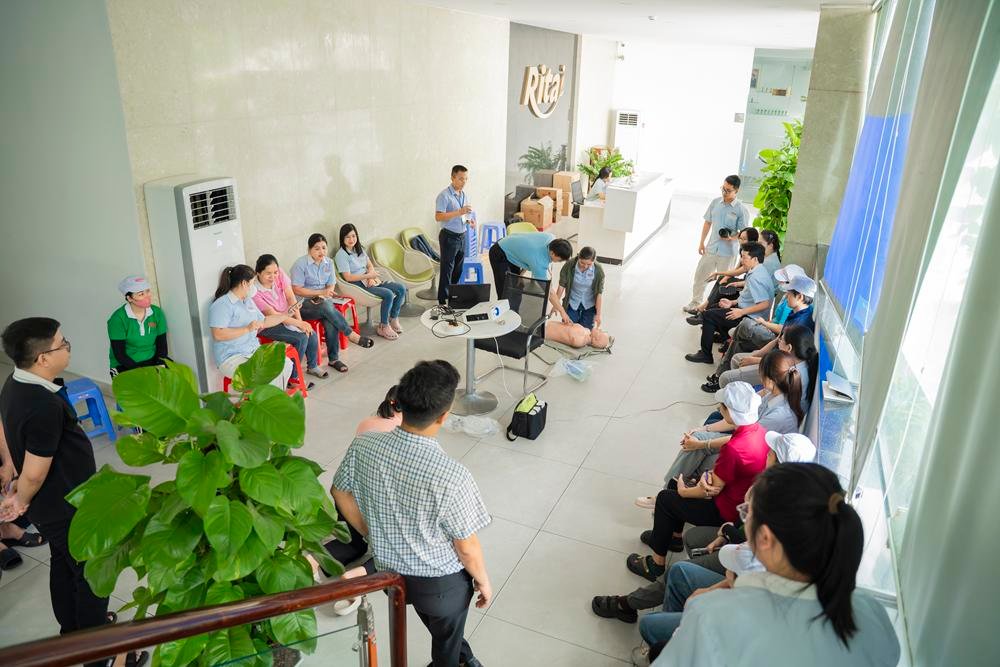
- Spreading the spirit of mutual affection: Group practical sessions create a special cohesive environment. By learning how to protect each other's lives together, colleagues build absolute peace of mind and trust, tightening solidarity in their shared working environment.
- Elevating and transforming safety awareness: The course creates a turning point in mindset. Employees shift from a state of "passive response" when an accident has occurred to "proactive prevention," consciously observing and eliminating occupational safety risks during their shifts.
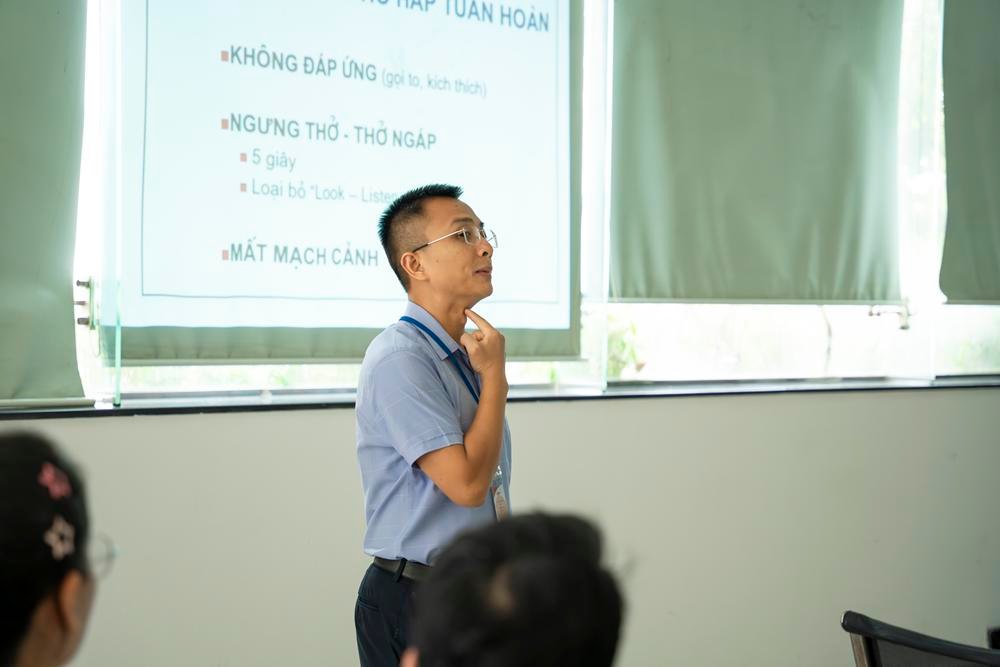
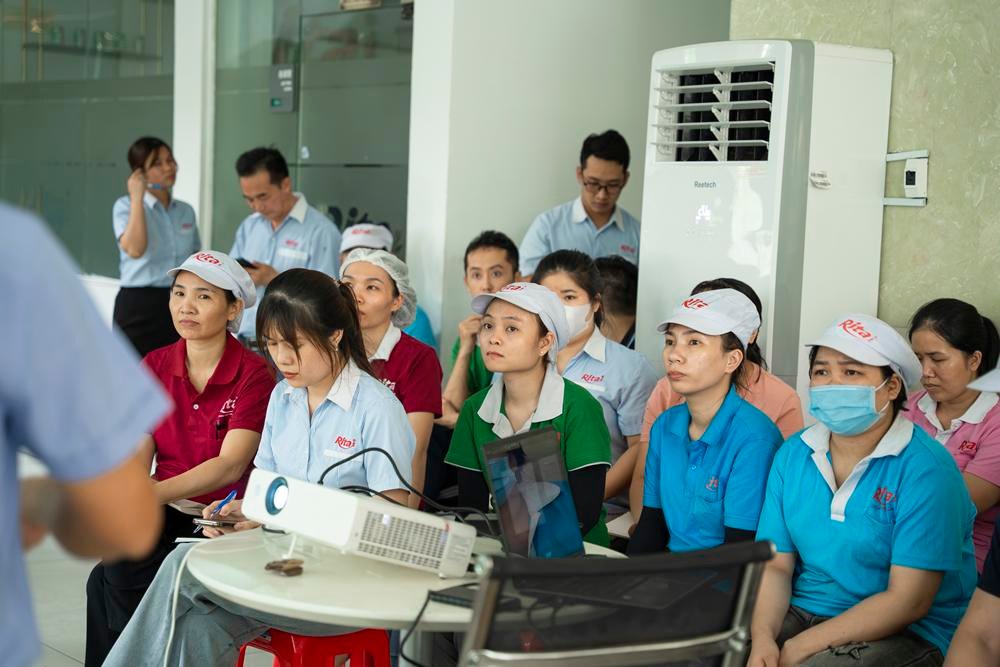
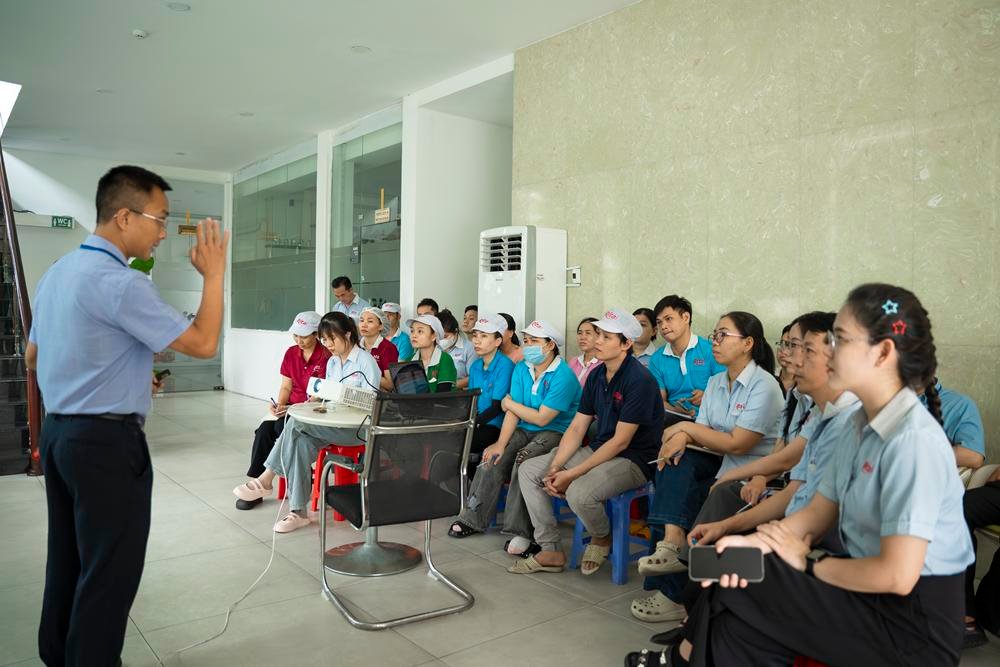
II. Main Training Content (Theory & Practice)
The training program at Rita is designed to balance foundational theory and highly applicable practical skills, tailored to the actual conditions of the beverage manufacturing industry.
1. Basic principles in first aid
Trainees are introduced to international standard first aid principles, simplified to be easy to remember and apply:
- 4-step process for approaching a safe scene:
Observe: Ensure the scene is safe (no electrical leaks, no toxic chemicals, no fire/explosion hazards) before entering.
Assess: Check the victim's level of consciousness, breathing rate, and severe injuries.
Act: Perform emergency first aid measures in order of priority (prioritize airway, stop bleeding).
Call for help: Immediately contact support forces.
- Communication process: Training on how to provide concise and accurate information (location, number of victims, condition) to Rita's internal medical department, or the fastest way to connect with ambulances and the nearest medical facilities in the Binh Duong and Ben Tre areas.
2. Skills to handle specific situations at Rita factory
Due to the specific nature of the industrial manufacturing environment, the course strongly focuses on the highest-risk situations:
- Common occupational accidents due to impact, machinery:
Handling open wounds & bleeding: Techniques for direct pressure on the wound, compression bandaging, and tourniquets (only when absolutely necessary and done correctly).
Sprains & Fractures: The RICE principle (Rest, Ice, Compression, Elevation) for sprains and techniques using splints to immobilize suspected fractured bones, absolutely no self-adjustment of bones.
- First aid for burns (Thermal & Chemical):
Areas operating boilers, pasteurization, and sterilization pose potential thermal burn risks. The technique of continuously flushing the burn with clean, cool water for 15-20 minutes is absolutely emphasized.
For chemical burns (during CIP industrial cleaning), trainees learn how to safely remove chemical-soaked clothing and wash away the chemical with a large amount of water.
- First aid for choking, airway obstruction:
In-depth training on the Heimlich maneuver – abdominal thrusts to expel foreign objects. This skill is important not only in the communal dining area but also necessary for both the office block and the factory.
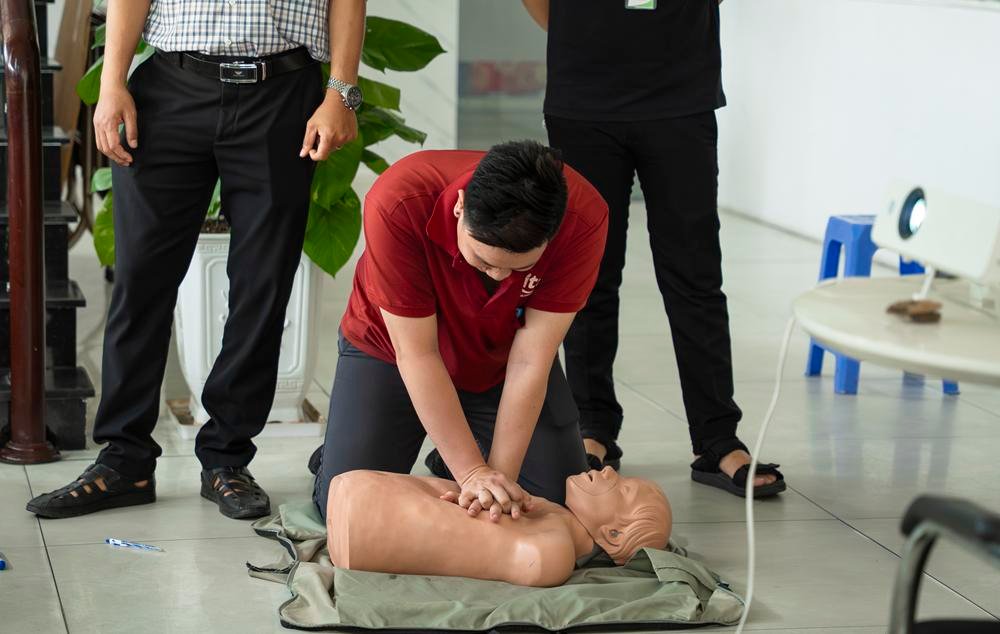
- Cardiopulmonary Resuscitation (CPR) & Automated External Defibrillator (AED):
Life-saving skills for cases of cardiac arrest and respiratory arrest (due to electric shock, myocardial infarction...).
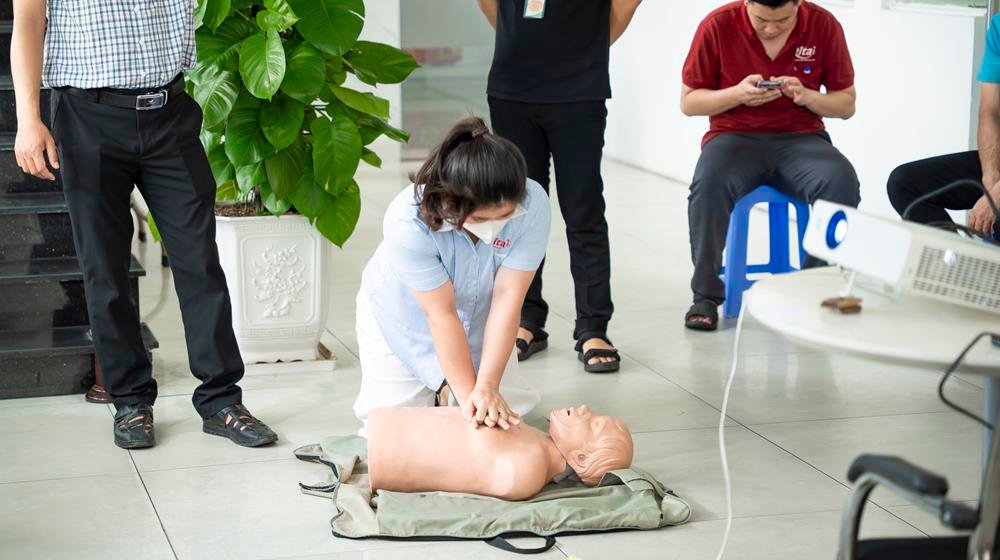
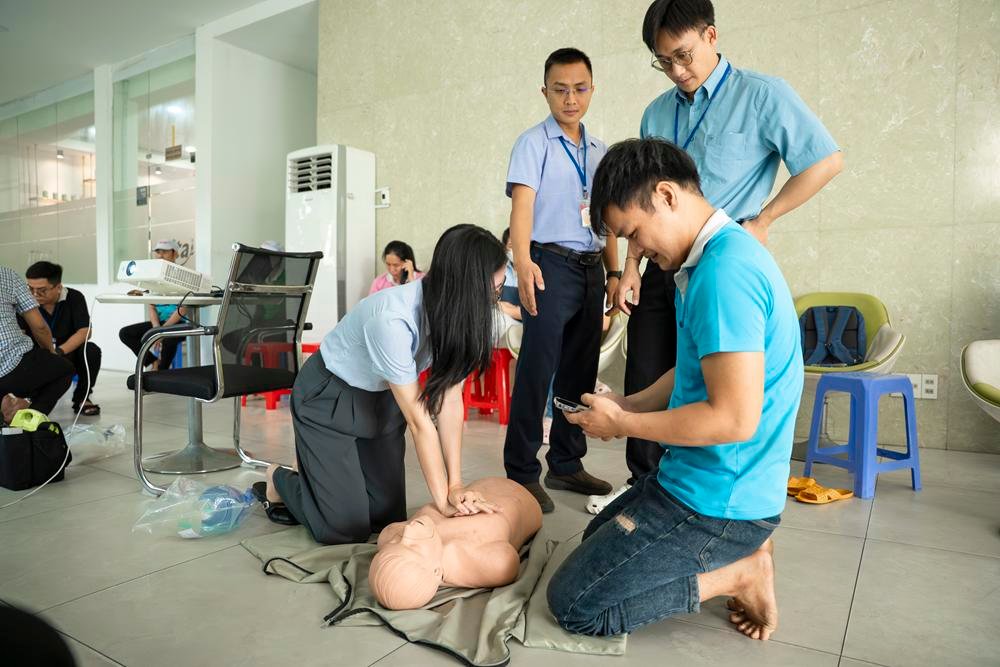
Trainees practice directly on models: Hand placement for chest compressions, compression rate (100-120 compressions/minute), and the ratio of 30 compressions to 2 rescue breaths.
Instructions on using an Automated External Defibrillator (AED) (if the factory is equipped with one).
III. Practical Benefits Attached to Rita Company
Investing in a first aid course is not an expense, but a profitable investment in terms of human resources and brand reputation for Rita company.
1. For employees (Staff)
- Confidence and bravery: Eradicating psychological barriers of hesitation and fear. Employees confidently step up to protect themselves, handle incidents promptly, and become a solid support for colleagues when accidents occur.
- Invaluable life skills outside the office: Knowledge about first aid for choking, burns, or CPR is an "invisible asset" that every individual can take home to protect their family, children, and loved ones in everyday life.
2. For Rita's operational activities
- Minimizing damages: The "golden time" in medicine determines the level of recovery. A correct bleeding-control bandage maneuver prevents the victim from going into hemorrhagic shock. This reduces the severity of the injury, subsequently decreasing recovery leave time and significantly saving medical costs.
- Ensuring continuous supply chains: In the beverage manufacturing industry, progress is gold. Isolating and swiftly handling occupational accident incidents helps the system remain undisturbed. It minimizes the need to halt the entire production line or delay the progress of packing and exporting containers.
3. For Rita's brand reputation internationally
- Standardizing corporate image: Occupational safety is one of the top criteria in modern corporate governance.
- Meeting strict standards: A well-trained workforce contributes to perfecting the capacity profile to achieve and maintain quality management standards such as ISO, HACCP, or Corporate Social Responsibility (CSR/ESG) certifications. This is a decisive "plus point" to build solid trust in the eyes of international partners, customers, and importers.
IV. Conclusion: Evaluation & Closing of the Training Course
To ensure training quality does not stop at mere theory, the course concludes with a strict evaluation process:
- End-of-session practical test: 100% of trainees must undergo a direct practical exam supervised by medical experts. Mandatory tests include: Wound immobilization bandaging techniques, bleeding control techniques, and CPR maneuvers on standard models.
- Issuance of prescribed certificates: Trainees who meet the requirements will be issued valid first aid training certificates under current law, officially becoming a link in the company's safety network.
- Commitment from the Board of Directors: The closing ceremony is marked by a speech from Rita's Board of Directors, reaffirming the strong commitment to investing in protective equipment, upgrading warning systems, and maintaining the corporate culture philosophy: "A Zero-Accident Working Environment."
V. Frequently Asked Questions (FAQs) About First Aid Training
1. Who is required to participate in the first aid training course at Rita? According to internal safety regulations, all employees, including the office block, management block, and especially workers directly operating in the workshops and production team leaders, must participate in basic knowledge training. The core force of Safety Officers/First Aiders will receive more in-depth training.
2. How often should workplace first aid training be reorganized? To ensure skills do not fade and to update the latest medical knowledge, the law requires enterprises to organize retraining (review) for first aid forces periodically at least once a year.
3. I have never studied medicine; are maneuvers like CPR or bandaging too difficult to perform? Absolutely not. The training program is specifically designed for people without medical expertise. Instructors use a "hands-on" method, simplifying operational steps and practicing repeatedly on models until you are proficient.
4. What if I make a mistake during actual first aid and make the victim's condition worse? This is a common psychological apprehension (bystander effect). However, for emergencies like cardiac arrest or respiratory arrest, "doing something is better than doing nothing." The course will teach you how to "assess your own limits" – you will only perform the maneuvers you have been trained in and are certain of. The top priority remains calling the emergency medical system.
5. Will the company equip enough First Aid Kits in the working areas after the course? Certainly. Along with personnel training, Rita's Board of Directors has arranged standard medical cabinets and first aid kits in many easily accessible and highly visible locations throughout the office and factory areas in Binh Duong and Ben Tre. Trainees will be guided on the locations and how to use the supplies inside these medical cabinets.
Newer news items:
- Rita Food & Drink Organizes Comprehensive Firefighting Training Course: Enhancing Awareness and Ensuring Labor Safety - 11/07/2026 04:04
- Coconut Water with Chocolate Flavor: A New Frontier in Beverage Export Opportunities - 10/07/2026 01:33
- Coconut Water with Chocolate: A New Frontier for Beverage Importers and Distributors - 07/07/2026 01:27
- The Rise of Caffeinated Protein Milk: A New Frontier in the Ready-to-Drink Beverage Market - 04/07/2026 10:19
- A Warm Dragon Boat Festival with Rita Beverage Company: Spreading Culture, Connecting with Love - 20/06/2026 02:58
Older news items:
- Rita Is Ready For THAIFEX 2026: Shaping The Next-Generation Beverage Map Of The Global Market - 05/06/2026 09:12
- Celebrating International Children’s Day with Rita Drinks - 05/06/2026 08:51
- Carbonated Coconut Water Market Trends Driving Global Beverage Innovation - 23/04/2026 10:07
- How Carbonated Energy Drinks in Cans Are Shaping Global Beverage Export Trends - 23/04/2026 09:51
- Exploring the Global Demand for Coco Energy Carbonated Drink Apple Flavor 250ml Can in the Beverage Industry - 23/04/2026 09:45