
How Carbonated Energy Drinks in Cans Are Shaping Global Beverage Export Trends
The global beverage industry is undergoing a significant transformation, driven by evolving consumer preferences for convenient, flavorful, and portable options. Among the most dynamic segments is the carbonated energy drink market, which has seen a surge in demand for innovative flavors and sustainable packaging. For importers, distributors, and F&B businesses looking to capitalize on these trends, understanding the production capabilities and market positioning of key manufacturers is essential. This article explores the growing role of carbonated energy drinks in cans, with a focus on how OEM beverage manufacturing partners are meeting international standards and scaling production for global export.
Key Takeaways
- The demand for carbonated energy drinks in aluminum cans is rising globally, driven by convenience and portability.
- OEM beverage manufacturing partners offer scalable solutions for private label energy drink production.
- International certifications like ISO, HACCP, and HALAL are critical for entering regulated markets.
- Vietnam has emerged as a key hub for energy drink export, with competitive pricing and reliable logistics.
- Understanding MOQ, shelf life, and packaging options helps importers make informed sourcing decisions.
Market Dynamics Driving Carbonated Energy Drink Demand
The carbonated energy drink market has experienced robust growth, particularly in the Asia-Pacific and Middle East regions. According to recent industry reports, the global energy drink market is projected to reach over $86 billion by 2026, with carbonated variants accounting for a significant share. This growth is fueled by changing lifestyles, urbanization, and the increasing popularity of on-the-go consumption. Aluminum cans, especially the 250ml format, have become the preferred packaging choice due to their lightweight, recyclable nature, and ability to preserve carbonation and flavor integrity.
For businesses entering this space, partnering with an experienced OEM beverage manufacturer is crucial. Companies like RITA Food & Drink Co., Ltd, with over 20 years of expertise, offer tailored solutions that align with market demands. By leveraging Vietnam's strategic location and competitive production costs, manufacturers can provide high-quality carbonated energy drinks that meet global standards.
The Role of OEM Beverage Manufacturing in Energy Drink Production
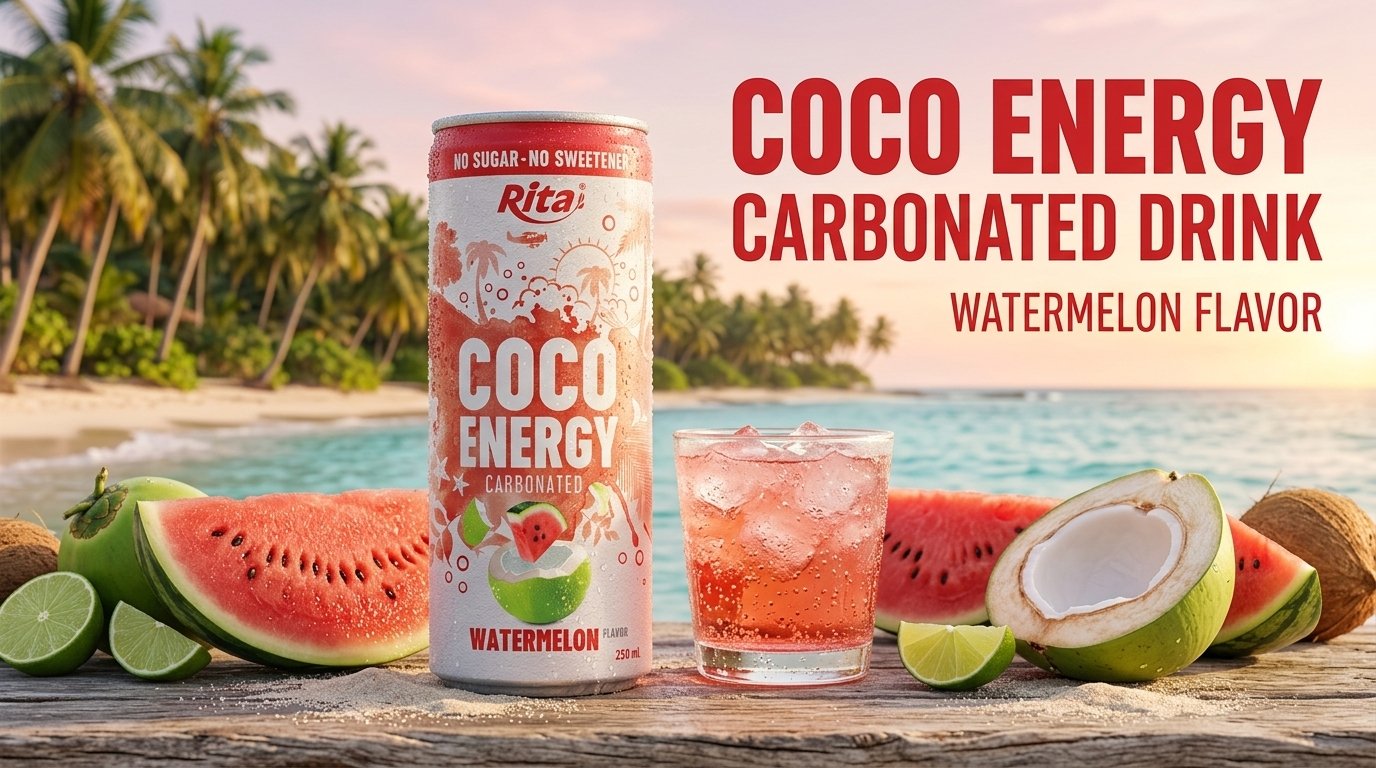
OEM beverage manufacturing has become a cornerstone of the energy drink industry, enabling brands to launch products without heavy capital investment in production facilities. A reliable OEM partner offers end-to-end services, from custom formulation to packaging design. For example, a product like the Coco Energy Carbonated Drink Watermelon Flavor 250ml Can exemplifies how manufacturers can create region-specific flavors while maintaining consistent quality.
Key aspects of OEM energy drink production include:
- Custom Formulation: Adjusting sweetness, carbonation levels, and flavor profiles to suit target markets.
- Flexible MOQ: Minimum order quantities as low as 500 cartons allow startups and mid-sized distributors to test markets.
- Scalable Capacity: With supply ability reaching 600 twenty-foot containers per month, manufacturers can handle bulk orders efficiently.
Export Opportunities for Carbonated Energy Drinks from Vietnam
Vietnam has positioned itself as a leading exporter of beverages, including carbonated energy drinks. The country's favorable trade agreements, skilled workforce, and modern production facilities make it an attractive sourcing destination. The energy drinks series from Vietnamese manufacturers often includes products with certifications like ISO, HACCP, HALAL, and FSSC, which are essential for entering markets such as the US, Europe, and the Middle East.
One notable example is the 250ml aluminum can format, which is widely used for energy drinks due to its portability and shelf stability. Products like the Coco Energy Carbonated Drink Watermelon Flavor 250ml Can have a shelf life of 24 months, making them ideal for long-distance shipping and inventory management. Exporters benefit from delivery times of 20–25 days after order confirmation, with payment terms such as L/C or T/T offering flexibility for international transactions.
Packaging Innovations and Consumer Preferences
Packaging plays a critical role in the success of carbonated energy drinks. Aluminum cans offer several advantages over other materials, including:
- Lightweight: Reduces shipping costs and carbon footprint.
- Recyclability: Aligns with growing consumer demand for sustainable packaging.
- Protection: Preserves carbonation and flavor for extended periods.
For OEM partners, offering packaging options like 250ml cans allows brands to cater to different consumption occasions, from retail shelves to vending machines. The OEM service provided by manufacturers includes assistance with packaging design, ensuring that the final product stands out in a competitive market.
Quality Certifications and Compliance for Global Markets
Entering international markets requires adherence to stringent quality and safety standards. Vietnamese manufacturers, particularly those with global export experience, invest heavily in certifications. Products like the Coco Energy Carbonated Drink Watermelon Flavor 250ml Can are produced in facilities certified with ISO, HACCP, HALAL, FSSC, BRC, and GMP. These certifications assure importers and distributors that the product meets food safety requirements and quality benchmarks.
For businesses targeting specific regions, such as the Middle East or Southeast Asia, HALAL certification is often mandatory. Similarly, for the European market, BRC and FSSC certifications demonstrate compliance with high standards. By partnering with a certified OEM beverage manufacturer, companies can reduce the risk of regulatory hurdles and accelerate market entry.
Supply Chain and Logistics for Energy Drink Export
Efficient supply chain management is critical for the success of energy drink export. Vietnamese manufacturers have optimized their logistics to handle bulk orders seamlessly. Key factors include:
- Port Accessibility: Ho Chi Minh Port serves as a major hub for container shipments.
- Lead Times: Typical delivery times of 20–25 days ensure timely delivery.
- Documentation Support: Experienced exporters provide assistance with customs documentation and compliance.
With a supply ability of 600 containers per month, manufacturers can accommodate large-scale orders from distributors and wholesalers. This scalability is particularly beneficial for businesses looking to establish a strong presence in multiple markets simultaneously.

Strategic Partnerships for Private Label Energy Drinks
Private label energy drinks represent a growing opportunity for retailers and distributors. By leveraging ODM solutions, brands can create unique products without investing in R&D or production lines. The ODM service offered by Vietnamese manufacturers includes:
- Custom flavor development (e.g., watermelon, tropical fruits).
- Brand-specific packaging and labeling.
- Flexible production runs to test new concepts.
For example, a distributor targeting the US market could work with an OEM partner to develop a carbonated energy drink with natural ingredients and a unique flavor profile. The 250ml can format is particularly popular in convenience stores and gas stations, where single-serve beverages drive impulse purchases.
Frequently Asked Questions
1. What is the typical MOQ for private label energy drinks in cans?
Most OEM manufacturers, including those in Vietnam, require a minimum order quantity of 500 cartons for private label energy drinks. This allows for cost-effective production while enabling brands to test the market.
2. How long does it take to produce and ship a carbonated energy drink order?
Production and shipping typically take 20–25 days after order confirmation, depending on the complexity of the formulation and packaging requirements. Bulk orders may require additional lead time.
3. What certifications are necessary for exporting energy drinks to the Middle East?
For the Middle East market, HALAL certification is essential. Additionally, ISO and HACCP certifications are often required to demonstrate food safety compliance.
4. Can I customize the flavor and sweetness of a carbonated energy drink?
Yes, OEM manufacturers offer custom formulation services, allowing you to adjust flavor profiles, sweetness levels, and carbonation to suit your target market. The Coco Energy Watermelon Flavor is an example of a tailored product.
5. What are the advantages of using aluminum cans for energy drinks?
Aluminum cans are lightweight, recyclable, and provide excellent protection against light and oxygen, preserving carbonation and flavor. They are also cost-effective for shipping and storage.
Newer news items:
- A Warm Dragon Boat Festival with Rita Beverage Company: Spreading Culture, Connecting with Love - 20/06/2026 02:58
- First Aid and Occupational Safety Training Course at Rita Company - 12/06/2026 08:31
- Rita Is Ready For THAIFEX 2026: Shaping The Next-Generation Beverage Map Of The Global Market - 05/06/2026 09:12
- Celebrating International Children’s Day with Rita Drinks - 05/06/2026 08:51
- Carbonated Coconut Water Market Trends Driving Global Beverage Innovation - 23/04/2026 10:07
Older news items:
- Exploring the Global Demand for Coco Energy Carbonated Drink Apple Flavor 250ml Can in the Beverage Industry - 23/04/2026 09:45
- Energy Drink Market Trends 2025: Opportunities for Mango Flavored Carbonated Beverages in Global Trade - 23/04/2026 09:44
- Natural Date Cola Drives Innovation in Carbonated Beverage Market - 23/04/2026 09:39
- How Sugar-Free Cola in 330ml Cans Is Reshaping the Global Carbonated Soft Drink Market - 23/04/2026 09:33
- Global Energy Drink Market Trends and the Rise of Mango Flavored Carbonated Beverages in 250ml Cans - 23/04/2026 09:29